

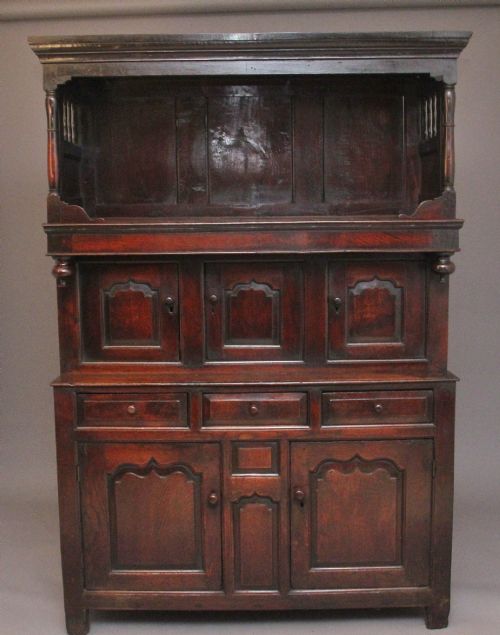


Welsh Oak Court Cupboard
A welsh oak court cupboard is a substantial historic storage piece built for rural homes, offering deep cupboards and heavy timber construction.
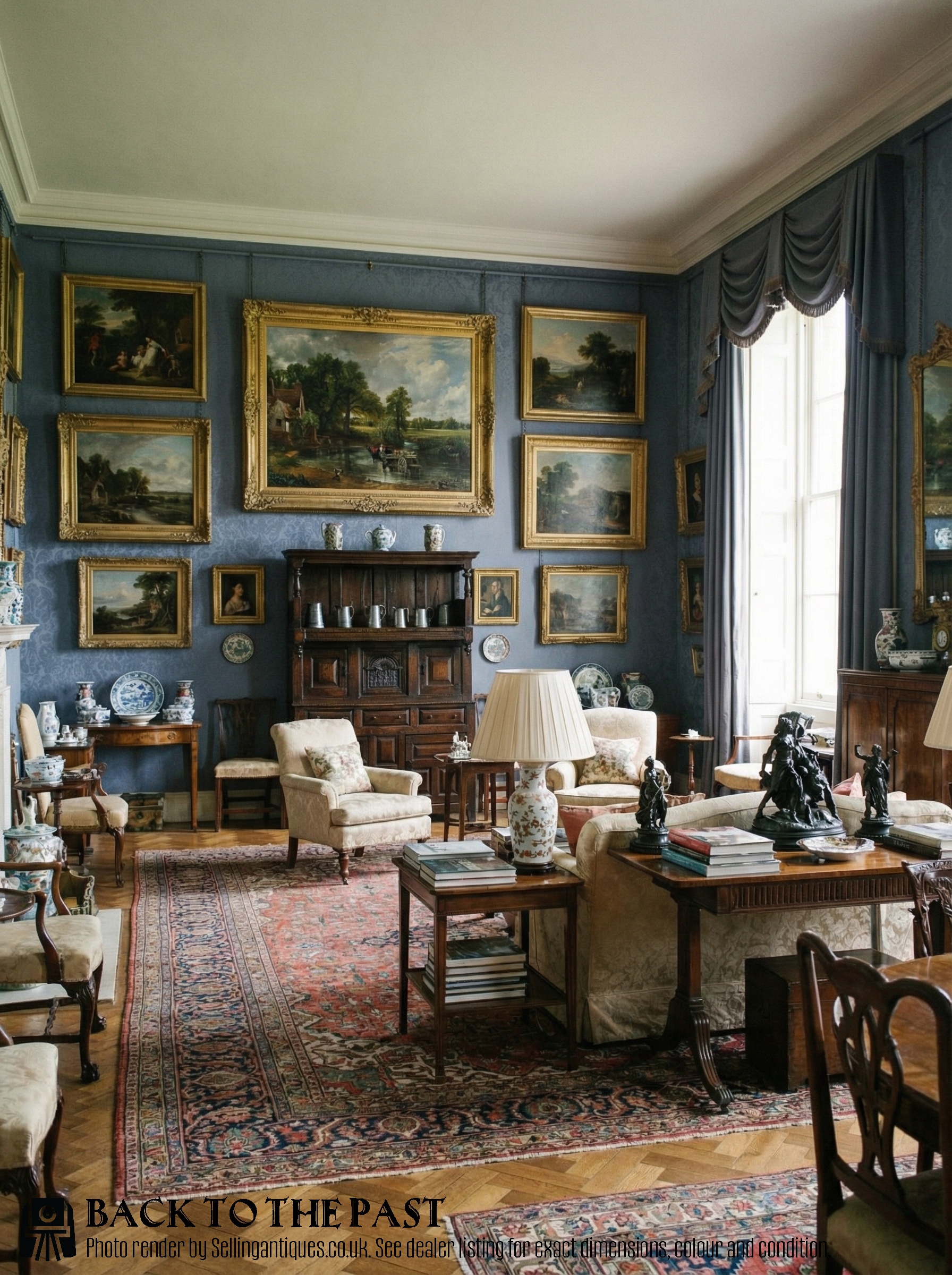
Welsh Oak Court Cupboard
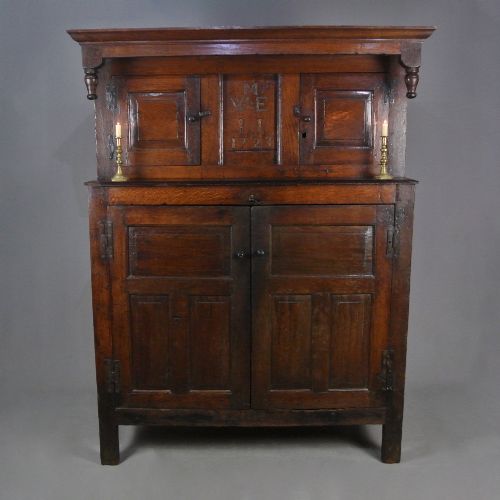
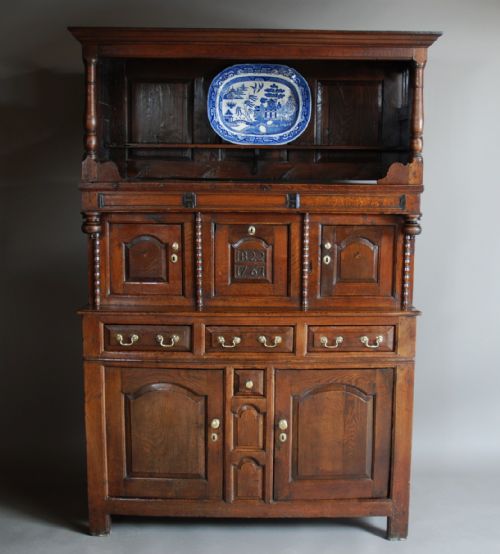
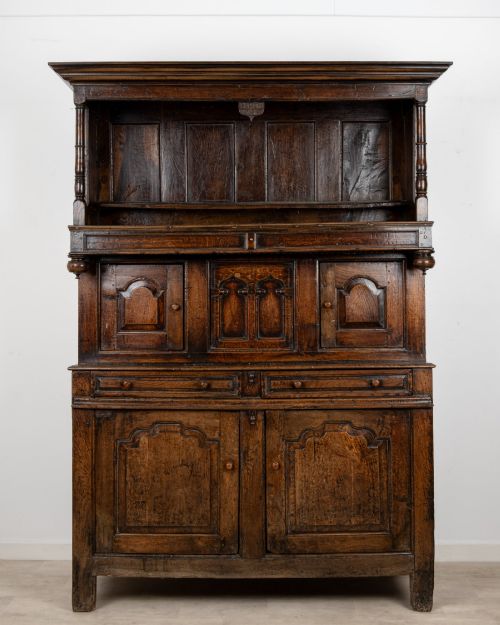
When searching for a welsh oak court cupboard, buyers encounter substantial timber furniture originating from country workshops and vernacular traditions. These storage pieces appear primarily as two-part deuddarn and three-part tridarn formats dating across the seventeenth, eighteenth, and nineteenth centuries. Regional variations such as examples from Snowdonia demonstrate local craftsmanship distinct from standard English forms.
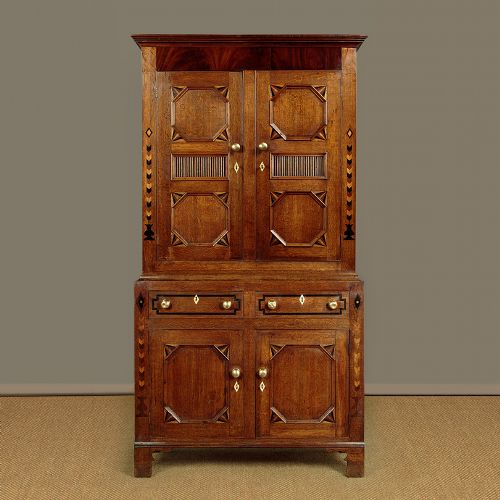
The material identity centres on solid native timber, occasionally paired with secondary woods like yew or inlaid details in ebony and holly. Workshops utilised regional styles ranging from plain vernacular surfaces to geometric carvings associated with revival periods. Buyers frequently encounter formats combining enclosed cupboards with display sections or lower drawer arrangements.
Materials and construction methods
Makers built these pieces primarily using solid oak boards joined with traditional frame and panel construction. Iron and brass hardware such as hinges and locks secured the heavy doors, while occasional leaded glass doors appeared in later variations.
Surface decoration relied on hand carving, geometric panels, and inlaid contrasting timbers like holly and ebony. Structural integrity depended on pegged joints and sturdy timber frames designed to withstand heavy domestic use.
Bread and cheese cupboards included integrated ventilation slats to keep daily rations fresh before modern refrigeration existed.
What separates examples
The standard of a piece rests upon the crispness of the hand carving and the integrity of the original timber boards. Pieces retaining an untouched surface patina display superior visual depth compared to stripped or heavily restored woodwork.
Proportion and regional distinctiveness also set specific examples apart. Well-balanced proportions in lesser-seen three-part formats or documented local characteristics elevate certain pieces above standard vernacular production.
The Welsh Oak Court Cupboard Glossary
- Cwpwrdd Deuddarn
- A traditional Welsh two-part court cupboard featuring an upper and lower section enclosed by panelled doors. This form provided essential storage in rural households.
- Cwpwrdd Tridarn
- A three-part Welsh court cupboard comprising an upper canopy or recess, a middle cupboard section, and a lower base. It represents the grandest scale of traditional Welsh vernacular storage.
- Vernacular
- Architecture and furniture created by local craftsmen using traditional regional methods and materials, rather than following formal academic architectural designs.
- Patina
- The surface sheen and colour acquired by timber through age, handling, and regular polishing over centuries. It forms a key indicator of genuine historical age.
- Livery Cupboard
- An antique storage piece historically used for food and candles, closely related in form to early court cupboards.
Welsh Oak Court Cupboard: Frequently Asked Questions
What is a welsh oak court cupboard?
A welsh oak court cupboard is a traditional heavy storage unit built in rural Wales, typically featuring enclosed cupboards arranged in two or three stacked sections.
These pieces served as the central storage furniture in country houses for linens, dry goods, and household valuables.
How do I identify a deuddarn?
A deuddarn is specifically a two-part cupboard structure with panelled doors enclosing the upper and lower compartments.
This format is smaller and more common than the three-part tridarn variant.
Where were these cupboards made?
They originated in rural Welsh workshops, with notable regional examples documented from areas such as Snowdonia.
Local cabinet makers utilised native timbers available in the Welsh countryside.
How do I clean the oak?
Maintenance involves gentle dusting with a dry cloth and occasional application of traditional beeswax to nourish the dry timber.
Avoid modern liquid polishes that can degrade the historic surface sheen and accumulated patina.