





Georgian Oak Court Cupboard
A georgian oak court cupboard is a substantial statement piece offering historic storage and character for traditional interiors.
What a Georgian oak court cupboard is
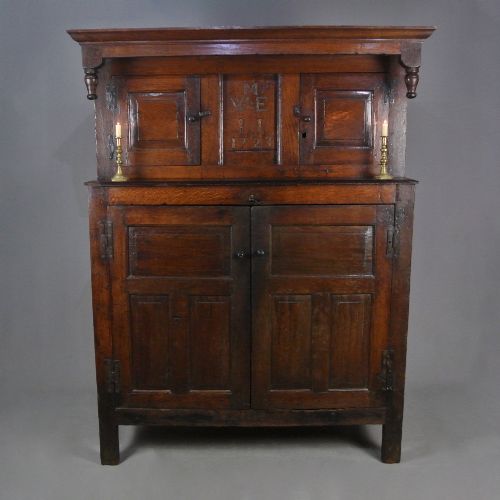
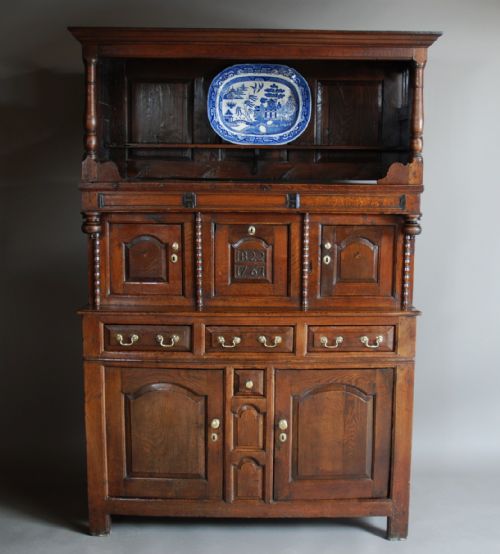
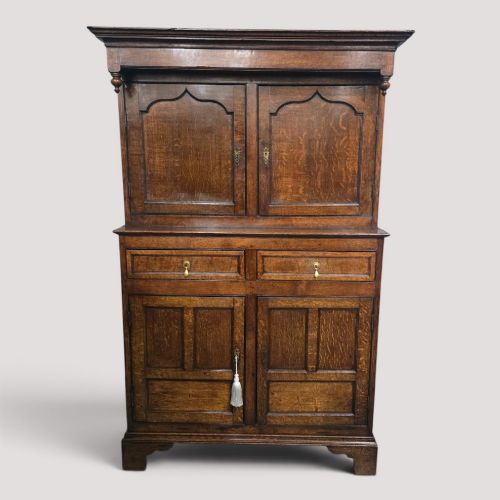
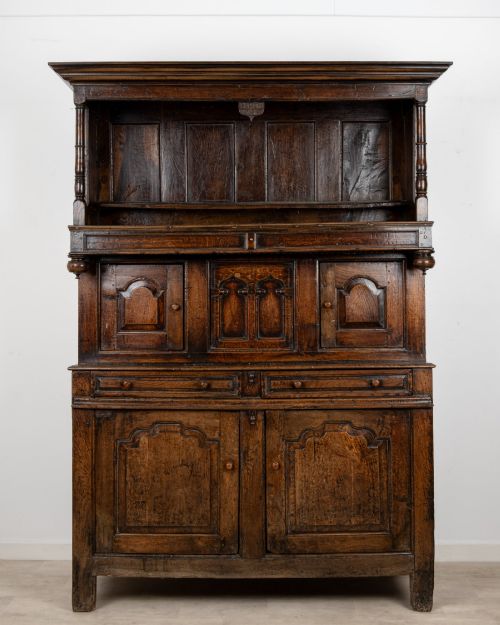
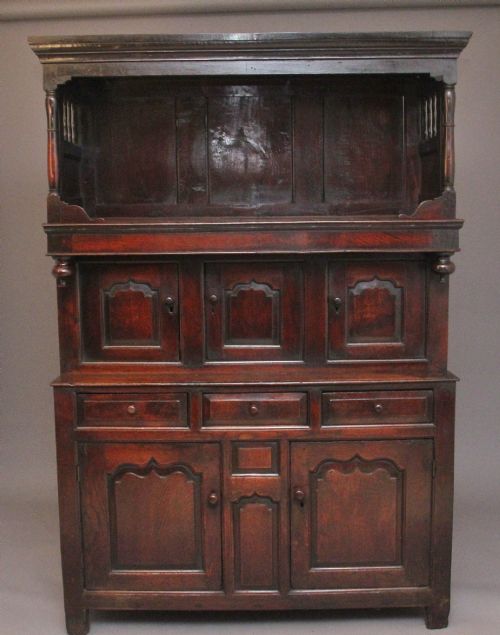
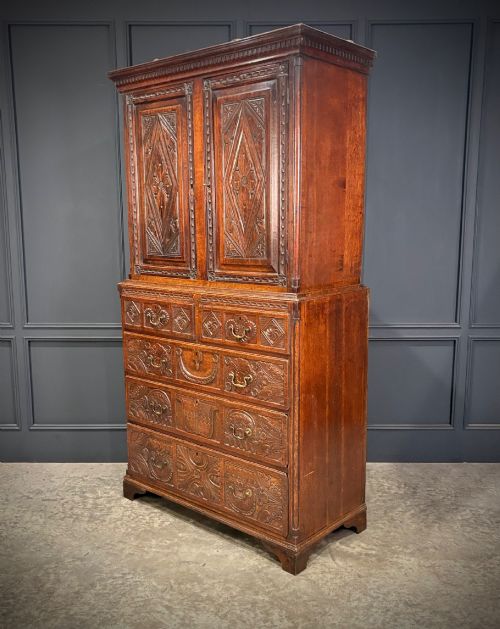
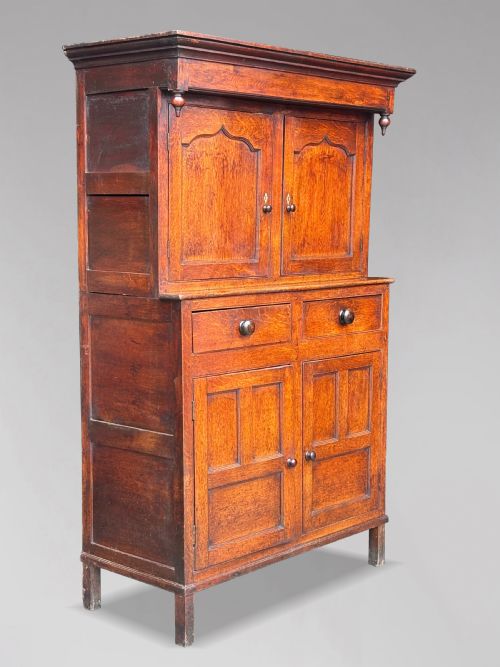
A georgian oak court cupboard is a multi-tiered storage item originating from the eighteenth century, encompassing forms such as the traditional court cupboard, press cupboard, and the Welsh cwpwrdd tridarn. These architectural pieces dominate a room with their height and presence, functioning historically to display plate and store provisions.
The pieces appearing on this page span the eighteenth century and the year 1800, displaying regional variations including Welsh vernacular styles from Snowdonia alongside English country examples. Buyers regularly encounter multi-section designs, including three-part cupboards known as tridarns, built to hold household goods securely.
Makers constructed these cupboards with distinct stages, often featuring recessed upper sections supported by pillars or turned columns above enclosed lower cupboards. The survival of dated examples from the seventeen-twenties through to seventeen-forties establishes a clear chronology for these regional forms.
How they were made
Craftsmen built these cupboards primarily using solid oak, complemented occasionally by yew-wood for specific regional pieces. Structural integrity relied on traditional joinery methods suited to heavy timbers.
Metalwork played a functional and decorative role, with brass and iron utilised for hinges, latches, and mounts. Surfaces frequently exhibit the deep patination developed over centuries of handling and wax polishing.
Retail Price Guide 2026
Typical UK retail prices for georgian oak court cupboard, calculated from the Sellingantiques database of over a million retail prices indexed since 2003. This retail price guide relies exclusively on Sellingantiques data; no external sources or auction records are used, so the figures do not describe the wider market.
What varies in quality
The degree of surface patination and the survival of original timber define the upper tier of these cupboards, distinguishing pieces that retain their untouched skin from those with heavily restored surfaces. Rich, mellow colour on the oak panels indicates proper historical maintenance and superior initial wood selection.
Regional distinctiveness and complexity of form dictate the hierarchy among these cupboards, with vernacular Welsh tridarns and dated examples commanding greater architectural interest. The proportion between the upper canopy and lower base sections determines the visual balance of the piece.
The Georgian Oak Court Cupboard Glossary
- Court cupboard
- A traditional English storage piece featuring tiers for display and enclosed cupboards. These items evolved from medieval domestic furniture into prominent fixtures of the Georgian interior.
- Cwpwrdd tridarn
- A traditional Welsh three-part cupboard incorporating a lower base, a middle section, and an upper canopy. This form provides substantial vertical storage and display space.
- Patina
- The lustrous surface sheen developed on timber over decades of use and polishing. This quality marks genuine age and distinguishes untouched historical pieces from modern alterations.
- Vernacular
- Furniture built by local country craftsmen following regional traditions rather than metropolitan fashions. These pieces utilise local materials and idiosyncratic construction methods.
- Press cupboard
- A large enclosed storage piece designed for linens and garments, often featuring panelled doors. The form represents a specialised development of the standard court cupboard.
Frequently Asked Questions
How do I date these cupboards?
Dating relies on construction methods, timber characteristics, and occasional carved dates found on the woodwork. Eighteenth-century examples often display regional vernacular traits and pegged mortise and tenon joinery.
Comparing panel styles and hardware helps narrow down the period between the early seventeen-hundreds and the turn of the nineteenth century.
Where were they made?
These cupboards originated across English rural districts and Welsh regions such as Snowdonia. Local country workshops produced them using native timbers available in the immediate vicinity.
Regional differences in carving and structure reflect the specific traditions of the makers working in these distinct geographical areas.
How do I care for oak furniture?
Maintaining eighteenth-century oak requires stable environmental conditions away from direct heat sources and dramatic humidity shifts. Regular application of traditional beeswax preserves the historic surface and feeds the dry timber.
Avoiding synthetic polishes ensures the natural patination continues to develop over time.