
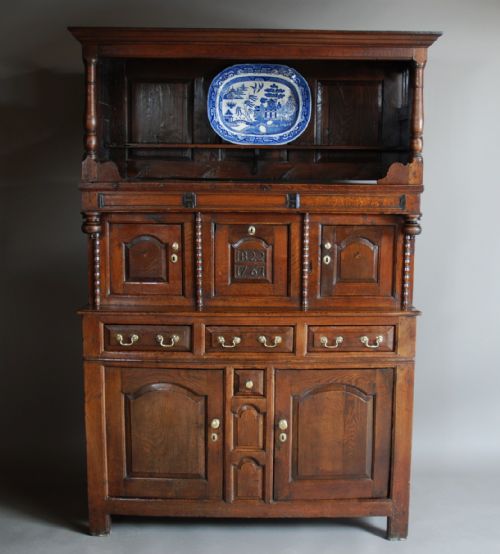
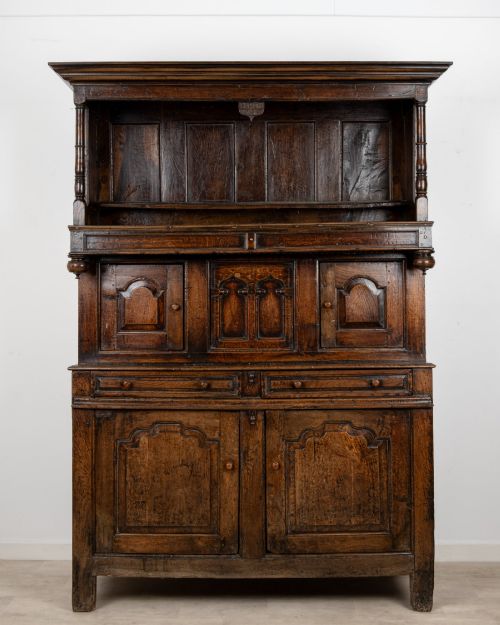
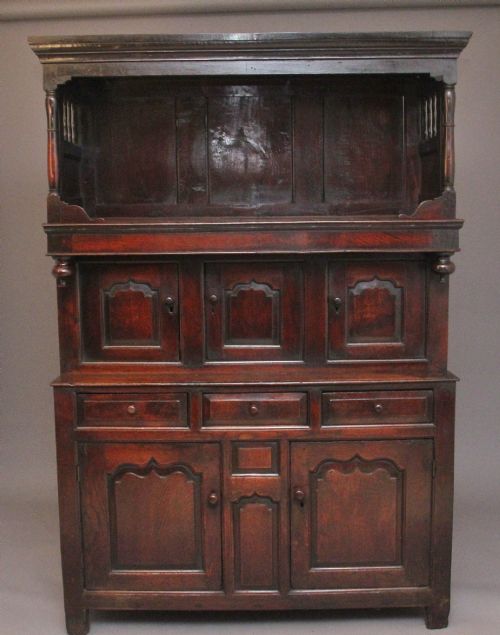


Three Tier Oak Cupboard
A three tier oak cupboard is a towering piece of vernacular furniture built to store provisions and display household wealth.
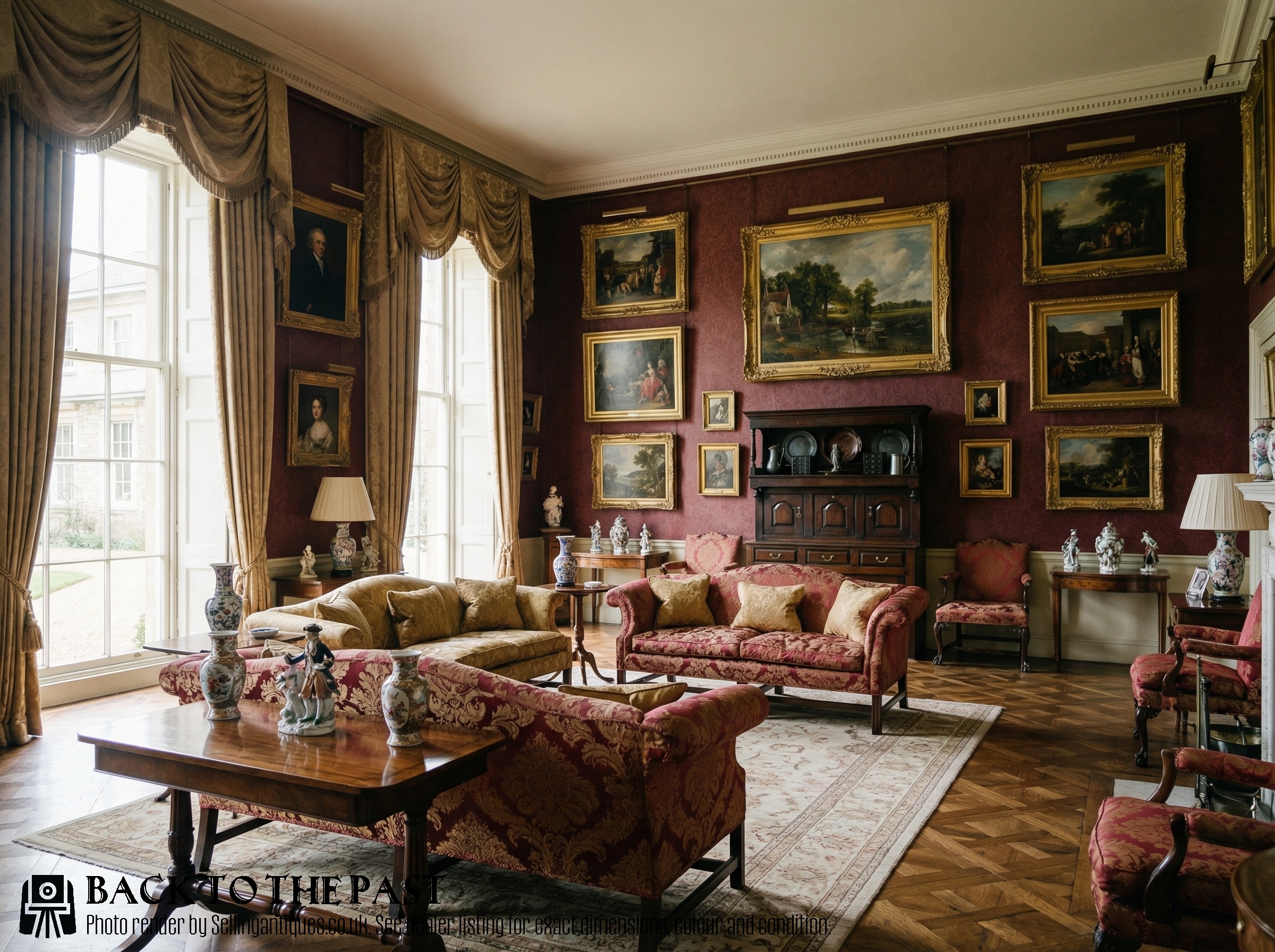
Three Tier Oak Cupboard
The form developed within Welsh vernacular and country traditions, reflecting local craftsmanship rather than metropolitan London styles. Buyers encounter Georgian and eighteenth-century editions alongside later vernacular revivals. Each structure balances display space for plate with deep storage capacity below.
How they were made
Joiners built these cupboards using solid timber planks of oak and occasionally yew-wood, assembled with pegged mortise and tenon joints. Panels were commonly fielded and fitted into grooved frames to accommodate seasonal wood movement. Surfaces received hand-tooling with adzes and planes, leaving subtle tool marks across the structural timbers.
Iron and brass hardware, including butterfly hinges and latches, secured the doors and drawers. Turners shaped the supporting posts and spindles on pole lathes, producing robust architectural columns for the open middle or upper tiers. Carving, where present, was executed by hand with gouges directly into the solid oak framework.
Three Tier Oak Cupboard Retail Price Guide 2026
Typical asking prices for three tier oak cupboard among the pieces listed under this phrase on Sellingantiques today, from the lower quarter to the upper quarter. They describe what is for sale here now, not the wider market.
The listings show dates spanning the early eighteenth century through the late Victorian period, constructed predominantly in oak with occasional yew-wood.
What varies in quality
The distinction between standard domestic items and superior examples lies in the proportion of the three tiers and the depth of the regional carving. Finer pieces display crisp architectural turnings on the canopy posts and well-balanced proportions across the upper, middle, and lower sections. Timbers with rich, deep surface patination and tight grain patterns command greater appreciation.
Originality of components heavily influences the standing of a piece, particularly the survival of original brass or iron hardware and unaltered feet. Vernacular items that retain their early surface finishes without heavy modern stripping show superior integrity. The regional origin, such as specific attribution to Snowdonia workshops, adds distinct character to the construction.
The Three Tier Oak Cupboard Glossary
- Tridarn
- A traditional Welsh three-tiered cupboard consisting of an open canopy, a middle section with small cupboards, and a larger base. This distinct form developed for domestic storage and display in rural Welsh homes.
- Cwpwrdd tridarn
- The Welsh language term for a three-tiered cupboard. It describes the exact same regional form as the English tridarn.
- Vernacular
- Furniture built by local country joiners using regional traditions and native timbers rather than following metropolitan fashion. These pieces prioritize practical utility and local style.
- Fielded panel
- A wooden panel with bevelled edges designed to fit into a grooved frame. This technique allows the wood to expand and contract with humidity changes without cracking.
- Patina
- The surface sheen and colour developed by wood over centuries through handling, wax application, and oxidation. A deep patina indicates age and continuous use.
Three Tier Oak Cupboard: Frequently Asked Questions
What is a three tier oak cupboard?
A three tier oak cupboard is a traditional Welsh storage piece featuring an open top section, a middle tier, and a large lower base. These substantial items combine display space with enclosed cupboards.
Most examples date from the eighteenth century and display regional vernacular craftsmanship in solid oak or yew-wood.
Where were these cupboards made?
These cupboards originated primarily in rural Wales, with specific regions like Snowdonia producing notable regional variations. Local joiners built them for Welsh country homes using native timbers.
The regional style separates them sharply from standard English urban furniture of the same period.
How do I date an antique tridarn?
Dating relies on construction methods, timber characteristics, and stylistic details such as panel shaping and turning profiles. Eighteenth-century examples often feature pegged joinery and hand-planed board surfaces.
Carved dates or initials occasionally appear on the upper frieze, providing a direct point of origin.
How should I care for an oak tridarn?
Maintain a stable room environment away from direct heat sources and strong sunlight to prevent the timber from splitting. Apply traditional beeswax occasionally to nourish the oak surface.
Avoid modern chemical polishes that can damage the historical patina built up over centuries.