


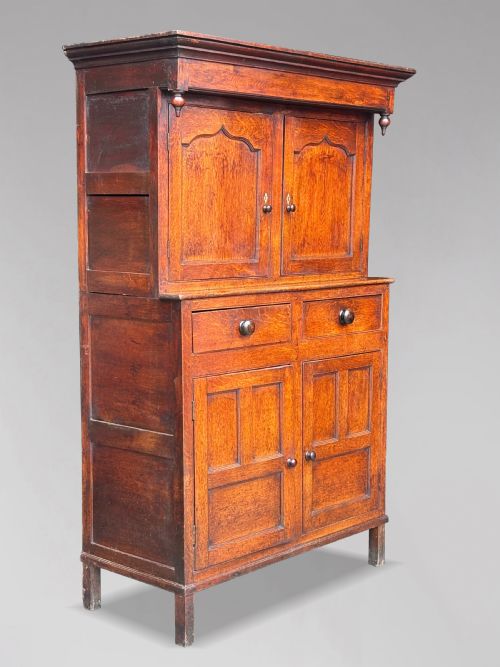


Georgian Oak Bread Cupboard
A georgian oak bread cupboard brings robust country utility into a modern interior, offering honest vernacular storage with centuries of practical history behind it.
Georgian Oak Bread Cupboard
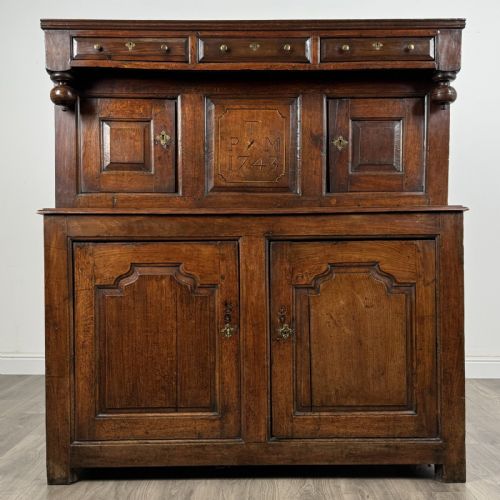
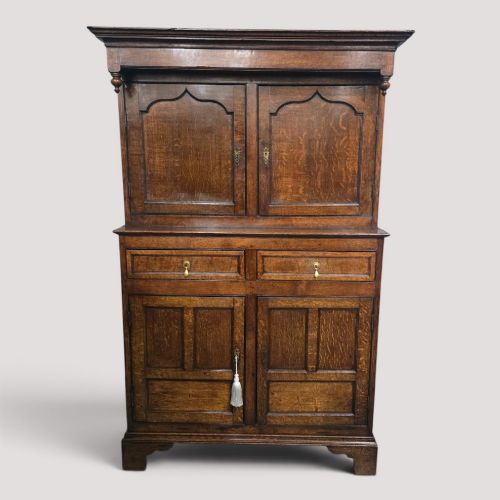
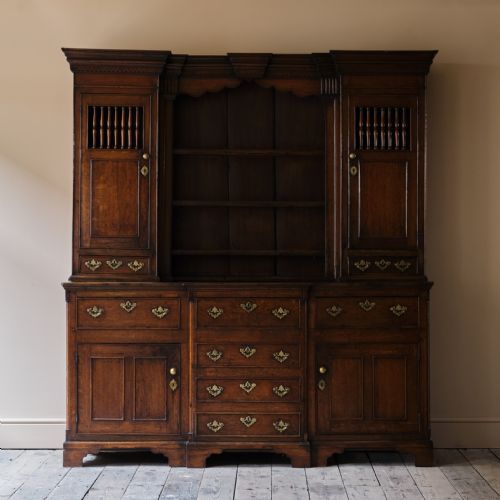
When you search for a georgian oak bread cupboard, you enter the realm of robust country furniture spanning the eighteenth and early nineteenth centuries. These pieces encompass regional forms such as court cupboards, deuddarns, dressers, and food safes built for rural households.
You are most likely to encounter sturdy oak constructions reflecting Welsh vernacular and English country traditions. Many pieces combine deep storage with panelled doors and distinct regional joinery.
The objects vary from monumental two-part cupboards bearing dates and initials to smaller primitive food safes and panetieres designed for ventilation. Each item reveals the utilitarian demands of rural domestic life.
How they were made
Carpenters constructed these cupboards primarily from solid oak, sometimes incorporating elm, chestnut, and iron hardware. Boards were hand-rived and planed, showing the natural grain and irregularities of early timber preparation.
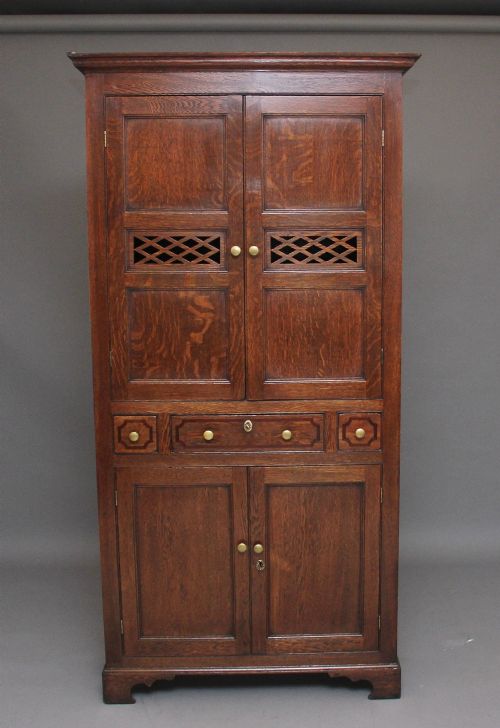
Joinery relied on pegged mortise and tenon frames alongside original wrought iron locks and hinges. Ventilation openings were frequently pierced or turned into panels to keep provisions dry.
Listings demonstrate forms spanning eighteenth-century court cupboards, Welsh deuddarns, and nineteenth-century food safes in oak and elm.
What varies in quality
Quality rests in the integrity of the timber and the honesty of the construction. Pieces retaining their original surface patination and authentic blacksmith ironwork stand apart from heavily restored examples.
Proportion and regional character dictate distinction among country pieces. A balanced carcass with crisp moulding and undisturbed structural pegged joints represents the pinnacle of vernacular craftsmanship.
The Georgian Oak Bread Cupboard Glossary
- Deuddarn
- A traditional Welsh two-section cupboard featuring an enclosed upper stage and lower cabinet space. This form typifies eighteenth-century rural Welsh joinery.
- Court cupboard
- An antique enclosed cupboard or sideboard, often standing on short posts supporting an upper canopy. These pieces frequently display panelled doors and geometric carving.
- Tridarn
- A three-tier Welsh cupboard incorporating an open middle section or tiers above a base cabinet. It represents a more complex evolution of the standard vernacular press.
- Panetiere
- A freestanding cabinet or wall-hanging safe traditionally used in France for storing bread. It relies on spindle-turned or pierced galleries for air circulation.
- Vernacular
- Architecture and furniture built by local craftsmen using regional materials to satisfy immediate domestic needs. These items eschew academic classical rules in favour of practical utility.
Georgian Oak Bread Cupboard: Frequently Asked Questions
What is a bread cupboard?
A bread cupboard is a traditional piece of rural furniture designed to store and air dry loaves of bread. These cabinets utilised ventilated panels or spindle galleries to keep provisions fresh.
Over time, such pieces evolved in regional styles across Britain and Europe, adapting to the storage needs of the rural household.
Where were these cupboards made?
These cupboards were made primarily in rural workshops across Wales and provincial England. Local joiners utilised native timber available in their immediate surroundings.
Regional variations in moulding and layout often point directly to the specific valley or county where the carpenter worked.
How do I date a georgian oak cupboard?
Dating relies on examining construction methods, tool marks on the timber, and surviving hardware such as iron locks and hinges. Hand-planed boards and pegged joints indicate eighteenth or early nineteenth-century production.
Occasionally, makers carved dates or initials directly into the woodwork, providing a precise point of origin.
How do I care for oak furniture?
Keep oak furniture away from direct heat sources and dramatic humidity fluctuations to prevent the timber from splitting. Regular dusting with a dry cloth maintains the surface.
Applying a traditional beeswax polish occasionally will nourish the wood and preserve the natural patination built up over centuries.