


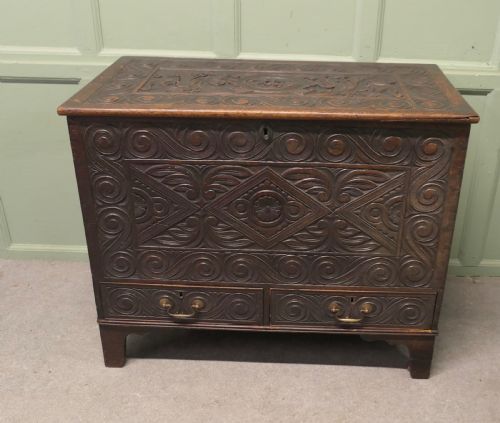

Oak Box with Drawers
An oak box with drawers is a sturdy domestic container for textiles or valuables, combining a lidded chest with functional lower storage.
Oak Box with Drawers
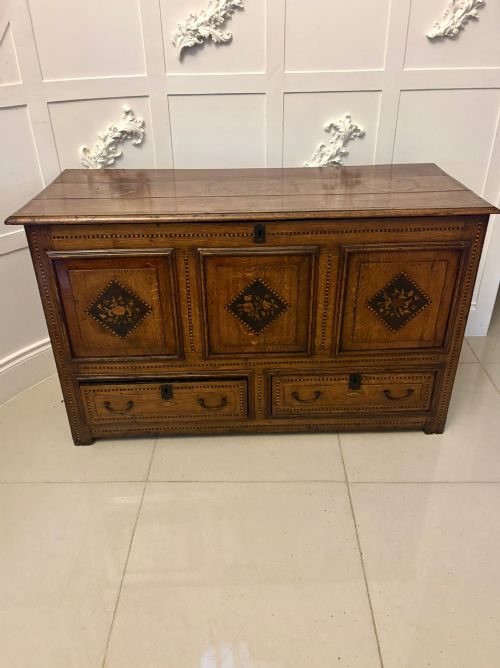
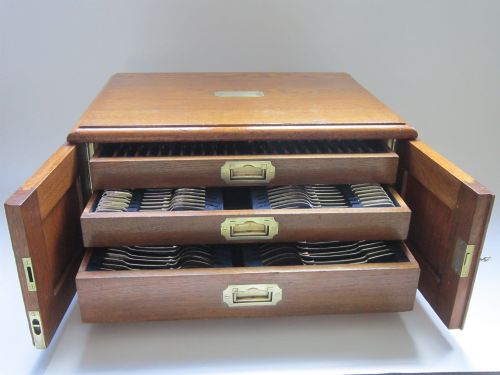
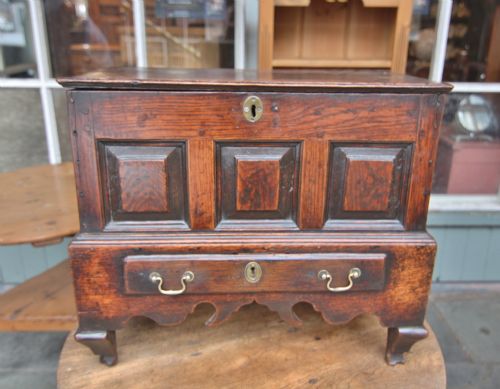
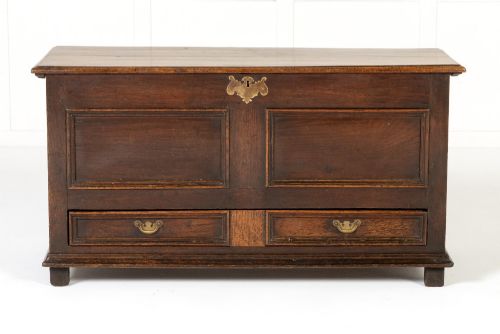
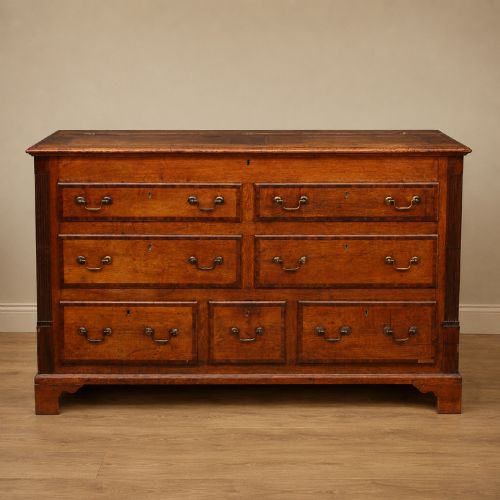
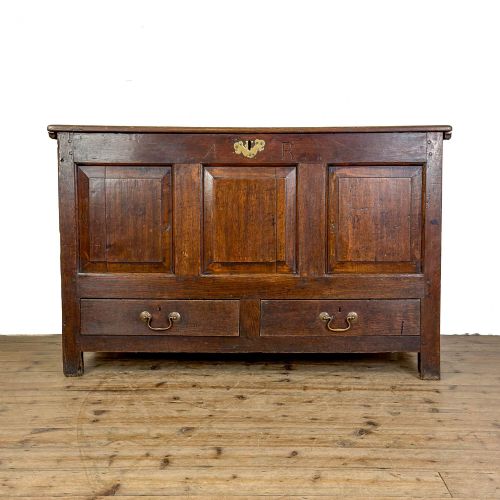
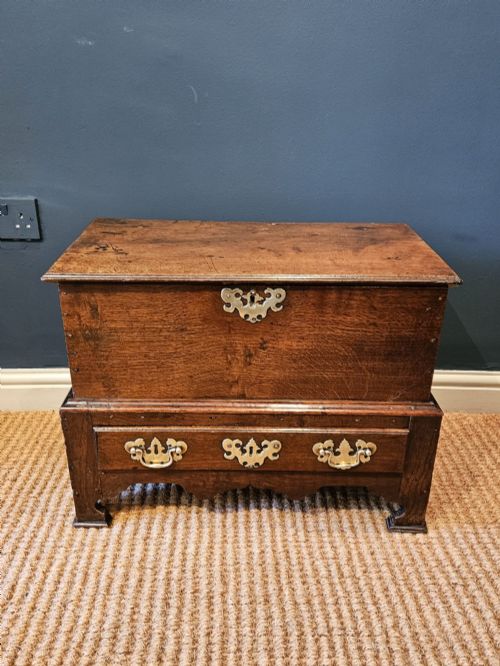
An oak box with drawers bridges the traditional lidded chest and the multi-drawer cabinet, commonly appearing as a mule chest or a coffer bach with one or more lower drawers. These pieces served generations of households for storing garments, linen, and personal valuables securely within a single utilitarian unit.
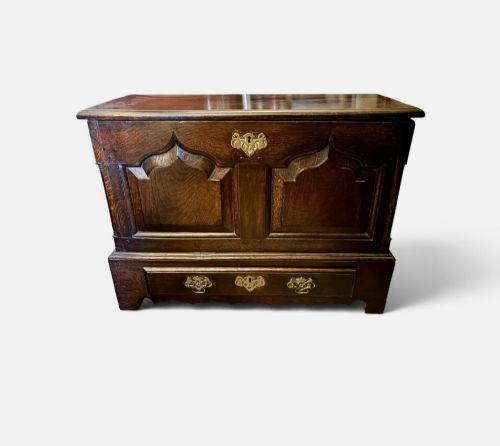
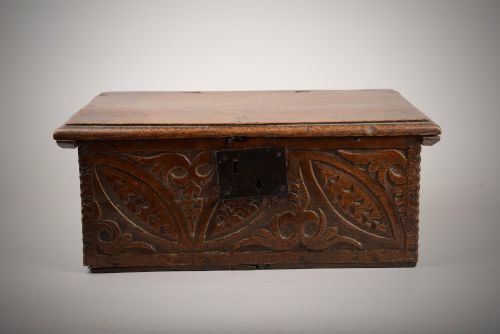
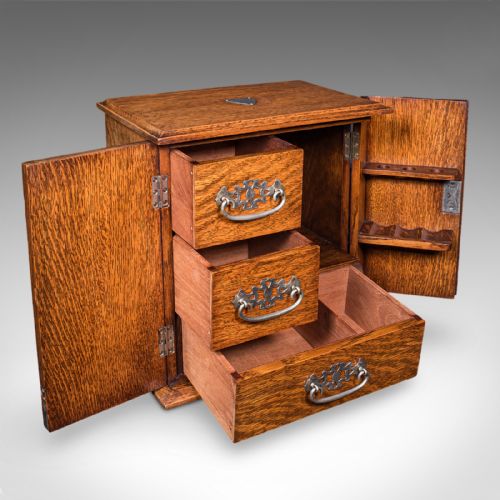
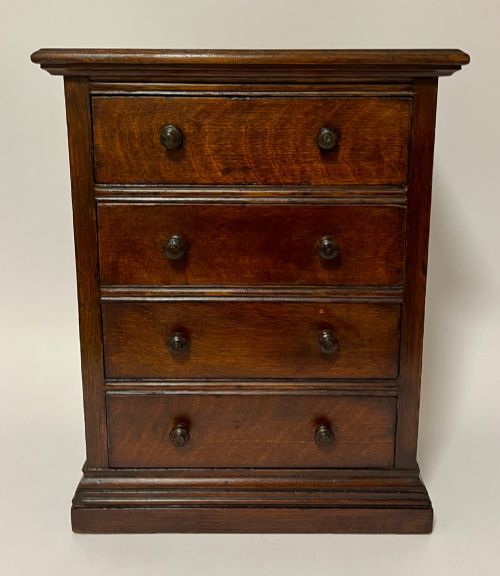
The version most frequently encountered on this page is the Georgian or 18th-century mule chest, constructed with panelled timber and a row of exterior drawers beneath the main lift-top compartment. Smaller variations such as table boxes, desk boxes, and miniature coffer bach examples also appear, offering internal compartments or secret drawers.
Originating largely from English and Welsh country workshops, these items display regional vernacular traits rather than formal court designs. Buyers searching for an oak box with drawers encounter sturdy proportions built from native hardwood, showing practical joinery suited to domestic life.
How they were made
The primary material is solid oak, often quarter-sawn to reveal characteristic medullary rays, combined with secondary timbers like elm or mahogany for specific panels. Hardware relies heavily on forged iron hinges, brass escutcheons, and plate handles that secure the lids and drawer fronts.
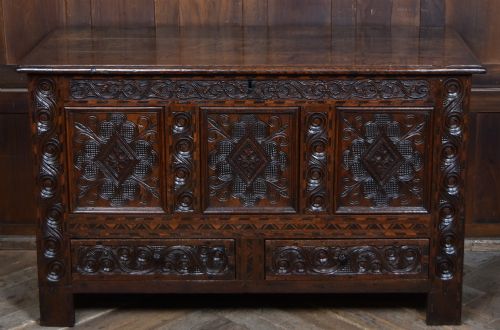
Construction methods depend on frame-and-panel joinery, which allows the timber to expand and contract naturally with changes in humidity without splitting the main structure. Decorative elements incorporate carved panels, marquetry inlay, or burr elm veneers depending on the period and regional workshop traditions.
Listings feature oak, brass, iron, and marquetry inlay across periods spanning the seventeenth, eighteenth, and nineteenth centuries.
What varies in quality
Quality rests upon the integrity of the timber selection and the retention of original structural components such as hinges, feet, and drawer runners. Pieces retaining their initial surface patination and unreplaced brassware command greater respect among collectors than those stripped down or heavily rebuilt.
The sophistication of the carving and inlay work distinguishes standard vernacular carpentry from finer regional output. Proportions also dictate desirability, where balanced drawer arrangements and well-defined mouldings separate utilitarian containers from superior cabinetmaker commissions.
The Oak Box with Drawers Glossary
- Mule chest
- A traditional storage chest featuring one or more functional drawers built into the base beneath a lidded compartment. This form emerged as a transitional design before full drawer chests became standard in domestic interiors.
- Coffer bach
- A small Welsh miniature chest, often translated as little chest, constructed with internal tills or drawers. These pieces served as dowry items or presentation boxes in Welsh households.
- Frame and panel
- A method of wooden construction where a central floating panel sits within a grooved perimeter frame. This technique prevents warping while maintaining structural strength across large surfaces.
- Marquetry inlay
- The art of applying decorative pieces of contrasting veneer to a structural surface to form geometric or floral patterns. It adds visual complexity to plain oak panels.
Oak Box with Drawers: Frequently Asked Questions
What is a mule chest?
A mule chest is a traditional storage trunk that combines a lift-up lid on top with one or more functional drawers set into the base. This design evolved to provide easier access to stored clothing without requiring items to be lifted entirely out of the top well.
These pieces bridge the gap between mediaeval coffers and modern drawer chests. They became a staple of country house and farmhouse interiors throughout the seventeenth and eighteenth centuries.
How were these boxes used?
Households utilised these lidded containers to store heavy textiles, blankets, woollens, and personal garments away from damp walls and pests. The lower drawers held smaller linens, accessories, or private documents.
Smaller desk boxes and table chests were placed on top of tables to keep writing materials, valuables, and letters secure. Their portability allowed owners to move important papers quickly if necessary.
How do I tell an 18th-century box from a later copy?
Eighteenth-century examples display hand-cut dovetails on the drawer joints, irregular adze or saw marks on the interior boards, and shrinkage cracks appropriate to ageing oak. The timber exhibits a deep, natural wax patination developed through centuries of handling.
Later Victorian revivals or modern reproductions often utilise uniform machine-cut joints, overly clean interior surfaces, and modern fixings. Examining the construction of the drawer linings provides clear clues to the true age of the piece.