
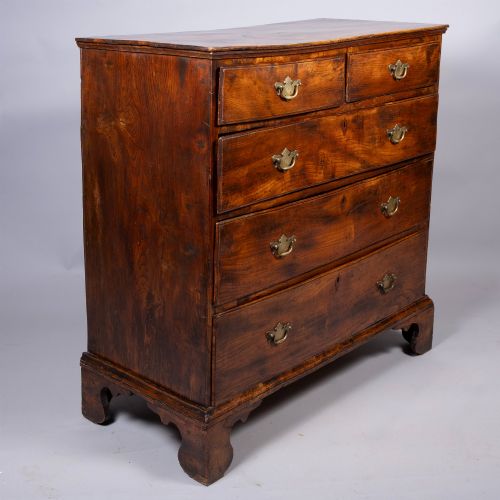


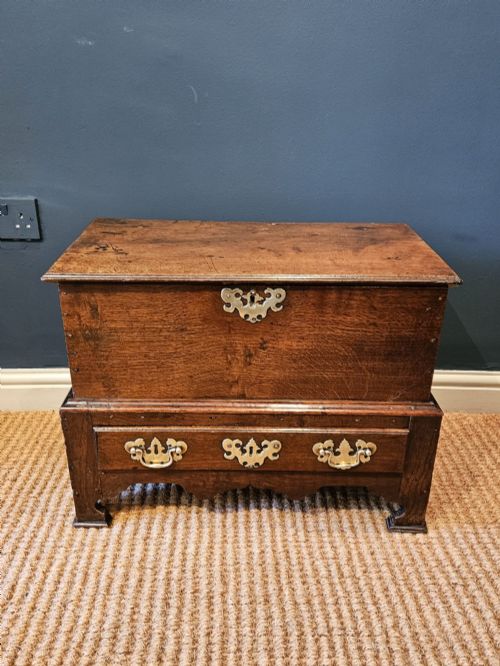
Oak Blanket Chest Drawers
These oak blanket chest drawers combine lidded storage with fitted lower drawers, spanning centuries of British vernacular and formal cabinet-making.
Oak Blanket Chest Drawers
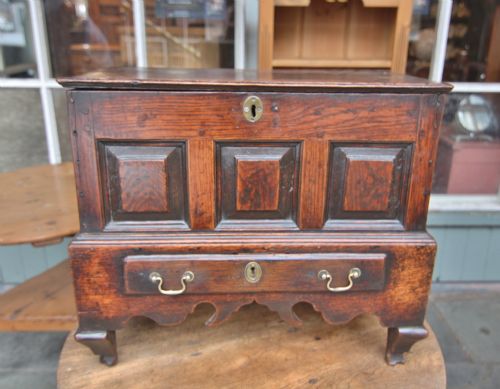
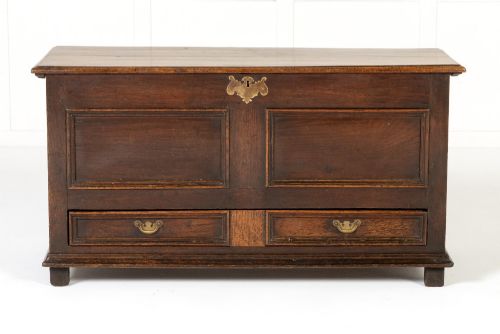
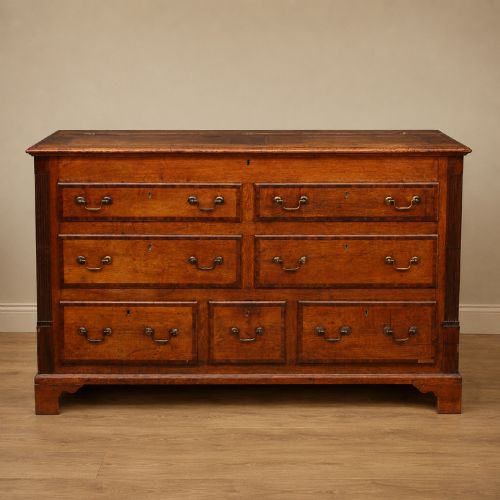
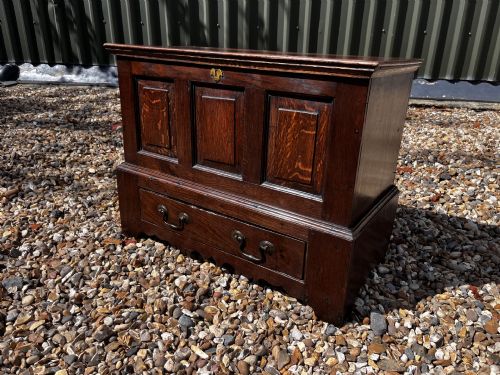
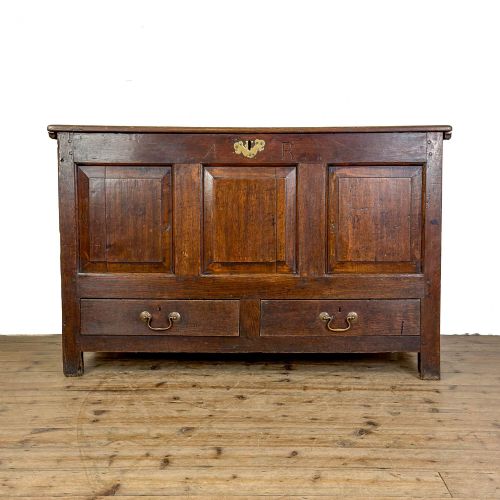
When searching for oak blanket chest drawers, buyers encounter sturdy storage furniture that bridges the gap between traditional coffers and drawer-based cabinets. These pieces primarily manifest as mule chests and coffer bach forms, incorporating one or more lower drawers beneath a lift-top compartment.
The pieces on this page span several centuries, originating from the 17th, 18th, and 19th centuries, with notable representation from Georgian and Jacobean periods. Regional variations, such as Welsh vernacular styles and Lancashire workshop designs, appear frequently among the listings.
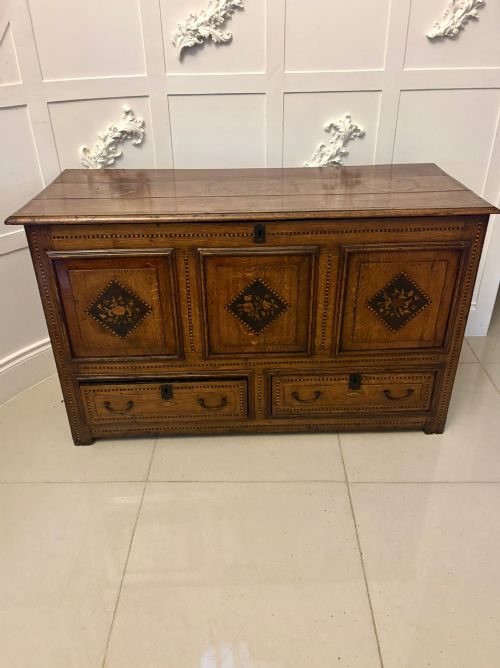
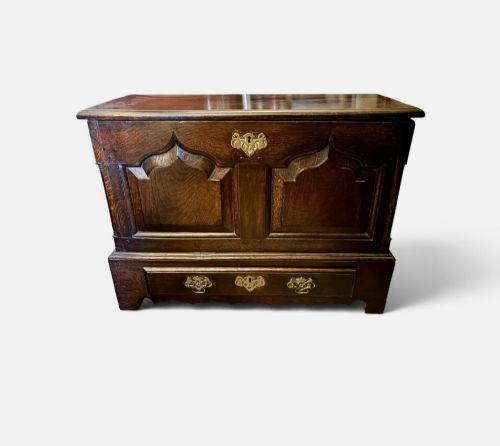
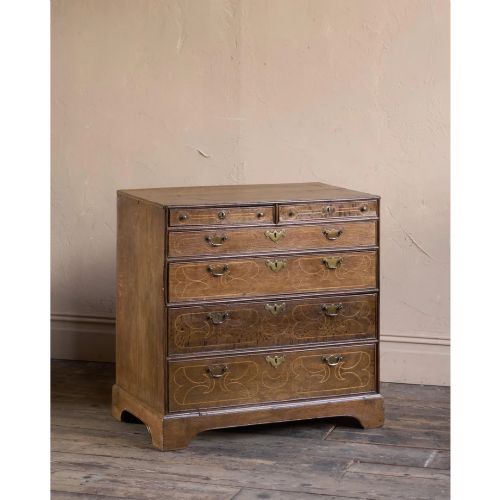
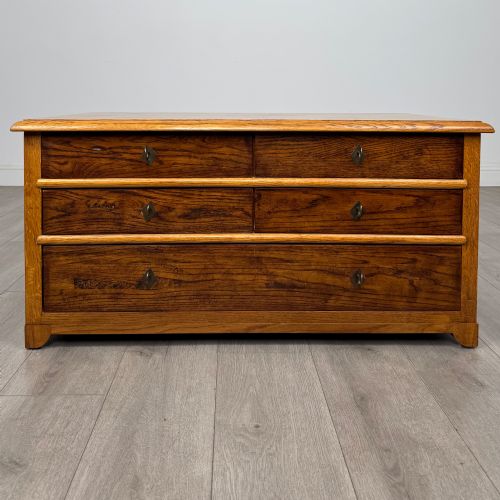
Forms range from large three-panel storage trunks with brass and iron hardware to diminutive coffer bach examples on turned feet. Many pieces integrate secondary timbers such as mahogany crossbanding, fruitwood inlay, and burr elm panels into the primary oak structure.
Materials and construction techniques
Cabinet-makers relied on solid oak for the primary structural framework, utilising framed-and-panelled construction to accommodate the natural seasonal movement of the timber. Joinery methods relied on pegged mortise and tenon joints to secure upright stiles and rails around floating panels.
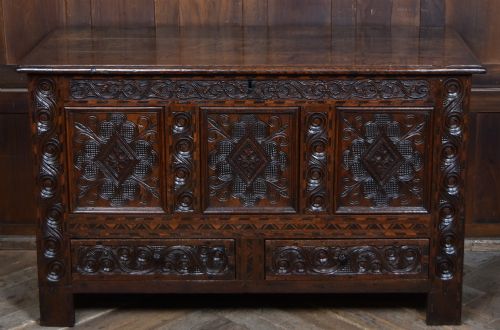
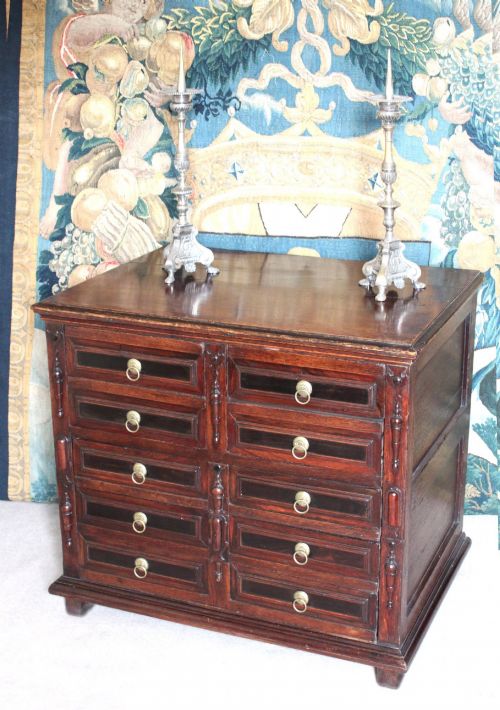
Decorative surfaces frequently incorporated contrasting woods and detailed carving, employing marquetry inlay, wood inlay, and geometric mouldings. Secondary materials such as brass and iron provided functional hardware for hinges, escutcheons, and drawer pulls.
Specialised variations included applied fruitwood details, mahogany crossbanding, and figured elm accents on panels and drawer fronts to elevate the visual contrast against the dark patinated oak ground.
At least one compact chest incorporates a carved Green Man mask peering out from beneath the lid.
Distinctions in construction and design
The refinement of the surface decoration and the sophistication of the joinery dictate the standing of an individual piece. Earlier 17th-century examples often display intricate geometric mouldings and crisp hand-carving, whereas 18th-century Georgian interpretations favour proportioned panel layouts and tidy crossbanding.
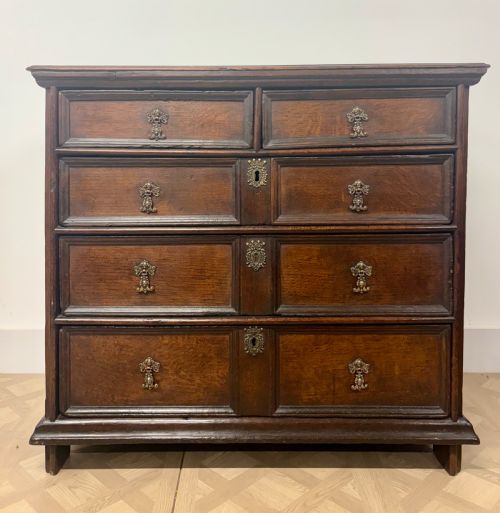
The integration of the lower drawer section relative to the upper coffer body determines structural cohesion. Superior examples maintain flush-fitting drawer tiers with hand-cut dovetailing that align cleanly with the base rail of the main trunk.
The depth of the natural patina and the retention of original brass or iron hardware influence the overall integrity of the piece. Untouched timber surfaces with deep, warm tones command higher regard among collectors than heavily restored or stripped equivalents.
The Oak Blanket Chest Drawers Glossary
- Mule Chest
- A storage chest featuring one or more drawers built into the base beneath a main lidded compartment. This form developed during the late 17th century as a hybrid of the traditional coffer and the chest of drawers.
- Coffer Bach
- A Welsh term translating to little coffer, denoting a miniature blanket chest or box, frequently elevated on feet or fitted with a single small drawer. These scaled-down pieces served specific domestic storage roles.
- Crossbanding
- A decorative border technique where thin strips of veneer are laid across the grain of the surrounding wood. This method creates a contrasting frame around drawer fronts or panel edges on Georgian furniture.
- Marquetry
- The art of applying decorative veneer pieces in geometric or pictorial patterns onto a structural surface. Cabinet-makers used varied wood species to build up intricate inlay designs.
- Stile
- The vertical outer member of a panelled frame, receiving the horizontal rails in mortise and tenon joinery. Stiles provide the primary structural skeleton for panelled oak chests.
Oak Blanket Chest Drawers: Frequently Asked Questions
What is a mule chest?
A mule chest is a traditional storage box that combines a hinged lid compartment at the top with one or more functional drawers arranged beneath the main body. This hybrid design emerged to bridge the gap between simple blanket trunks and multi-drawer storage cabinets.
Craftsmen built these pieces predominantly in oak during the 17th and 18th centuries. They served as versatile household furniture for linen, garments, and domestic valuables.
What is a coffer bach?
A coffer bach is a traditional Welsh miniature chest, often translated literally as little coffer. These smaller versions frequently feature a lift-top lid above a single small drawer and rest upon turned feet or bracket supports.
Historically produced throughout the 18th century, these diminutive pieces functioned as presentation boxes or specialised receptacles for precious household textiles. Their smaller scale distinguishes them from standard storage chests.
How do I date an oak chest?
Dating an oak chest involves examining the construction methods, tool marks left behind by craftsmen, and stylistic elements such as mouldings and hardware. Pieces from the 17th century typically display heavy framing, pegged joinery, and geometric panels, while Georgian examples show refined proportions and crossbanded veneers.
Changes in drawer construction, including the transition from pegged side-hung rails to hand-cut dovetailed boxes, also provide reliable chronological markers. Examining the wood's patina and secondary timbers helps confirm the period of manufacture.
Where were mule chests used?
These storage pieces found placement primarily in domestic bedchambers and main living spaces of country houses and farmhouses. Their dual function allowed families to store bulky bedding materials in the top well while keeping smaller garments organised in the base drawers.
In larger properties, they stood in hallways or landings for general household storage. Their robust oak construction ensured they withstood daily domestic traffic.