
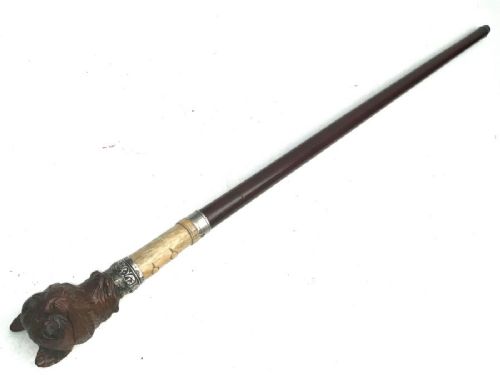
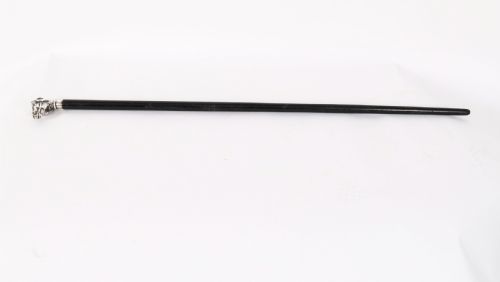
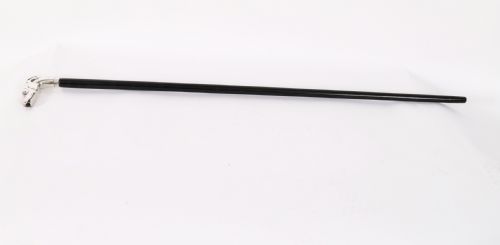
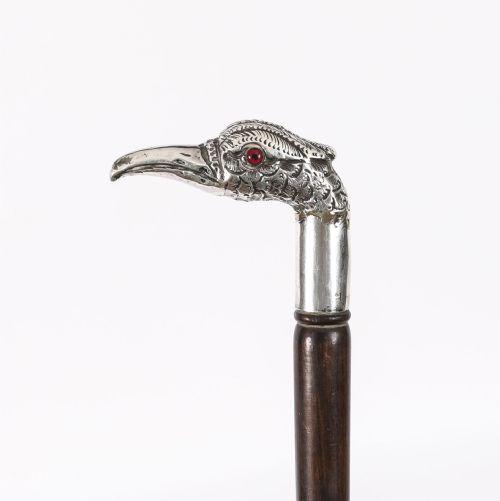
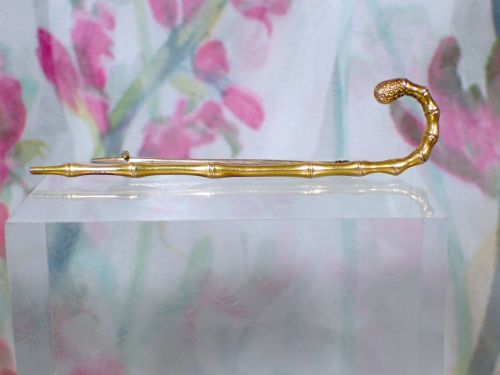


Novelty Walking Stick
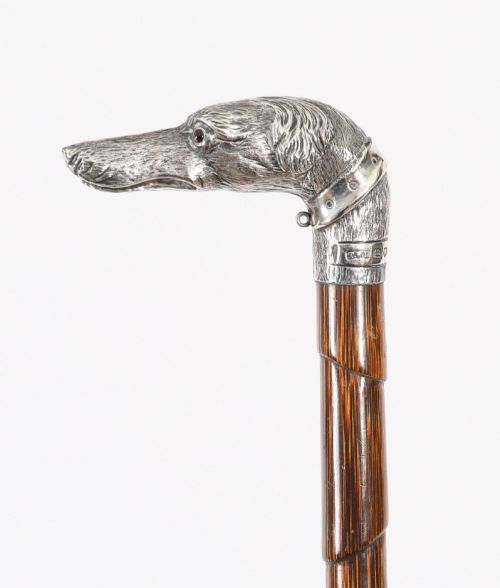
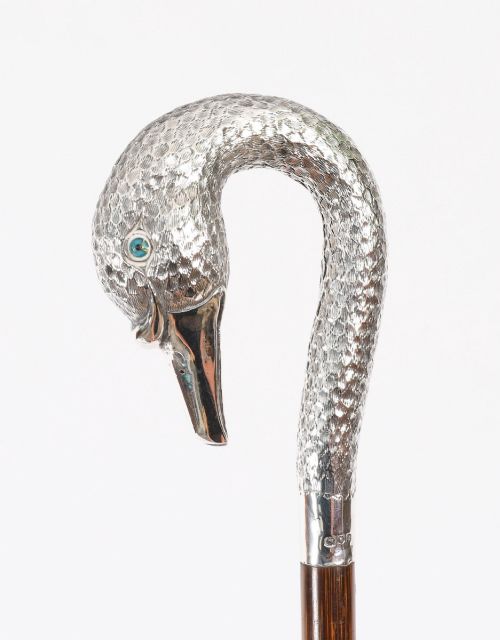
A novelty walking stick conceals a functional gadget, animal carving or mechanical surprise beneath a standard shaft.
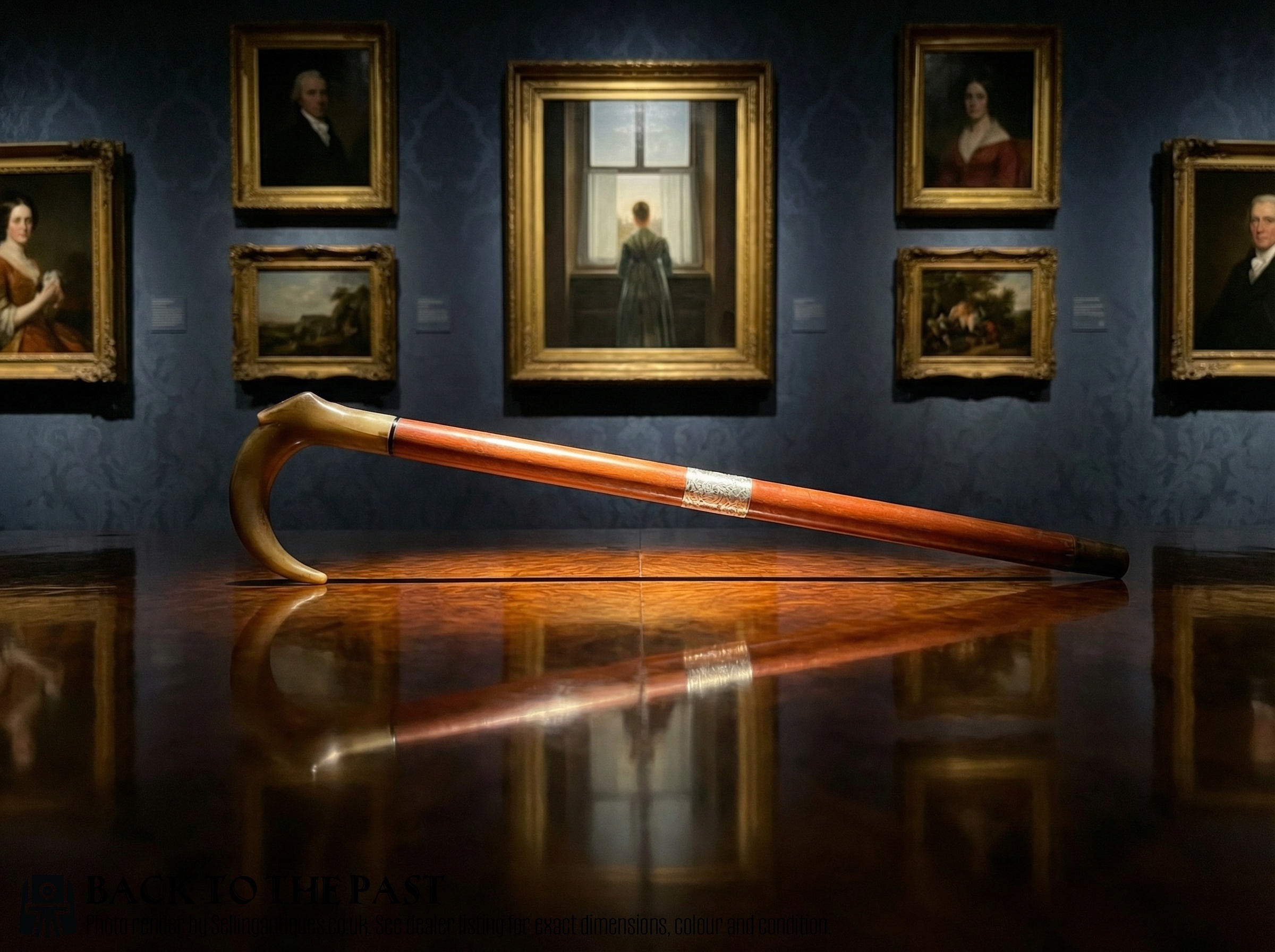
Identifying Novelty Walking Sticks
A novelty walking stick is a specialised cane designed with a hidden purpose, a figural handle or an unusual shaft. When you search for a novelty walking stick, you encounter 19th Century, Edwardian, and 1930 Art Deco examples.
Materials span timber, hardwood, bamboo, and malacca shafts paired with handles formed from silver, sterling silver, silver plate, horn, bone, and ivory. These pieces bridge everyday gentlemanly attire with concealed utility and carved ornamentation.
Materials and Construction
Constructed from natural timbers such as hardwood, bamboo, and malacca, these shafts provide the structural rigidity required for daily use. Handles and mounts utilise worked animal materials including bone, horn, and ivory alongside metals like silver and silver plate.
Mechanisms embedded within the cane require precise metalwork, seen in automated monkey mouths, hidden corkscrews, internal blades, and functional pen and pencil compartments. Carved figural handles demonstrate skilled hand work on organic mediums like horn and ivory.
Retail Price Guide 2026
Typical UK retail prices for novelty walking stick, calculated from the Sellingantiques database of over a million retail prices indexed since 2003. This retail price guide relies exclusively on Sellingantiques data; no external sources or auction records are used, so the figures do not describe the wider market.
Assessing Quality and Execution
Quality rests in the precision of the hidden mechanism and the fidelity of the carved handle. Articulated parts like an automated jaw or a concealed blade demand exact alignment to function smoothly within the timber shaft.
The choice of materials elevates a piece, distinguishing standard hardwood and silver plate from sterling silver mounts and finely carved ivory or horn. The integration of the gadget into the overall silhouette determines the success of the design.
The Novelty Walking Stick Glossary
- Gadget cane
- A walking stick that conceals a functional tool such as a sword, flute, or corkscrew inside the shaft. These dual-purpose items were popular among gentlemen during the nineteenth and early twentieth centuries.
- Helixophile
- A collector of corkscrews, often applied here to walking sticks featuring integrated corkscrew handles. Such pieces allowed the owner to carry a bottle opener disguised as a standard cane.
- Malacca
- A sturdy timber imported from Southeast Asia, prized for its mottled brown surface and resilience. It served as a favoured material for walking stick shafts.
- Snuff box
- A small lidded container built into the handle of a cane for holding powdered tobacco. This compartment reflects the social habits of the period.
- Automation
- Mechanical movement built into the figural handle of a cane, such as an opening mouth. This adds a layer of theatrical surprise to the object.
Frequently Asked Questions
What is a novelty walking stick?
A novelty walking stick is a cane that includes a hidden gadget, a mechanical action, or a figural carved handle.
These pieces combine standard walking support with concealed items like swords, flutes, and snuff boxes.
How were concealed swords used?
Concealed blades functioned as personal protection for gentlemen navigating city streets or rural paths after dark.
The sword blade fits securely inside the wooden shaft and locks with a hidden mechanism.
How do I date a cane?
Dating relies on stylistic markers, hallmarks on silver mounts, and the materials utilised in the construction.
Art Deco geometric lines point to the 1920s and 1930s, while Victorian pieces often feature carved ivory, bone, or elaborate silver work.
Are these sticks functional?
Many of these sticks served as genuine walking aids while housing secondary tools within the handle or shaft.
Mechanical elements and internal instruments like flutes or pencils remain operable in well-preserved examples.