




Nomadic Tribal Embroidery
Nomadic tribal embroidery brings vivid Central Asian textile art into modern spaces as striking wall hangings and ceremonial covers.
Nomadic Tribal Embroidery
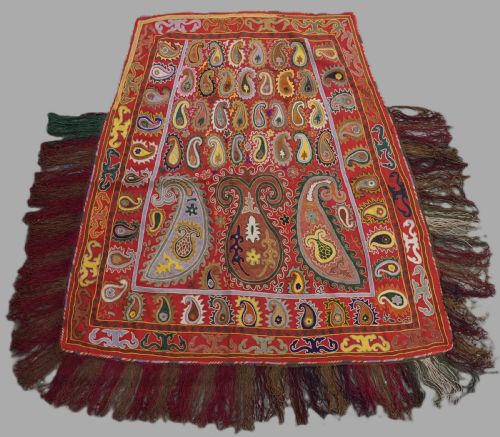
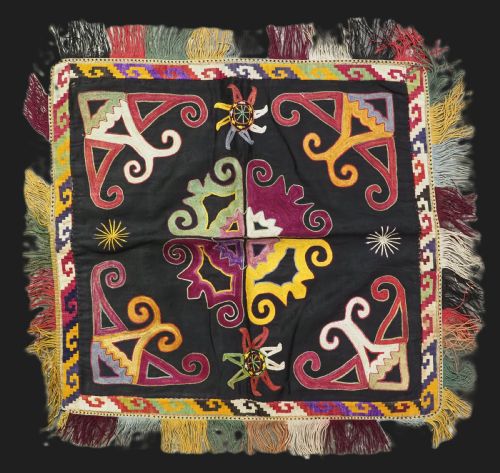
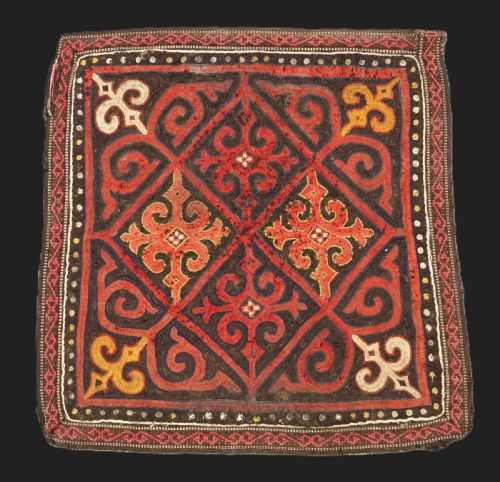
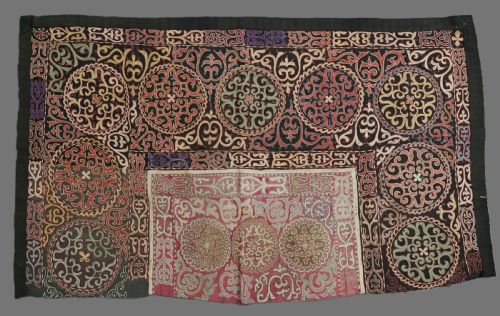
Nomadic tribal embroidery comprises utilitarian and ceremonial textiles produced across Central Asia by groups such as the Lakai, Yomut Turkmen, Ersari Turkmen, Kirghiz, and Banjara tribes. These pieces include wall hangings, dowry embroideries, horse blankets, saddle covers, bed decorations, and yurt wall hangings originating from the late nineteenth century into the early decades of the twentieth century.
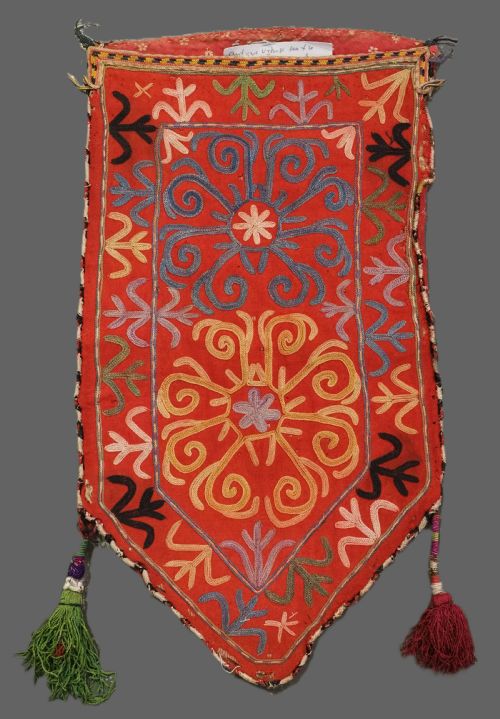
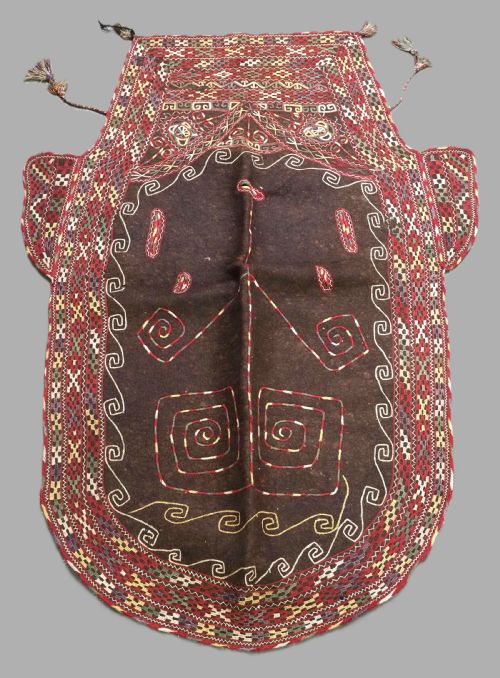
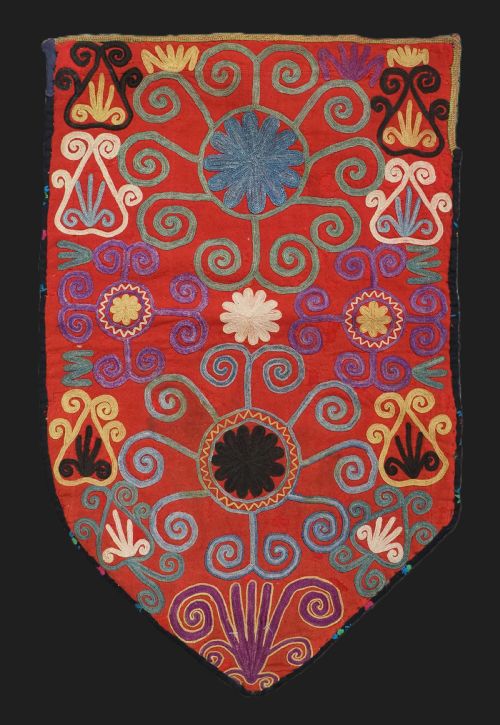
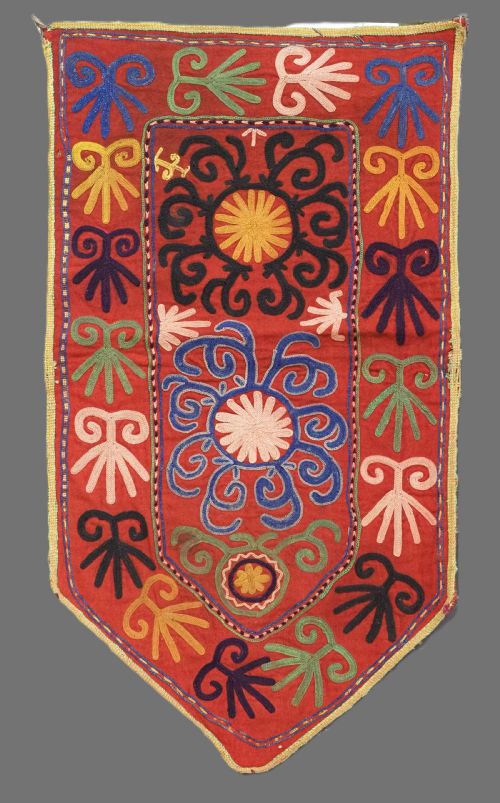
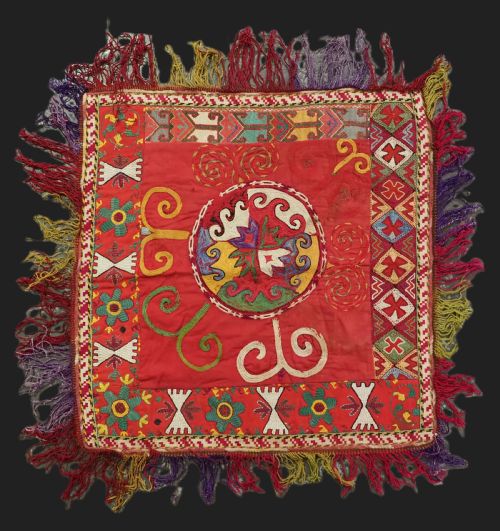
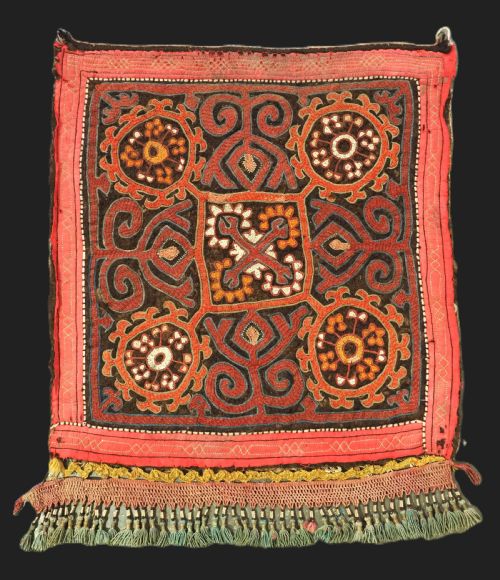
The most common items found on this page are Uzbek Lakai tribe ilgich and uut kap ilgich pieces, which functioned as dowry embroidery and bag faces designed for wall hanging. Alongside these hangings, buyers encounter felt panels, horse covers, and specialised domestic textiles constructed in regions like Shakrisabz.
These textiles reflect indigenous nomadic aesthetics spanning Central Asian tribal and nomadic styles, often utilising bold geometric and figurative motifs. They served practical and decorative functions within traditional yurt and domestic environments.
Materials and construction
Makers constructed these textiles using wool, cotton, and felted wool as ground materials, frequently employing Mogul red wool grounds for specific pieces like uut kap ilgich. Artisans applied silk and cotton threads to execute dense surface stitching, sometimes adding applied fringes and horsehair tassels.
Several ceremonial pieces incorporate actual horsehair tassels alongside intricate silk embroidery.
Quality variations
Quality in these embroideries depends on the precision of the needlework, the density of the silk or cotton thread used on the ground material, and the integrity of the base felt or wool. Pieces exhibiting intricate stitch work and complex geometric arrangements stand apart from simpler iterations.
Condition remains a factor, with well-preserved textiles retaining vibrant thread colours and intact fringes or horsehair tassels without extensive degradation to the wool or cotton foundations.
The Nomadic Tribal Embroidery Glossary
- Ilgich
- A Central Asian embroidery piece, often made as dowry embroidery for wall hanging by the Lakai tribe. These works typically display energetic geometric designs in silk on wool.
- Uut Kap
- A storage bag or bag face from Central Asian nomadic traditions. They were used inside yurts and frequently embroidered with vibrant silk threads.
- Torba
- A small wall hanging or tent bag utilised in Turkmen households. These items often feature detailed face embroidery with silk highlights.
- Suzani
- A traditional embroidered textile originating from Central Asia. They were created as dowry pieces and wall decorations.
Nomadic Tribal Embroidery: Frequently Asked Questions
What is nomadic tribal embroidery?
Nomadic tribal embroidery refers to hand-stitched textiles made by traditional groups in Central Asia, including the Lakai, Turkmen, Kirghiz, and Banjara tribes. These works include wall hangings, dowry pieces, and horse covers created during the late nineteenth and early twentieth centuries.
Maker groups utilised materials like wool, felt, cotton, and silk to produce utilitarian and decorative items designed for domestic yurt life.
How do I hang a textile on the wall?
Wall hangings and ilgich panels require careful mounting to distribute the weight evenly across the fabric without causing strain. Conservation-grade mounting methods, such as custom fabric sleeves or gentle stitching to a padded backing board, help protect wool and silk fibres.
Direct exposure to bright sunlight should be avoided to prevent fading on Mogul red wool grounds and silk embroidery threads.
How do I tell Kyrgyz and Uzbek pieces apart?
Uzbek Lakai tribal pieces frequently feature spirited silk embroidery on wool grounds, utilising specific forms like ilgich wall hangings and uut kap bag faces with dynamic geometric compositions. Kyrgyz works often incorporate embroidered felt panels, such as large tush kyiz wall hangings or felt ok bash items with horsehair tassels.
Examining the primary ground material and distinct tribal design vocabulary clarifies the geographic and cultural origin of each textile.