




Ochre Wall Hanging
An ochre wall hanging brings rich, earthy warmth into a room, spanning centuries of textile craft and painted art.
Ochre Wall Hanging
When you search for an ochre wall hanging, you encounter a diverse range of textiles, paintings, and panels spanning from the eighteenth century to the mid-twentieth century. These pieces encompass woven tapestries, embroidered dowry panels, temple paintings, and tile plaques created across various regions.
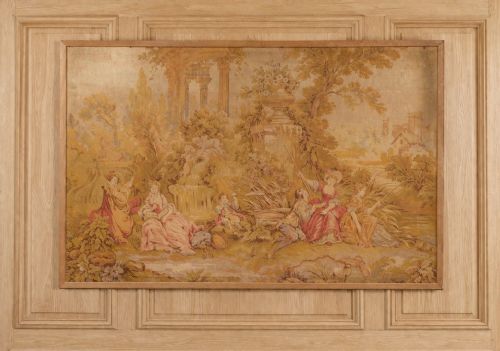
The selections available on this page include traditional Indian Kalamkari temple paintings, Central Asian Suzani and Lakai tribe embroideries, and French woven tapestry panels. Alongside these textiles, you find oil paintings on canvas and Arts and Crafts ceramic tile plaques mounted for display.
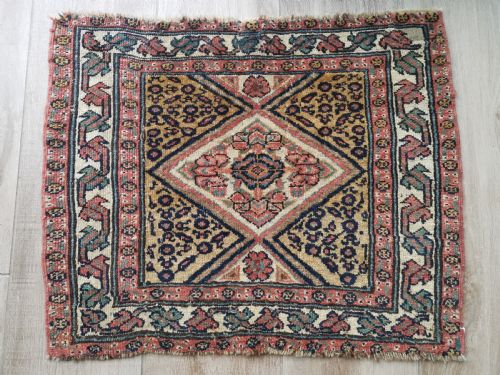
Makers and artisans utilised natural materials to achieve deep yellow and brown tones across diverse cultural traditions, ranging from Persian bagfaces to Turkish silk rugs adapted for vertical display.
How they were made
Textile wall pieces rely on traditional techniques such as embroidery, weaving, and Kalamkari hand-painting on cotton, wool, silk, and canvas grounds. Artisans employed natural dyes to produce lasting earthy hues.
Rigid wall art incorporates oil paint on canvas, glazed ceramic set within earthenware, and wood framing to support and display fragile antique panels.
Ochre Wall Hanging Retail Price Guide 2026
Typical asking prices for ochre wall hanging among the pieces listed under this phrase on Sellingantiques today, from the lower quarter to the upper quarter. They describe what is for sale here now, not the wider market.
The selection includes Arts and Crafts tile plaques, French chateau tapestries, and Central Asian tribal embroideries.
What varies in quality
Quality depends upon the fineness of the execution, whether in the precision of needlework on tribal embroideries or the brushwork detail on canvas triptychs and tile plaques. The preservation of the original fabric or surface layer dictates the overall integrity of the piece.
The complexity of the design, such as large medallion variants in Suzanis or intricate iconography in Indian temple paintings, separates standard decorative items from superior examples of period craftsmanship.
The Ochre Wall Hanging Glossary
- Kalamkari
- A traditional type of hand-painted or block-printed cotton textile originating in India. These pieces often depict Hindu stories and mythological narratives.
- Suzani
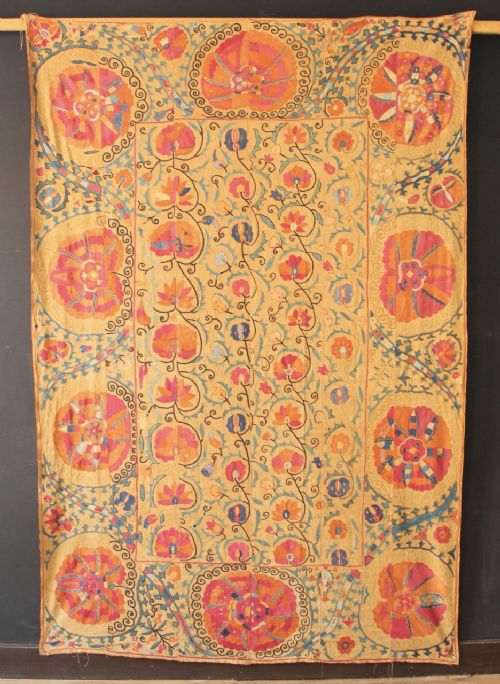
- A type of embroidered tribal textile originating from Central Asia, typically featuring large medallion motifs and floral patterns worked in silk or wool on a cotton ground.
- Triptych
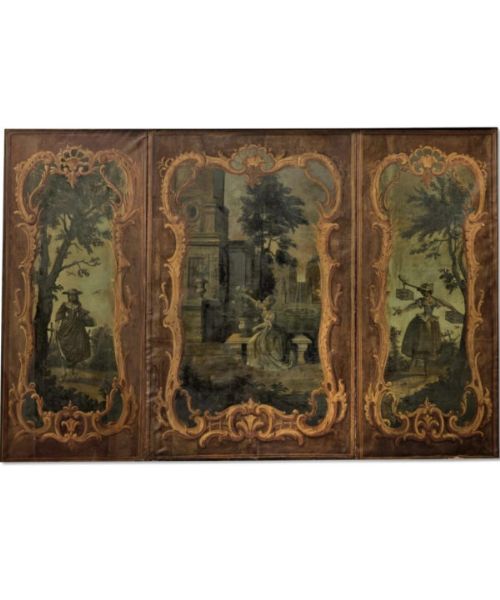
- A work of art divided into three sections, often seen in painted panels or folding screens. Each section complements the central theme.
- Bagface
- The front portion of a tribal weaving or storage bag, removed and preserved as a decorative textile wall hanging.
Ochre Wall Hanging: Frequently Asked Questions
How do I hang an antique textile safely?
Support heavy textiles evenly by using a sleeve sewn to the back or by mounting the piece on a padded wooden batten. Avoid pinning directly through fragile antique fabrics.
Keep woven and painted wall pieces away from direct sunlight and damp environments to preserve the integrity of the natural fibres and pigments.
What is a Kalamkari wall hanging?
A Kalamkari wall hanging is a traditional painted or block-printed cotton textile from India. These pieces frequently illustrate elaborate mythological scenes and traditional narratives.
They offer a distinct narrative element to interior spaces through the use of natural vegetable dyes on woven cotton.
How do I identify a Suzani embroidery?
Suzanis are large, embroidered tribal textiles from Central Asia created as part of traditional dowries. They typically display bold floral motifs and central medallion designs worked in vibrant thread on a plain ground.
Examining the reverse side reveals the hand-stitched needlework characteristic of nineteenth-century nomadic production.
Can I display a Turkish silk rug on the wall?
Turkish silk rugs and smaller pile-woven formats transition well to vertical display when properly secured. Their detailed knotting and fine materials provide rich texture and colour to interior walls.
Ensure the mounting method distributes the weight evenly across the entire upper edge of the rug to prevent distortion.