


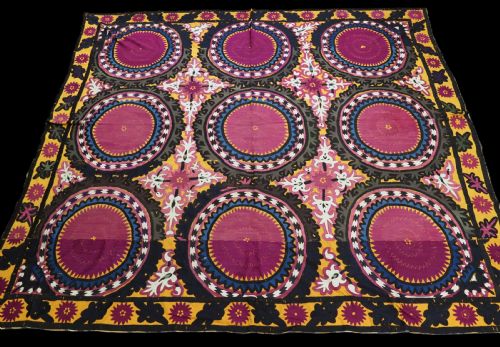


Yellow Silk Embroidery
Yellow silk embroidery pieces are striking textile works featuring vibrant needlework on silk and cotton, prized for their rich colour and cultural depth.
Yellow Silk Embroidery
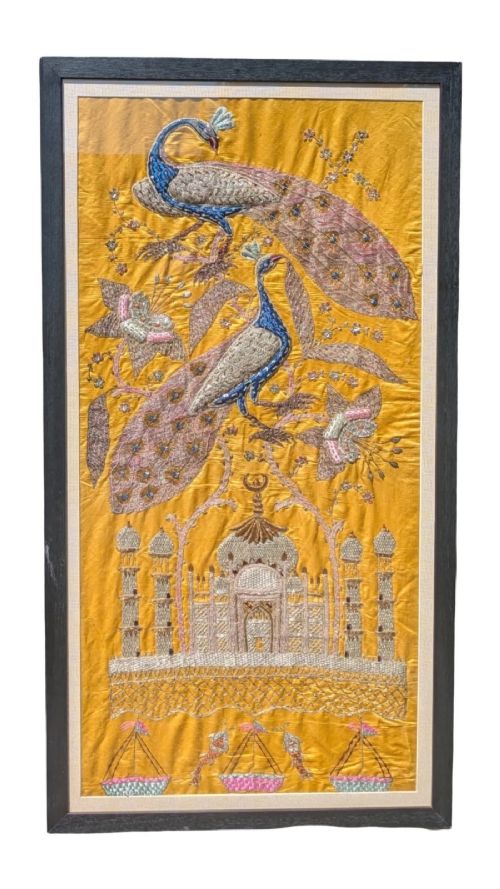
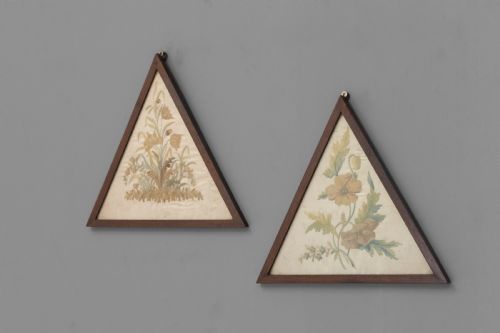
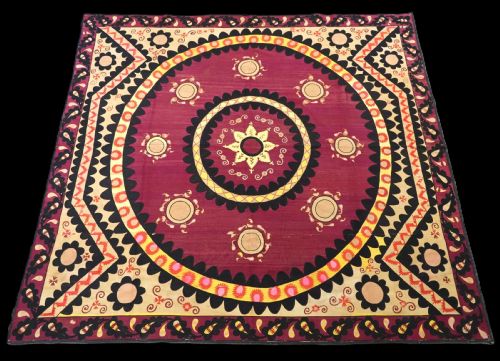
When you search for yellow silk embroidery, you encounter a range of textile formats including framed panels, wall hangings, and large medallion variant suzanis. These pieces span origins from Central Asia and India, reflecting diverse regional textile traditions.
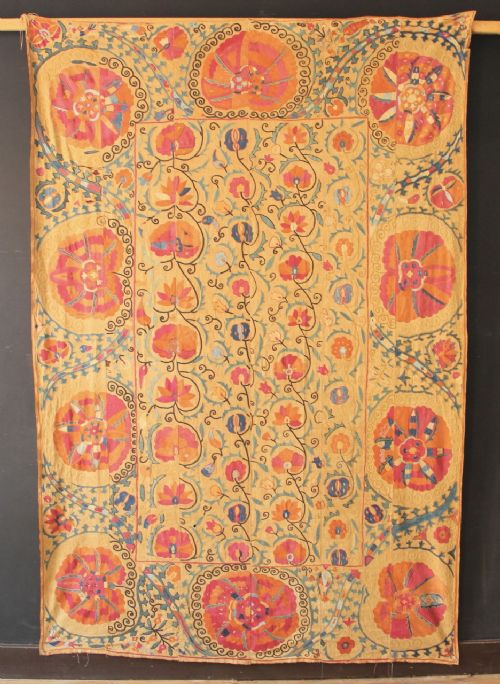
The version you are most likely to meet on this page is the Uzbek suzani, typically worked in silk embroidery on a yellow cotton ground. Such pieces date across the nineteenth and early twentieth centuries, encompassing styles such as Central Asian tribal and English country house.
Objects range from prayer suzanis and Tashkent palak suzanis to dowry embroideries like the Lakai tribe ilgich. Each form serves a distinct decorative or cultural purpose, displaying specific regional motifs and formats.
Assessing quality
The standard of a piece depends heavily on the density of the needlework and the complexity of the design layout, such as fully embroidered palak suzanis versus simpler panels. Finer examples display meticulous execution in the silk threads and balanced composition across the ground.
Condition and colour retention significantly influence the overall appeal of these textiles, alongside the crispness of regional motifs. Pieces retaining vibrant hues and intact foundations represent the stronger end of the range.
Peacocks occasionally make an appearance alongside traditional Central Asian medallions, proving that historic artisans enjoyed a bit of decorative variety.
The Yellow Silk Embroidery Glossary
- Suzani
- A traditional embroidered tribal textile from Central Asia, usually featuring large-scale floral or geometric designs worked on a cotton or silk ground. These pieces were often created as part of a bride's dowry.
- Palak
- A specific type of suzani characterised by a fully embroidered ground where the background fabric is almost entirely covered in silk needlework. This style requires immense labour and skill from the maker.
- Ilgich
- A small embroidered hanging produced by the Lakai tribe, traditionally used for domestic decoration or as dowry items. They are known for their distinct tribal aesthetics and compact formats.
- Prayer format
- A textile design layout featuring a mihrab or arch motif, historically associated with prayer rugs but adapted into decorative suzanis. This format directs the visual focus toward the centre of the composition.
Yellow Silk Embroidery: Frequently Asked Questions
What is a suzani?
A suzani is a type of embroidered textile originating from Central Asia, traditionally made as part of a dowry.
These pieces feature intricate silk needlework on cotton grounds and serve primarily as wall hangings or decorative panels.
How were these textiles used?
Historical examples functioned primarily as wall hangings, decorative covers, and dowry items within Central Asian households.
Today, many are framed or hung directly on walls to display their vibrant needlework and cultural motifs.
How do I date these embroideries?
Dating relies on stylistic analysis, material examination, and historical markers associated with specific nineteenth and early twentieth-century workshops.
Regional variations in design and dye usage provide further clues to the period of origin.
How do I care for antique silk embroidery?
Protect these textiles from direct sunlight to prevent the silk threads and cotton grounds from fading over time.
Display them away from high humidity and handle the fabrics gently to preserve the delicate needlework.