


Indian Textile Art
Indian textile art brings rich colour and centuries of handwork into a room, offering everything from painted wall cloths to framed embroideries.
Indian Textile Art
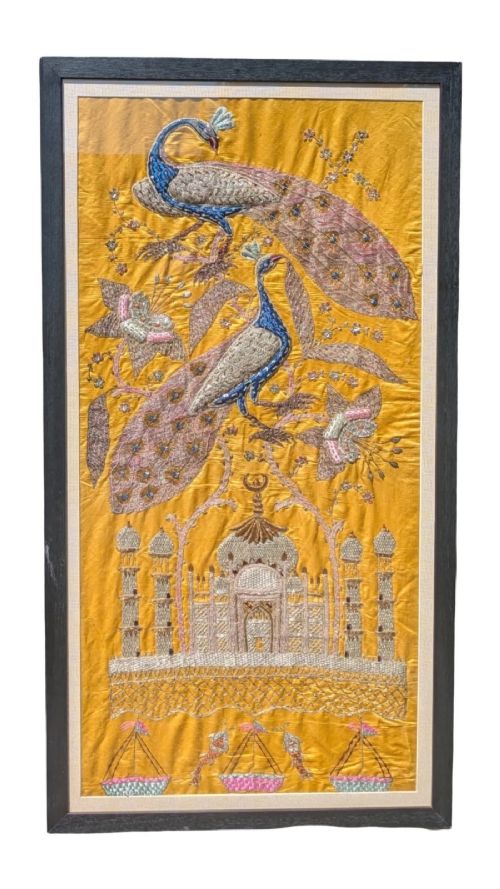
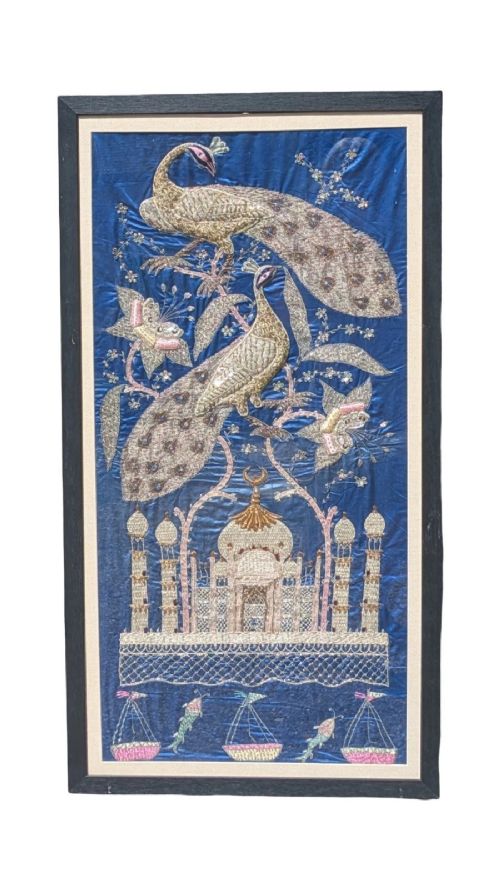
When you search for indian textile art, you encounter a diverse selection of wall hangings, framed pieces, and sculptural items spanning the nineteenth century, nineteen-hundred, and Edwardian eras. These works range from painted wall cloths depicting Hindu stories to embroidered silk panels featuring the Taj Mahal and peacocks.
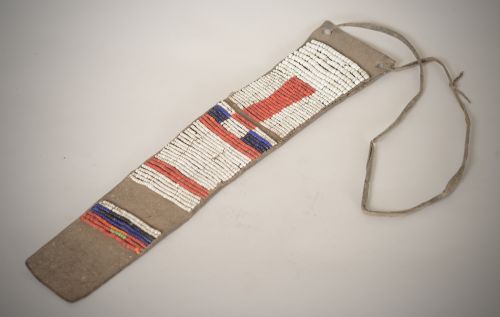
You are most likely to meet framed embroideries on silk, large Kalamkari temple paintings, and mounted spinning wheels such as oak charkras. The selection also includes tribal beadwork and Indo-Persian carved hardwood models that reflect traditional craftsmanship.
The objects combine fabrics with structural elements like wood, glass, and iron to create visually striking wall art and decorative sculptures. Each piece carries distinct motifs from Indian, Anglo-Indian, Indo-Persian, and tribal traditions.
How they were made
The makers utilised natural textiles including cotton, silk, wool, and velvet as the primary canvas for intricate needlework and surface design. Artisans incorporated metallic thread to add shimmering detail and depth to pictorial scenes.
Pigments were applied directly to fabrics and cloths to create detailed narrative scenes, such as depictions of Krishna with his wives or temple stories. Skilled woodcarvers shaped hardwood, oak, and other timbers to produce spinning wheels and sculptural processional horses.
Textiles often featured specialised techniques like traditional Kalamkari work, where designs were painted or block-printed onto cloth. Beadwork and embroidery demanded precise hand stitching using cotton and silk threads on heavy fabric bases.
Listings feature items from the 19th Century, 1900, 1930, and the Edwardian period.
What varies in quality
The fineness of the needlework and the complexity of the painted details dictate the level of execution in each textile. Pieces featuring dense embroidery, varied metallic threads, and carefully layered pigments demonstrate superior artistry.
The preservation of the underlying fabric and the stability of mounted elements, such as wooden spinning wheels or frames, influence the overall integrity of the piece. Superior examples maintain the vibrancy of their original pigments and the tightness of their weave or stitching.
The Indian Textile Art Glossary
- Kalamkari
- A traditional method of hand-painted or block-printed textile art originating in India. These works often depict Hindu stories and temple scenes.
- Charkra
- A traditional spinning wheel used for processing fibres like cotton and wool. Examples are occasionally mounted as decorative objects.
- Banjara gala
- A specific style of embroidered textile piece originating from nomadic communities. These items often feature dense needlework and decorative elements.
- Indo-Persian
- A style that blends Indian and Persian artistic traditions, visible in carved wooden figures and decorative motifs.
Indian Textile Art: Frequently Asked Questions
How do I hang indian textile art?
Many pieces arrive framed or mounted, making them ready to place directly onto a wall using appropriate fixings for their weight.
Larger textiles and wall hangings require careful support along the top edge to distribute the weight evenly across the fabric without causing strain.
What periods do these pieces come from?
The available selection primarily spans the nineteenth century, the year nineteen-hundred, and the Edwardian era.
Individual pieces reflect traditional craftsmanship from these periods, including specific regional techniques and materials.
Are all indian textile art pieces made of fabric?
While fabric is central, many listings incorporate other materials such as carved wood, glass, iron, and metallic thread.
Some objects combine textiles with structural wooden components like spinning wheels or sculptural models.
How do I care for antique textiles?
Keep textile art out of direct sunlight to prevent the natural pigments and silk threads from fading over time.
Display them in stable indoor environments away from excessive moisture and handle the fabric surfaces as little as possible.