




Metallic Thread Embroidery
Metallic thread embroidery comprises historic textiles worked in precious metal wires, bringing lasting lustre to garments, hangings and framed panels.
Metallic Thread Embroidery
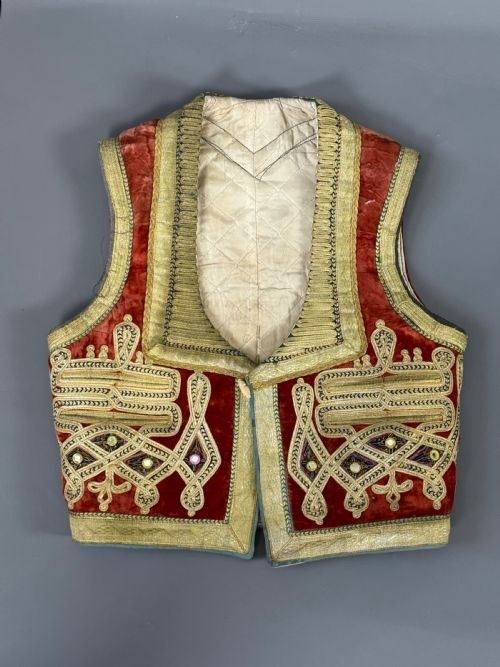
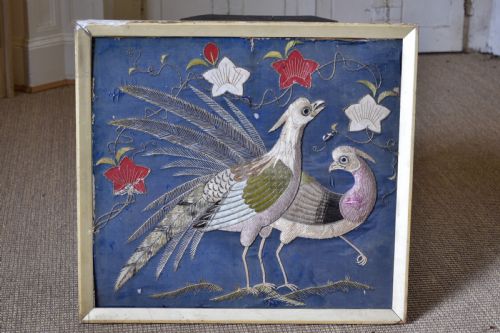
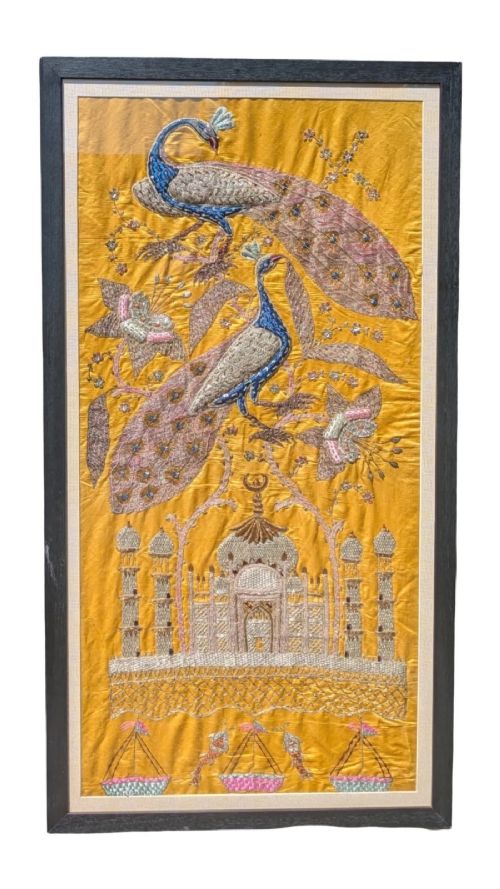
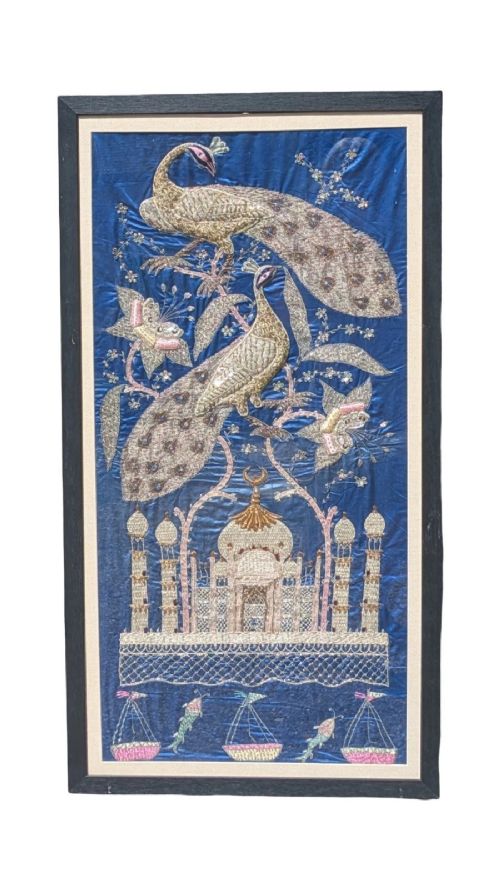
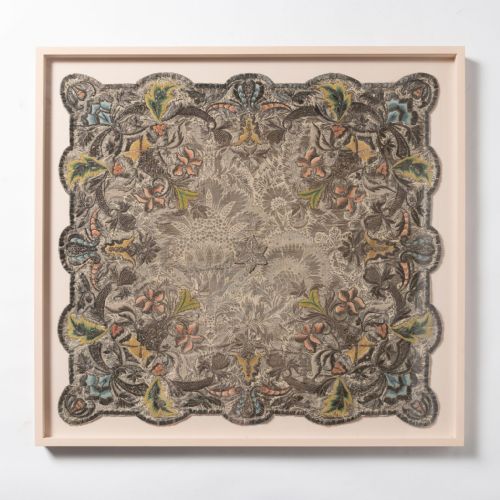
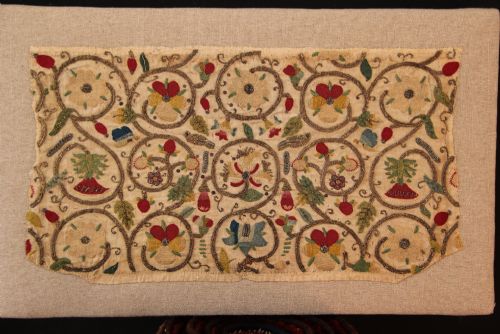
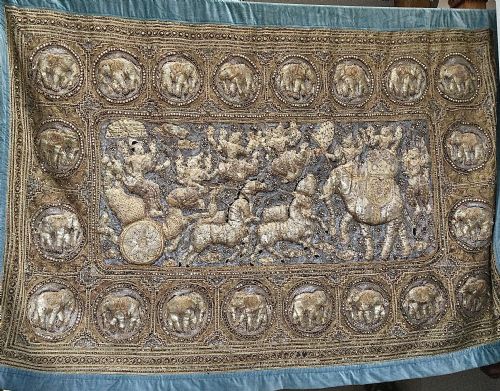
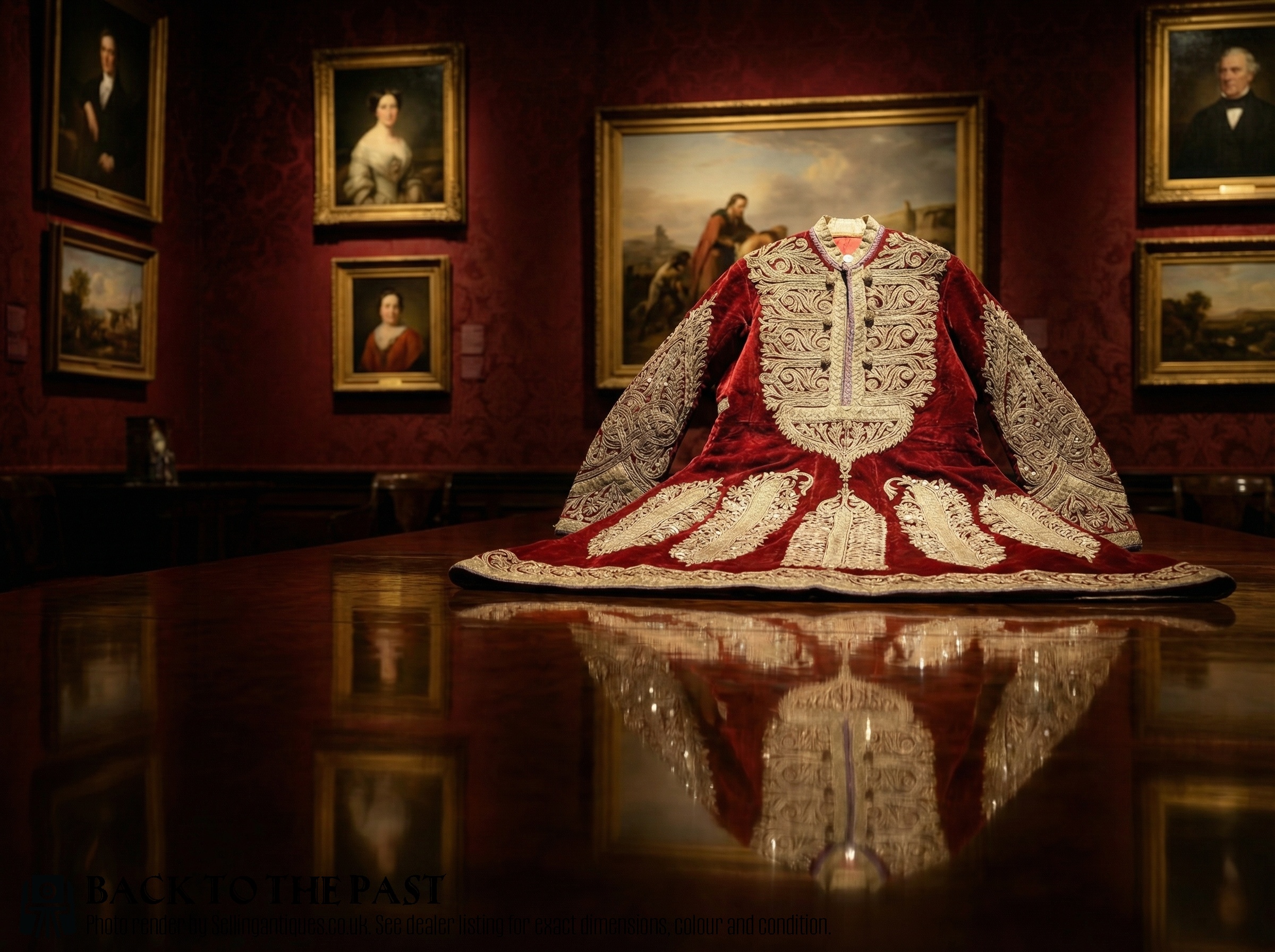
Metallic thread embroidery encompasses historic textile pieces ranging from framed panels and wall hangings to traditional garments such as waistcoats, dresses and jackets. The selection draws on global traditions, featuring Ottoman waistcoats, Indian silk depictions of the Taj Mahal, and early English coifs.
The pieces on this page span several centuries, with items originating from the seventeenth century through to the nineteenth century and the early twentieth century. Buyers will frequently encounter framed Dutch panels, Ottoman covers and South Asian textiles alongside domestic European needlework.
How they were made
Needlework of this type relies on foundational textiles such as silk, velvet, wool and cotton, worked with metal thread, silver thread, gold thread and occasionally glass beads or sequins. Ground fabrics vary from heavy woven velvet to fine silk tülbent and wool.
Execution involves applying metal strips and wrapped threads directly to the ground cloth, often combined with silk embroidery stitches to create relief effects and pictorial depth. Many examples utilise specialised brocade work to secure the precious metal elements across the surface.
Metallic Thread Embroidery Retail Price Guide 2026
Typical asking prices for metallic thread embroidery among the pieces listed under this phrase on Sellingantiques today, from the lower quarter to the upper quarter. They describe what is for sale here now, not the wider market.
Peacocks and the Taj Mahal gaze out from nineteenth-century silks, proving that historic artisans loved a grand tourist view just as much as modern travellers.
What varies in quality
Quality rests upon the preservation of the delicate metal threads and the underlying silk or velvet ground, where minimal loss indicates careful historical storage. Finer examples display intricate pictorial detail, such as architectural precision in architectural scenes or complex symmetry in floral motifs.
The skill of the original needlework dictates the visual impact, with dense metalwork and secure couching separating superior artistic output from simpler domestic execution. Provenance and the integrity of framed displays or original garment forms also influence the standing of an individual piece.
The Metallic Thread Embroidery Glossary
- Coif
- A close-fitting cap worn in early periods, often highly decorated with metal thread embroidery. These small caps frequently survive as prized textile fragments.
- Brocade
- A class of richly decorative shuttle-woven fabrics, often made with coloured silks and metallic threads. In these listings it describes raised surface pattern work.
- Couching
- An embroidery technique where threads or metal wires are laid across the surface of the fabric and fastened down with small stitches of fine thread. This method preserves precious metal from excessive wear.
- Fragment
- A surviving portion of a larger historic textile, such as a panel or garment piece. Fragments allow close inspection of historical needle techniques.
Metallic Thread Embroidery: Frequently Asked Questions
How should I clean antique embroidery?
Antique metal thread embroidery requires professional conservation rather than standard cleaning methods. Moisture and friction can easily damage aged silk grounds and tarnish metal wires.
Dust should be gently removed with a soft brush, and framed pieces ought to remain sealed behind glass away from direct sunlight.
Can I hang these textiles on the wall?
Many pieces are already mounted as framed textile art or wall hangings specifically for display. Heavier garments and covers require specialist mounting to support their weight evenly.
Avoid placing any textile in areas prone to dampness or fluctuating temperatures to protect the fibres.
How do I date metal thread work?
Dating relies on the style of the embroidery, the weave of the ground fabric, and the characteristics of the metal threads used. Comparative study of period garments and regional motifs helps narrow down the origin.
Documentation or provenance from previous collections also assists in establishing a reliable timeframe.
Are these pieces fragile?
Historic textiles naturally demand careful handling due to the age of the silk, velvet and metal components. Silk grounds can become brittle over centuries of exposure to light and air.
Minimal handling and stable environmental conditions ensure these historic works survive for future generations.