





18th Century Silk Textile
An 18th century silk textile brings tactile depth and centuries of historical handwork into a room.
18th Century Silk Textile
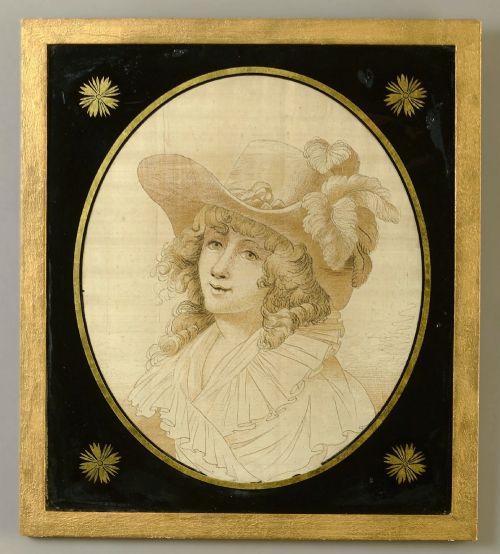
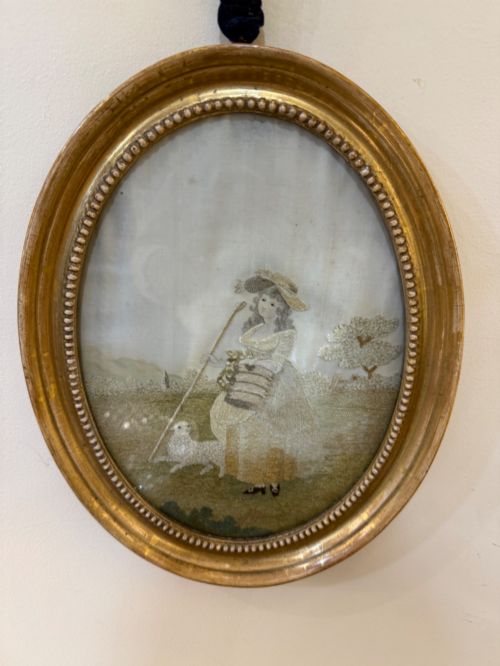
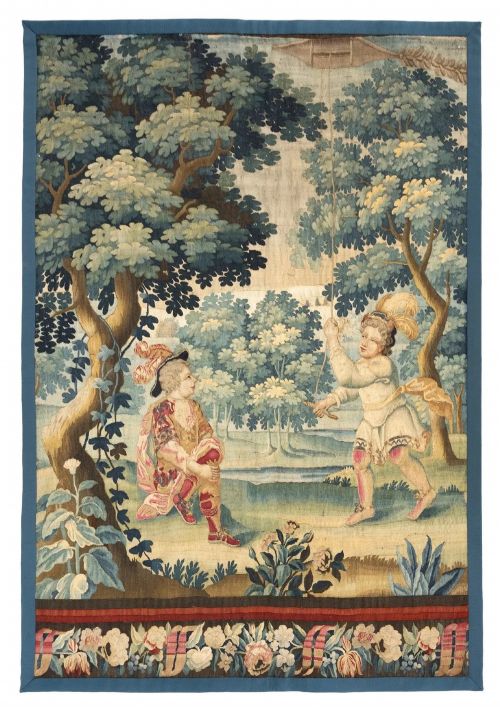
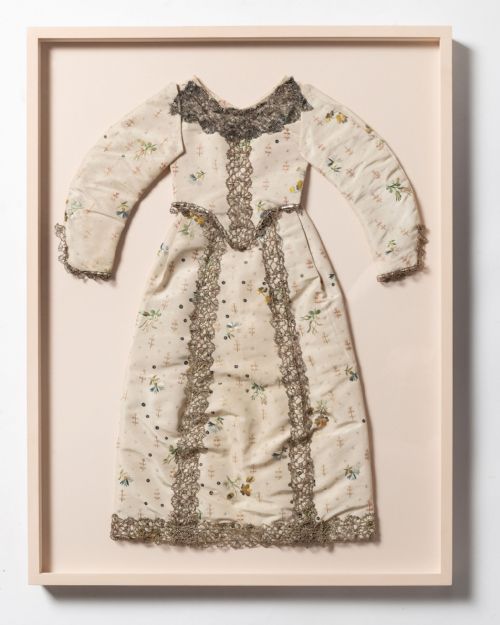
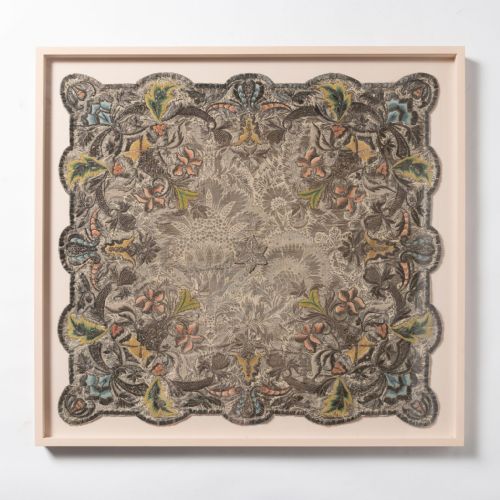
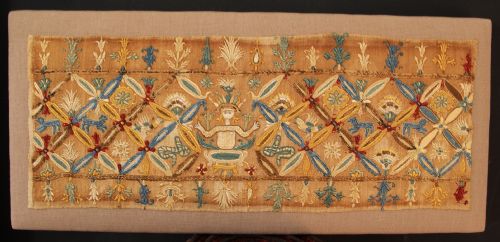
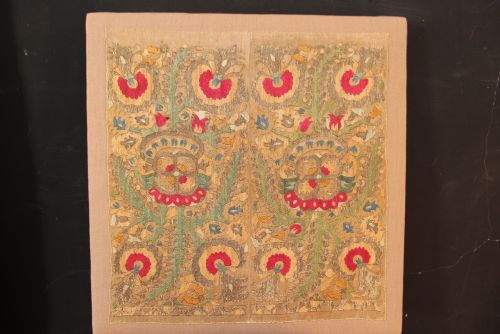
When you search for an 18th century silk textile, you encounter a diverse survival of woven, embroidered and needleworked pieces. These range from framed portraits and pastoral pictures to large wall tapestries, bedsheet borders and hand towel end panels. The selection spans domestic samplers and grand European wall hangings alike.
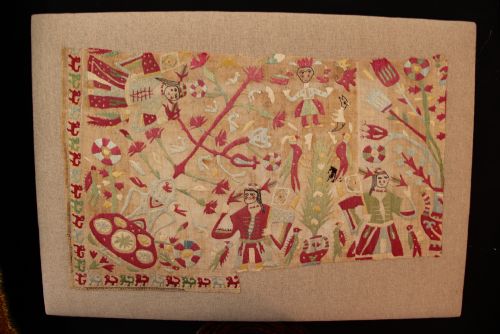
The versions most frequently met on this page include framed needlework pictures, embroidered map samplers, and lengths of woven fabric such as lampas and ciselé silk velvet. Pieces originate from English, French, Flemish, Greek and Ottoman workshops, reflecting varied regional techniques of the era. Many pieces retain original framing or mounting, preserving delicate fibres for modern display.
Materials and construction
Materials combine silk threads and floss with supplementary elements such as metal thread, wool, linen and glass beads. Ground fabrics range from fine woven silk and velvet to sturdy linen backings that support heavy embroidery.
Techniques rely entirely on manual dexterity, encompassing flat stitching, raised needlework, tapestry weaving and complex loom work like lampas. Embroiderers and weavers utilised specialised stitches to render pictorial details, landscapes and script, while taposseriers built large verdure scenes using wool and silk yarns.
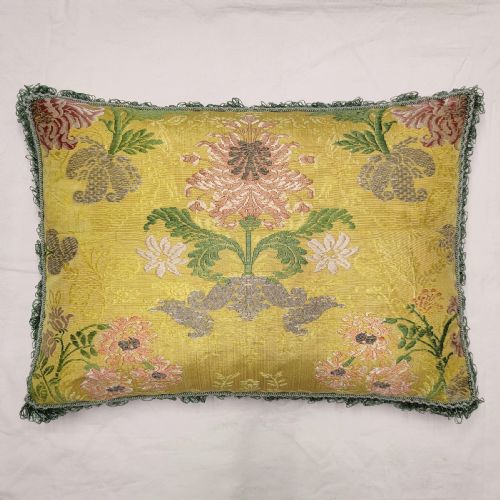
Listings feature 18th century silk textiles spanning woven lampas, embroidered samplers, verdure tapestries and ciselé silk velvet from English, French, Flemish and Greek origins.
Factors determining quality
Quality rests primarily on the execution of the needlework or weave and the preservation of the material. Finer pieces demonstrate meticulous stitch control, subtle tonal shading in silk floss, and complex pictorial composition, whereas lesser examples show looser tension or simpler repetitive patterns.
The integrity of the fibres and the retention of original colour also govern standing. Pieces retaining vibrant dyed hues and complete structural borders without extensive modern restoration command greater appreciation from collectors.
Mary Greening·Sarah Reading·Susan Mary Williams
The 18th Century Silk Textile Glossary
- Lampas
- A figured fabric where the pattern is formed by weft floats bound by a separate binding warp. This complex weaving technique creates rich, textured surface designs characteristic of luxury 18th century textiles.
- Ciselé velvet
- A velvet where the pattern is created by combining cut and uncut loops of pile. This method produces contrasting textures and low-relief patterns across the silk surface.
- Sampler
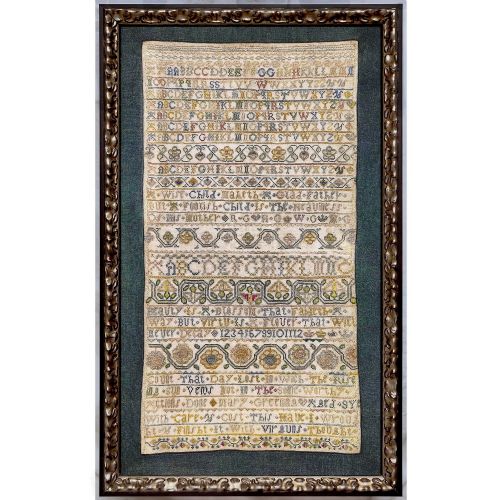
- A piece of needlework produced as a demonstration or test of skill. 18th century examples frequently incorporate alphabets, numerals, maps or religious verses.
- Verdure tapestry
- A wall hanging dominated by landscape motifs such as foliage, trees, plants and birds. These large textiles were woven in centres like Flanders using wool and silk threads.
- Metal thread
- A fine strip of silver or gilt metal wound around a core of silk or flax. It adds metallic lustre to embroidered pictures and heraldic panels.
18th Century Silk Textile: Frequently Asked Questions
How were these textiles originally used?
Many of these pieces served functional domestic roles as bedsheet borders, cushion covers, hand towels or wall hangings designed to insulate rooms. Others were decorative needlework pictures and samplers produced to demonstrate household accomplishments.
Over time, surviving fragments and panels were preserved by framing or mounting them as wall art. This transition shifted their role from utilitarian household items to cherished decorative antiques.
How do I care for an antique silk textile?
Display these delicate pieces away from direct sunlight to prevent silk fibres from fading and degrading. Ambient light levels should remain low, and humidity must be kept stable to protect organic threads.
Avoid cleaning them with water or chemical solvents. Professional textile conservators should handle any necessary mounting or stabilization work.
How can I tell English pieces from continental ones?
English pieces often take the form of needlework maps, pastoral farming pictures, or band samplers executed by schoolgirls or domestic practitioners. They frequently feature specific local subjects, such as an embroidered map of England and Wales.
Continental examples, by contrast, tend to include French lampas lengths, Flemish verdure tapestries, or regional Greek island embroideries. Their motifs, palette and weave structures align with distinct Mediterranean or Northern European traditions.
What is the difference between embroidery and tapestry?
Embroidery involves stitching decorative threads onto a pre-existing woven ground fabric using a needle. This technique creates surface details like portraits, maps, and birds on a stable background.
Tapestry is a form of textile art woven on a loom where the design is built directly into the fabric structure by interlacing warp and weft yarns. Tapestries are generally heavier and form large pictorial wall hangings.