




18th Century Framed Needlepoint
These 18th century framed needlepoint pieces bring historical textile art into modern interiors through detailed silk and wool stitching.
18th Century Framed Needlepoint
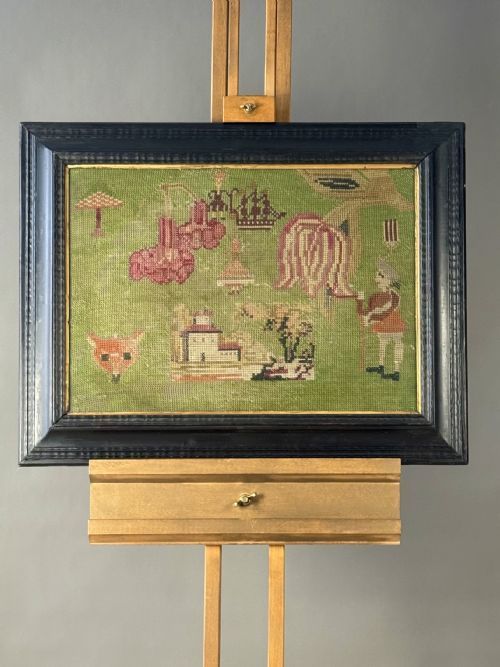
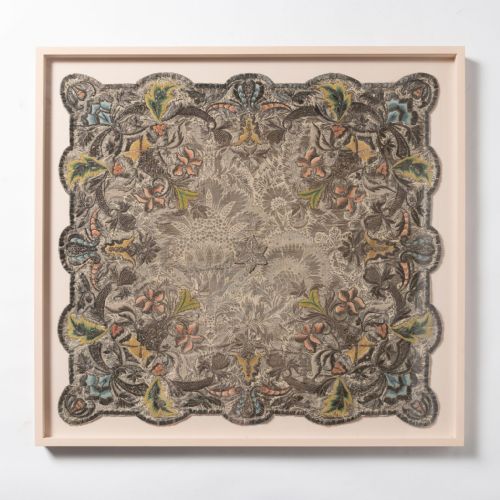
When you search for 18th century framed needlepoint, you are looking at historical textile art spanning samplers, pastoral pictures, maps, and religious scenes. The pieces on this page originate predominantly from the 18th Century and the Georgian period, alongside related examples from around 1700 and the 19th Century.
The dominant forms you will meet here include framed needlework pictures, embroidered panels, and wall art textiles. English and French examples appear frequently, accompanied by specific regional pieces such as Greek Island and Dutch works.
Materials and construction
These works rely on a base of linen cloth worked with threads of silk, wool, and occasionally metal. Silk floss and wool yarns provide the colour and texture for pictorial and map subjects.
Makers housed these embroideries in protective surrounds of wood, glass, gilt, and water-gilded oval or octagonal frames. The combination of delicate threadwork and period framing defines the physical survival of these textiles.
Listings feature 18th Century, Georgian, and 19th Century periods alongside materials such as silk floss, wool, linen, and giltwood.
Assessing quality and execution
The distinction between standard and superior pieces rests on the complexity of the needlework and the fidelity of the imagery. Finer works display intricate pictorial detail, sophisticated use of silk floss, and well-executed figures, maps, or pastoral scenes.
The quality of the housing also elevates a piece, with original water-gilded wood frames indicating superior original placement. The preservation of the underlying linen and the stability of the silk thread determine the overall integrity of the textile art.
Mary Greening·Susan Mary Williams
The 18th Century Framed Needlepoint Glossary
- Needlepoint
- A type of canvas work embroidery stitched with a needle, distinct from surface embroidery. It forms a dense, durable pattern that covers the ground fabric completely.
- Sampler
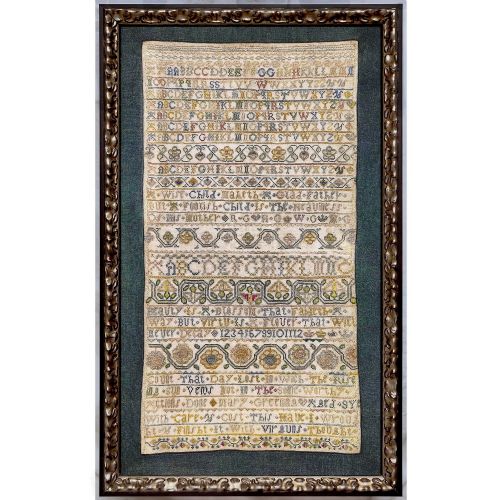
- A piece of cloth featuring various stitches and alphabets, traditionally used by makers to demonstrate needlework proficiency. Later examples frequently include names, dates, and pictorial motifs.
- Band sampler
- A long, narrow format filled with horizontal bands of distinct embroidery patterns. These earlier English formats showcase a repertoire of individual stitch techniques.
- Water-gilded frame
- A picture frame finished with genuine leaf applied over water-based size and burnished to a high gloss. This traditional method produces a refined metallic sheen.
18th Century Framed Needlepoint: Frequently Asked Questions
How were these framed needlepoints displayed originally?
These framed needlepoints served primarily as domestic wall art within period homes, showcasing the needlework skills of the maker.
They hung in parlours and reception rooms, often protected behind glass in wooden or gilt frames to preserve the delicate silk and wool threads from dust and light damage.
What subjects appear in these needlework pictures?
The subject matter ranges from pastoral farming scenes and bird studies to religious narratives and educational map samplers.
English, French, and Dutch pieces frequently depict figures or allegorical themes, while specialised Greek Island embroideries feature regional decorative motifs.
How do I care for an antique textile in my home?
Keep the framed piece away from direct sunlight and areas of high humidity to protect the silk floss and linen ground.
Avoid opening the frame yourself, as the original seals and glass provide essential environmental protection for the fragile threads inside.
How do I tell an 18th century piece from a later one?
Examination of the materials, thread types, and framing construction reveals the primary period of manufacture. 18th Century and Georgian works utilise specific silk and wool dyestuffs and mounting techniques distinct from later 19th Century reproductions.
Signatures, maker names, and specific institutional histories included in the stitching also help anchor the timeline of the textile.