



Antique Silk Sampler Frame
An antique silk sampler frame encloses centuries of needlework, preserving fragile threads and schoolgirl maps under glass for modern walls.
Antique Silk Sampler Frame
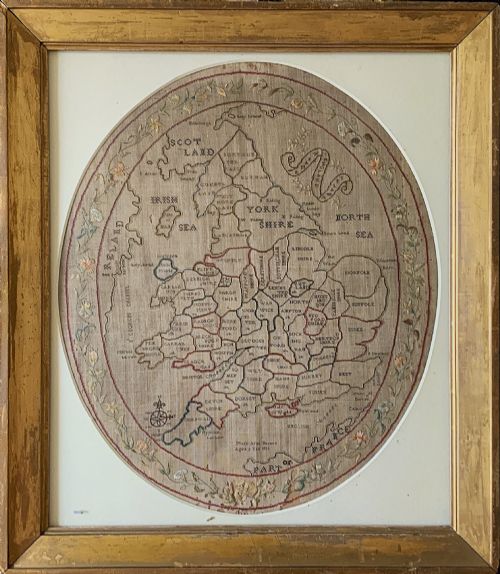
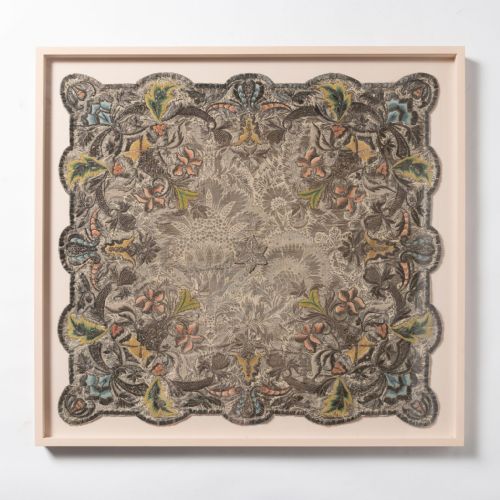
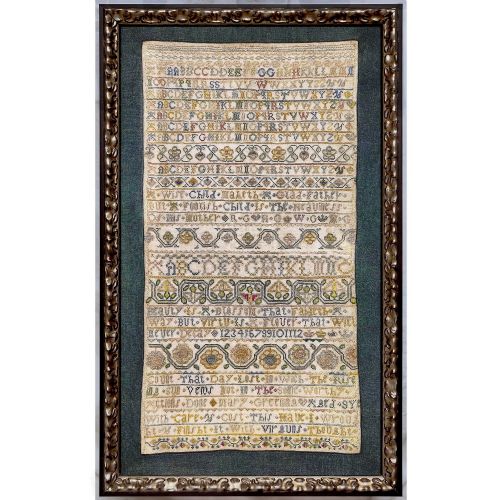
When you search for an antique silk sampler frame, you are looking at enclosures built to house delicate needlework, map samplers, and embroidered pictures. These objects range from late seventeenth-century band samplers to nineteenth-century schoolgirl maps and pictorial scenes.
The pieces encountered most frequently on this page combine wood construction with old glass to protect silk thread, wool, and linen textiles. Many date from the Georgian and Victorian eras, carrying the names and ages of young makers stitched centuries ago.
Materials and construction
Makers constructed these protective housings primarily from wood, fitted with glass to shield the delicate fabric surfaces from dust and handling. Inside these surrounds, the textile art itself relies upon linen foundations worked with silk thread, wool, and silk floss.
The needlework within utilises varied stitches executed by hand, often recording dates, names such as Mary Banion or Sarah Reading, and intricate pictorial motifs ranging from maps to biblical texts.
Young makers proudly stitched their ages into the cloth, immortalising twelve-year-old stitchers and school pupils from centuries past.
Determining quality in frames and needlework
Quality rests upon the preservation of the textile and the integrity of its housing, distinguishing well-kept seventeenth and eighteenth-century examples from later pieces. Original glass and undisturbed wooden surrounds elevate a piece significantly.
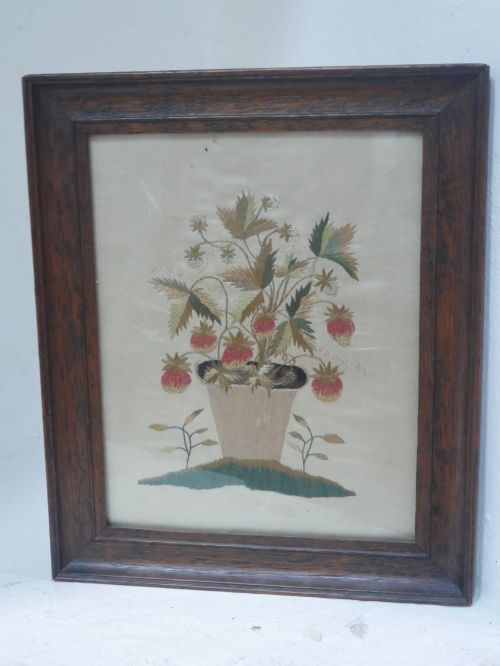
The fineness of the needlework itself dictates the tier of the object, from simple schoolroom exercises to complex maps of England and Wales or detailed pictorial embroidered panels.
The Antique Silk Sampler Frame Glossary
- Sampler
- A piece of needlework produced as a demonstration or test of skill, often featuring alphabets, numerals, and decorative motifs. These works frequently record the name and age of the maker alongside a date.
- Band sampler
- An early format of needlework consisting of horizontal strips of different patterns and stitches displayed in rows. Examples date back to the seventeenth century.
- Map sampler
- A specialised geographical embroidery depicting countries or regions, commonly England and Wales during the Georgian period. Young makers stitched these to demonstrate both needle skills and geographical knowledge.
- Needlework picture
- An embroidered pictorial scene rather than a standard lettering or pattern sampler. These often incorporate stories, figures, or architectural elements.
- Linen
- A durable textile woven from flax fibres that serves as the foundation ground for historical samplers and embroidery. Silk and wool threads are worked directly into this fabric.
Antique Silk Sampler Frame: Frequently Asked Questions
What is an antique silk sampler frame?
An antique silk sampler frame is a protective housing designed to display and preserve historical needlework, textile art, and embroidered map samplers under glass.
These surrounds are typically constructed from wood and are tailored to fit fragile linen and silk pieces stitched centuries ago.
How do I date an old sampler?
Many samplers include embroidered dates, along with the maker's name and age, providing a direct record of their creation during the seventeenth, eighteenth, or nineteenth centuries.
Stylistic elements such as map designs, lettering styles, and specific framing techniques also help narrow down the period of manufacture.
What materials were used in these samplers?
Historical needlework relies upon a foundation ground of woven linen, worked with silk thread, silk floss, and wool.
These textiles are then housed within wooden surrounds behind glass to protect the delicate fibres from environmental damage.
How should I care for a framed textile?
Keep framed needlework away from direct sunlight and damp environments to prevent fading and deterioration of the fragile silk and linen materials.
Ensure the protective glass remains sealed and stable to guard the historic embroidery against dust and physical disturbance.