








Framed Historic Silk Textile
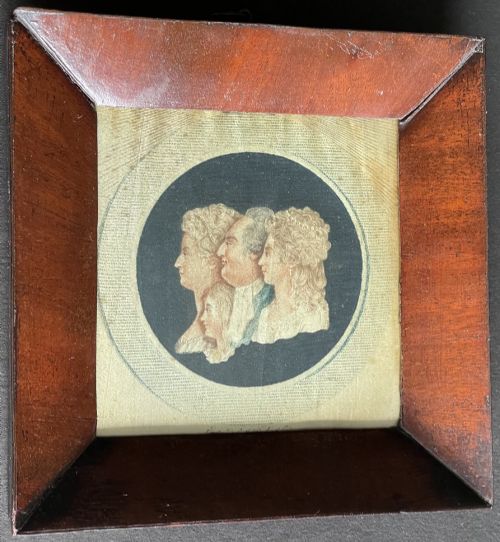
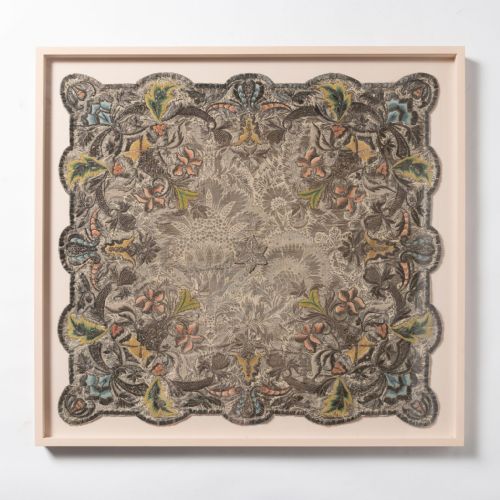
These framed historic silk textile pieces are centuries-old works of needlecraft and silk embroidery preserved behind glass in period frames.
Framed Historic Silk Textile
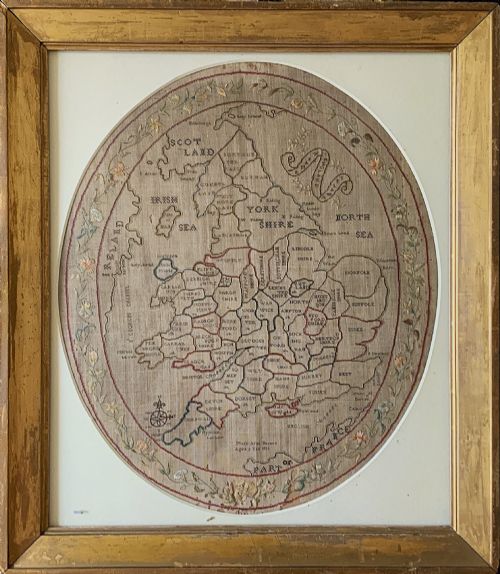
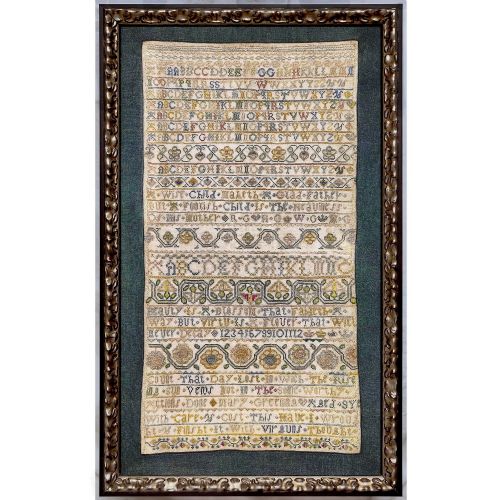
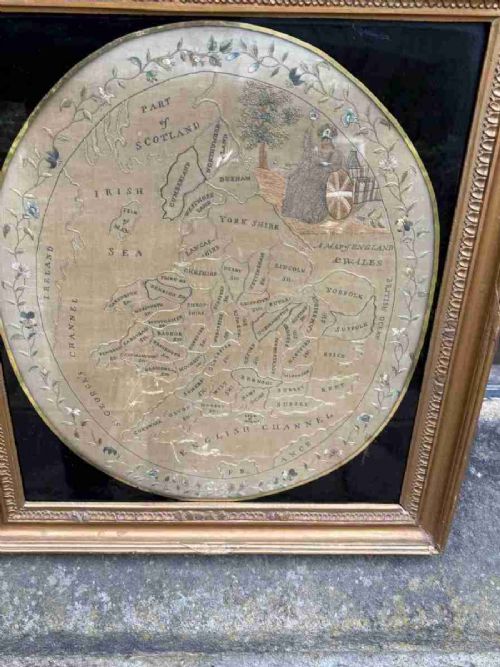
When you search for framed historic silk textile, you encounter works spanning from the seventeenth century through to the nineteenth century. The selection leans heavily towards English and Italian examples, incorporating map samplers, embroidered panels, and band samplers.
Most pieces date from the Georgian and nineteenth-century periods, often retaining their original wooden or giltwood frames. Needlework samplers by young makers and detailed pictorial silk panels form the core of what appears in this category.
Materials and construction
These items rely on silk thread and silk fabric combined with linen grounds, often worked with fine needlepoint and embroidery techniques. Artisans mounted these fragile textiles within timber frames, frequently utilising glass to protect the delicate fibres from dust and handling.
Giltwood frames appear alongside plain wood variants, enclosing panels and samplers that demonstrate meticulous hand-stitching. The makers employed various threads, including wool in certain sampler contexts, to build up pictorial and cartographic details.
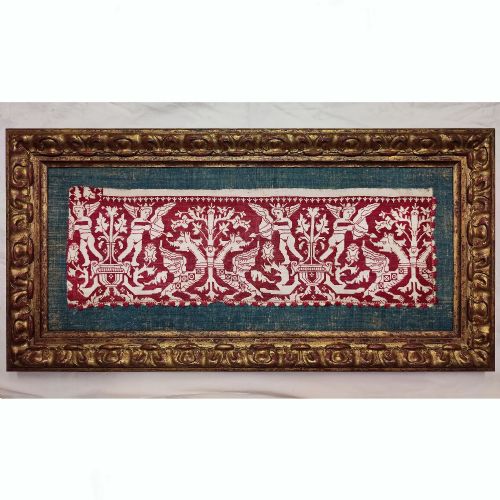
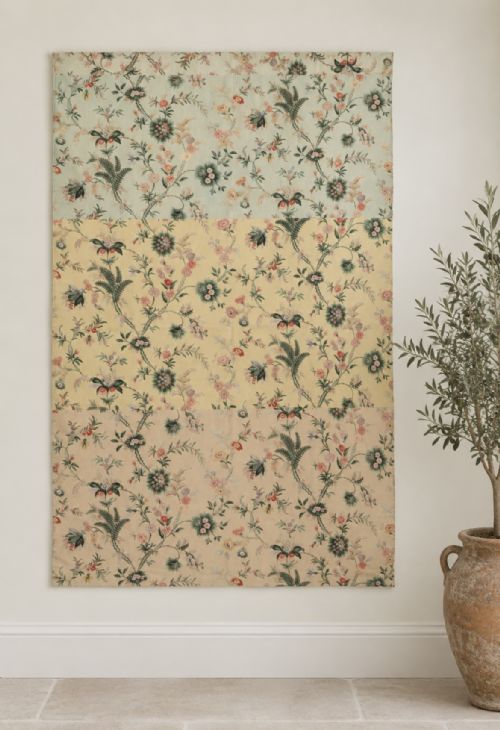
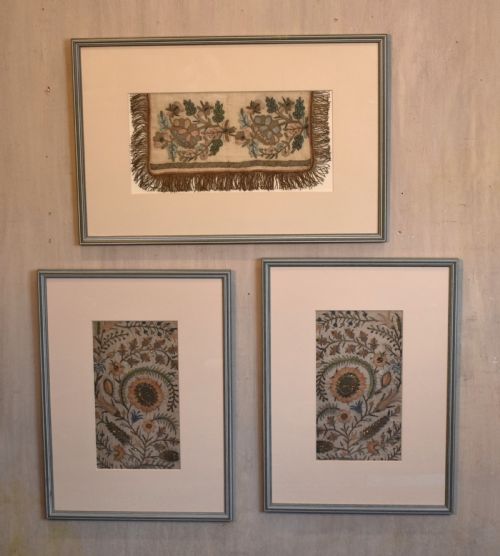
Object types include needlework samplers, framed print works, embroidered borders, and fabric wall panels.
Judging quality in historic textiles
Quality rests upon the clarity of the needlework, the preservation of the silk fibres, and the originality of the mounting. Pieces that retain vibrant colour in the silk threads and show disciplined execution by the maker command greater attention.
The integrity of the frame and the protective glass also play a part, as period giltwood surrounds that match the age of the textile enhance the overall survival of the object.
Mary Banion·Mary Greening·Ann Hodson·Sarah Baker·Martha Hall·Mary Pinfold
The Framed Historic Silk Textile Glossary
- Sampler
- A piece of needlework produced to demonstrate skill in various stitches and patterns, often including alphabets, numerals, and names. They frequently take the form of maps or pictorial scenes.
- Band sampler
- An early format of needlework featuring horizontal rows of disparate patterns and stitches arranged in bands down the linen. These date predominantly to the seventeenth and eighteenth centuries.
- Giltwood
- Wood carved and coated with gold leaf or a gold-coloured finish. This material is common for the frames housing high-status eighteenth-century silk panels.
- Needlepoint
- A type of canvas work embroidery stitched with a yarn or thread through a stiff open-weave ground. It provides a sturdy texture seen in many nineteenth-century map samplers.
Framed Historic Silk Textile: Frequently Asked Questions
How do I date a framed historic silk textile?
Dating relies on the style of the script, the framing materials, and specific stylistic markers recorded in the needlework. Many samplers include the maker's name, age, and a precise year.
Examining the backing boards and the type of glass helps confirm whether the framing is contemporary to the textile's creation.
Where were these embroidered panels originally displayed?
Historic textiles of this nature hung in parlours and drawing rooms as displays of domestic accomplishment and education. Wealthy households commissioned or produced them to demonstrate needle skills.
Map samplers and pictorial panels served both an educational purpose and a decorative function within the domestic interior.
How should I care for a framed historic silk textile?
Protect the piece by hanging it away from direct sunlight and maintaining a stable indoor humidity level. Ultraviolet light causes silk fibres and dyed threads to fade irreversibly over time.
Avoid placing these items in damp environments or areas subject to major temperature swings, as the historic wooden frames and delicate fabrics react poorly to moisture.