





Nomadic Prayer Rug
A nomadic prayer rug offers a tangible link to tribal heritage, designed for personal devotion and woven by hand across the borderlands of Persia and Afghanistan.
Nomadic Prayer Rug
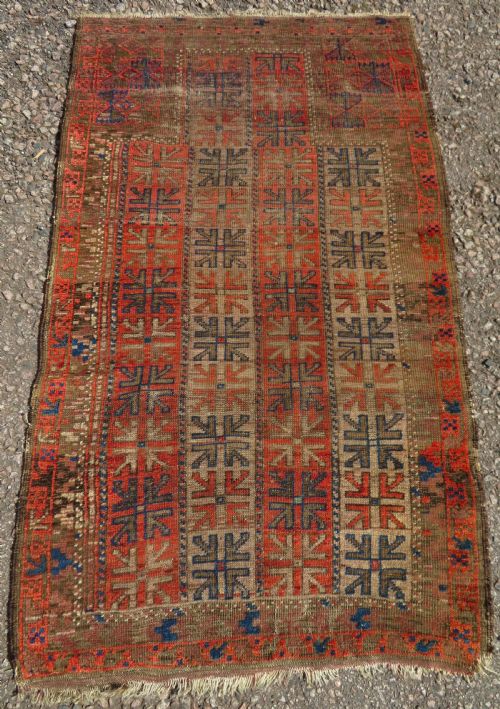
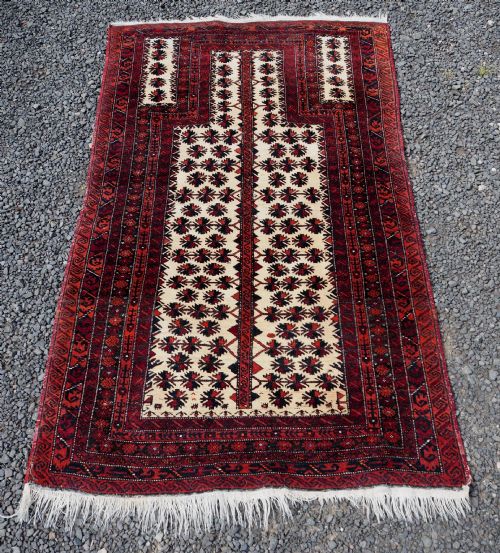
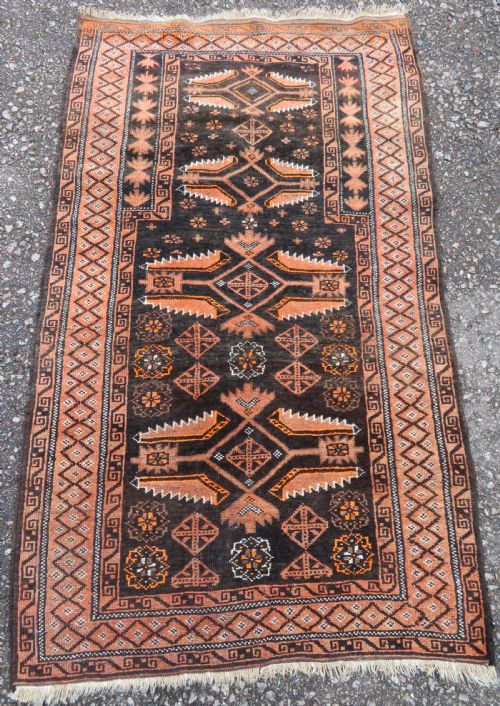
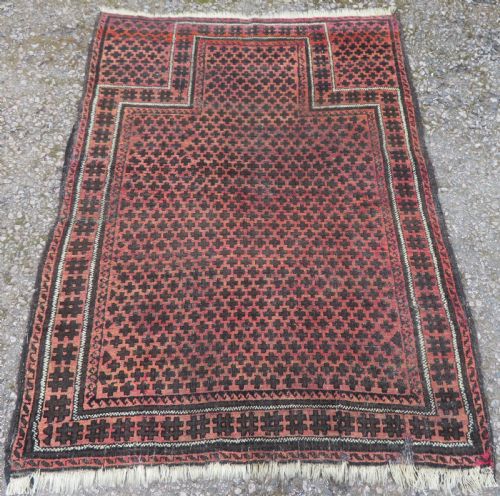
A nomadic prayer rug serves as a portable space for ritual worship, traditionally created by tribal groups such as the Baluch, Timuri, and Taimani. These pieces typically display a single or multiple mihrab design, marking the direction of prayer.
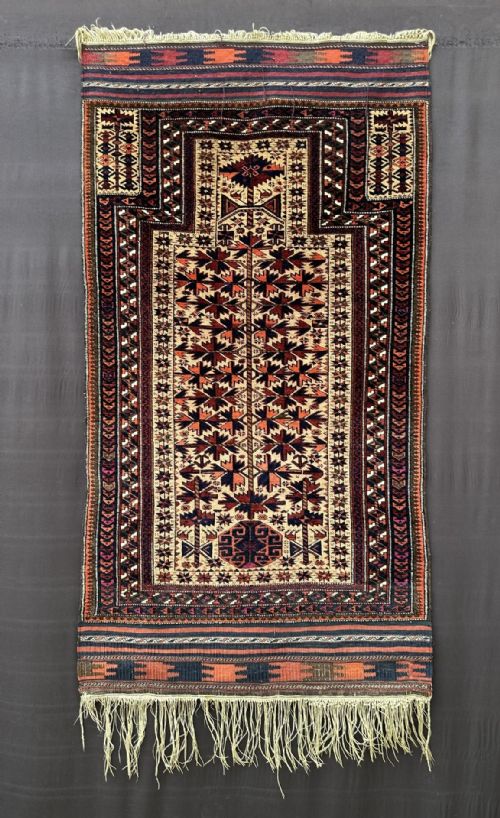
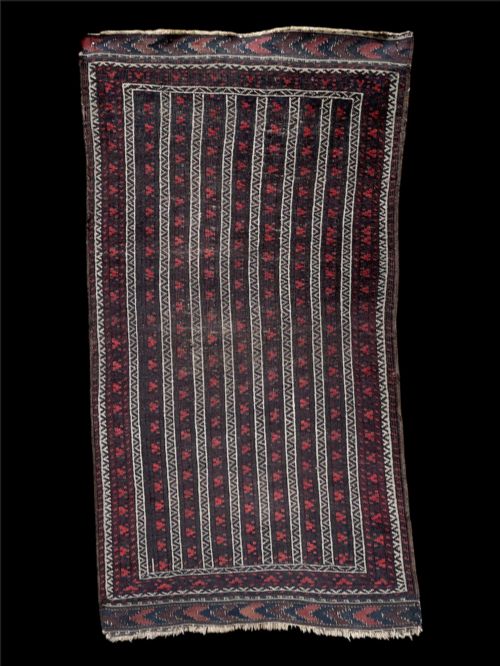
Most examples found here originate from the late nineteenth and early twentieth centuries, reflecting the traditional weaving practices of village and nomadic communities. Formats range from compact rectangular prayer rugs to longer formats featuring kilim ends.
Makers often incorporate distinct regional motifs, including tree of life patterns, lotus leaves, and octagons. These portable textiles were made for daily use within the tent or village home.
Materials and Construction
Weavers relied primarily on hand-spun wool for the pile, often utilising natural dyes to achieve deep indigo blues, rich reds, and earthy brown tones derived from local plants and minerals.
Foundation structures frequently incorporate wool, cotton, or goat hair, while camel hair appears in the pile of specific regional groups to provide a soft, undyed background texture.
Selvedges and ends are often finished with flatweave kilim sections, securing the structural integrity of the rug while adding length through simple geometric bands.
Listings feature wool, natural dyes, and camel hair across nineteenth and twentieth-century tribal forms.
Evaluating Quality
The handle and density of the wool pile determine the tactile quality of the piece, with tightly packed knots yielding a more durable surface over decades of use. Superior examples display consistent tension across the foundation, ensuring the rug lies flat without distortion.
Colour saturation and the complexity of the natural dye palette separate standard tribal work from exceptional examples. Subtle variations in tone, often called abrash, demonstrate the use of natural dye batches.
The clarity and execution of specific motifs, such as multiple mihrabs or unusual figural elements, indicate the weaver's skill and the artistic ambition behind the individual weaving.
The Nomadic Prayer Rug Glossary
- Mihrab
- The arched niche on a prayer rug that points toward Mecca during daily worship. Its shape often defines the specific tribal group or region.
- Abrash
- A natural variation of colour within the same field of dye, caused by using different dye lots or successive batches of wool.
- Kilim
- A flatwoven textile technique utilised at the ends of many tribal rugs to protect the pile from fraying and provide a finished border.
- Tree of Life
- A symbolic motif depicting growth and the connection between earth and heaven, frequently woven into the central field of nomadic prayer rugs.
- Seh Mihrab
- A triple arch design featuring three distinct prayer niches across the upper field of the rug.
Nomadic Prayer Rug: Frequently Asked Questions
What is a nomadic prayer rug?
A nomadic prayer rug is a small, hand-knotted textile created by tribal weavers for personal worship. They were designed to be portable and easily rolled up when moving camp.
These pieces reflect the cultural traditions and iconography of specific tribes living across Persia, Afghanistan, and surrounding borderlands during the nineteenth and twentieth centuries.
How do I identify a Baluch prayer rug?
Baluch prayer rugs are typically characterised by dark indigo and brown colour palettes, wool foundations, and distinctive geometric or tree of life motifs. Many feature camel hair backgrounds or flatwoven kilim ends.
They often display a single mihrab arch, though multiple mihrabs and unusual border designs also appear in pieces attributed to Timuri and Taimani sub-groups.
How should I care for an antique rug?
Antique tribal rugs require gentle handling, including regular vacuuming without a rotating brush bar to protect the wool pile. Professional cleaning by a specialist in antique textiles preserves the natural dyes and fibres.
Keeping the rug out of direct sunlight prevents the fading of natural indigo and madder dyes over time, ensuring the colours remain stable.
Can I use these rugs on the floor?
These rugs were originally made for functional daily use on tent and earth floors, meaning they are structurally suited for light foot traffic. Utilising an appropriate underlay prevents slipping and cushions the wool pile against hard surfaces.
Placing them in low-traffic areas or mounting them on a wall helps preserve the structural integrity of older foundation materials.