


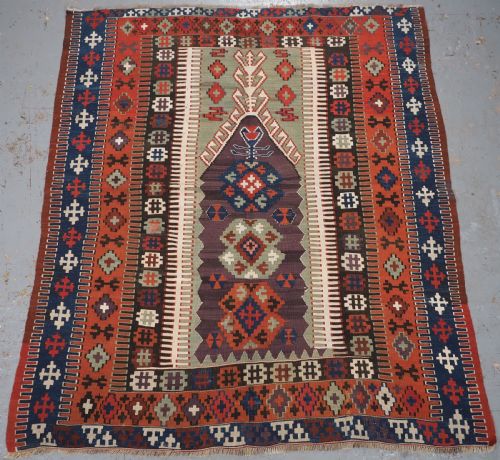
Mihrab Motif Rug
A mihrab motif rug focuses the eye on a sacred arch, bringing traditional tribal craftsmanship and deep cultural symbolism directly into your living space.
Mihrab Motif Rug
A mihrab motif rug centres on the distinctive arch design that historically points toward Mecca, serving as a functional prayer rug or a decorative tribal carpet. These pieces frequently emerge from Afghan, Turkish, and Persian weaving traditions, spanning from the mid-nineteenth century through the early twentieth century.
The inventory on this page highlights diverse regional interpretations, including Baluch prayer rugs featuring lotus leaf patterns and Turkish examples from regions such as Mudjur and Obruk. Village and tribal weavers produced these textiles using wool, cotton, silk, and natural dyes to create enduring geometric and floral arrangements.
Materials and construction
Weavers relied primarily on wool and cotton foundations, occasionally incorporating silk for finer carpets, paired with natural dyes to achieve deep and lasting colours. These materials sustained the heavy demands of daily use while allowing intricate details like rams horn motifs and star patterns to hold their definition.
Tribal workshops and village looms employed traditional knotting techniques suited to Afghan Baluch and Anatolian tribal aesthetics. The resulting textiles exhibit robust structures that support both flatweave kilim constructions and piled prayer rugs.
Mihrab Motif Rug Retail Price Guide 2026
Typical asking prices for mihrab motif rug among the pieces listed under this phrase on Sellingantiques today, from the lower quarter to the upper quarter. They describe what is for sale here now, not the wider market.
Listings feature pieces spanning from the mid nineteenth century to 1930, utilising wool, cotton, silk, and natural dyes.
Evaluating quality and design
Quality rests in the precision of the arch drawing and the complexity of supplementary motifs, such as lotus leaves and mosque designs. Finer examples display a harmonious balance between the central mihrab field and the surrounding borders.
The choice of materials also dictates the character of the piece, with silk and finely spun wool yielding greater textural depth. Natural dyes contribute subtle tonal shifts across the surface, distinguishing more accomplished village and tribal works.
The Mihrab Motif Rug Glossary
- Mihrab
- The arched niche in a prayer rug that mimics the architectural feature in a mosque indicating the direction of prayer. It forms the focal point of the composition.
- Kilim
- A flatwoven carpet or rug produced without a pile, common in Anatolian and regional traditions. This technique creates a lighter, reversible textile.
- Baluch
- A tribal group known for distinctive dark palettes and geometric prayer rugs originating from the borderlands of Afghanistan and Iran. Their weaving often incorporates symbolic lotus leaf motifs.
- Natural Dyes
- Colourants derived from plants, insects, and minerals rather than synthetic compounds. They produce organic hues that age with considerable character.
- Prayer Rug
- A smaller format rug designed specifically for individual worship, typically defined by a single arch or mihrab design at one end.
Mihrab Motif Rug: Frequently Asked Questions
What is a mihrab motif rug?
A mihrab motif rug is a textile featuring an arch design that represents the prayer niche found in mosques. These pieces often serve as functional prayer rugs or decorative floor coverings.
Originating largely from tribal and village traditions in Afghanistan and Turkey, they combine cultural symbolism with practical wool and cotton construction.
How do I identify the age of these rugs?
Dating relies on stylistic markers, regional weaving traits, and structural materials such as natural dyes and handspun wool. Pieces seen here span from the mid nineteenth century to the early twentieth century.
Examining the complexity of the design, such as classic seh mihrab layouts or rams horn motifs, helps place the rug within its specific period.
Where were these rugs made?
These rugs originate primarily from Afghanistan, Turkey, and surrounding regions associated with tribal and village production. Specific areas include the Herat region, Mudjur, and Obruk.
Each region developed distinct stylistic preferences, ranging from Afghan Baluch prayer rugs to Anatolian tribal kilims.
How do I live with a tribal rug?
Tribal and village rugs suit high traffic areas when paired with a quality underlay to prevent sliding and reduce wear. Regular gentle vacuuming without a beater bar helps maintain the wool pile.
Keeping these textiles away from direct, harsh sunlight preserves the natural dyes used across the centuries.