
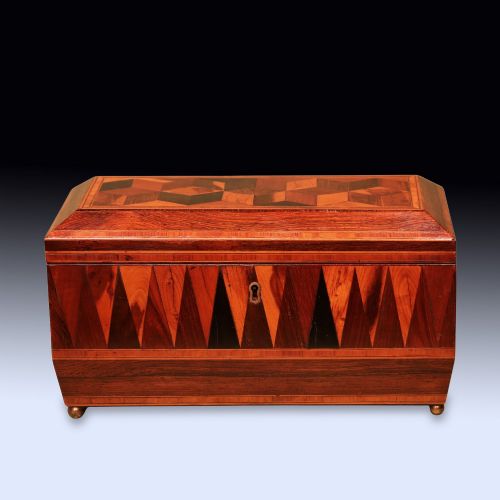


Nineteenth Century Tea Box
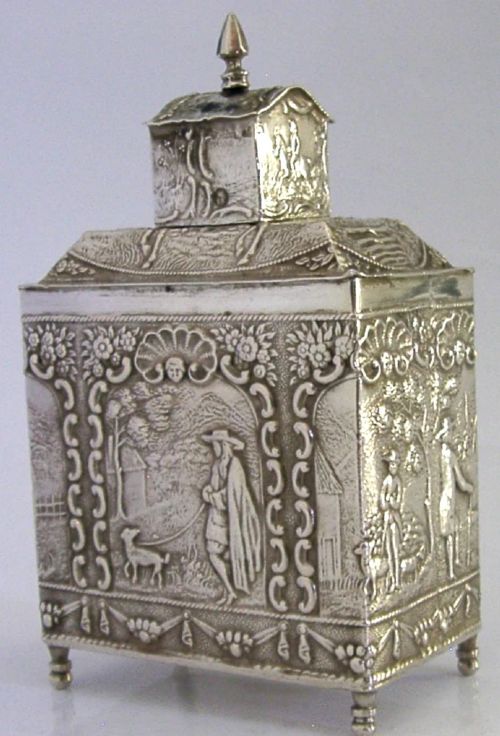
Nineteenth century tea box pieces are timber and papier-mâché caddies and teapoys that keep dry leaves fragrant on a drawing room table.
Nineteenth Century Tea Box
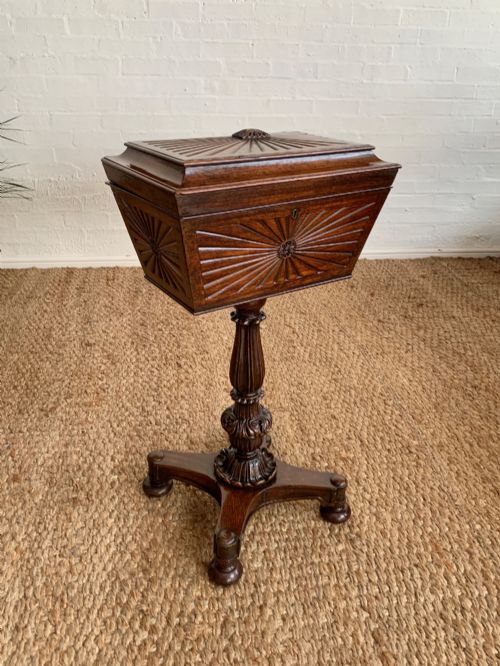
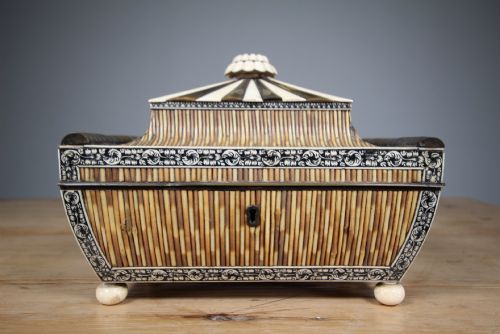
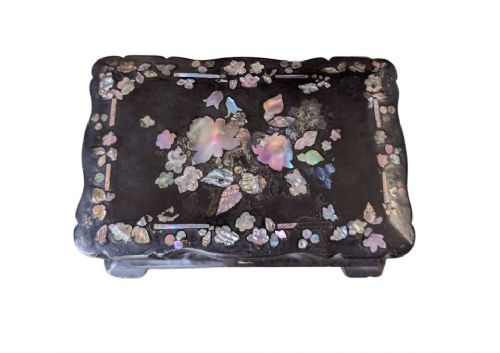
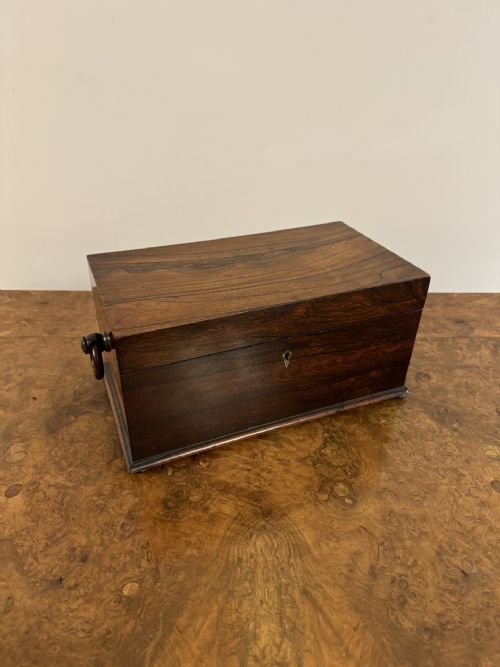
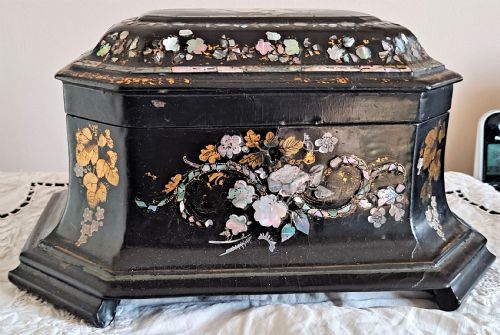
The standard version met on this page is the wooden caddy, taking forms such as the classical sarcophagus or a rectangular chest with hinged lids. Examples appear in rosewood, mahogany, and burr walnut, alongside tactile papier-mâché surfaces inlaid with mother of pearl.
Makers designed these vessels with internal compartments to separate green and black teas, often featuring removable crystal or glass mixing bowls in the centre. Certain pieces extend beyond simple storage into work tables or decorative occasional boxes with specialised internal fittings.
Materials and construction
Cabinetmakers constructed nineteenth century tea boxes using dense tropical timbers like rosewood and mahogany, frequently applying decorative veneers such as burr walnut, amboyna, and yew-wood. Parquetry, penwork, and brass inlay create intricate surface patterns across the lids and panels.
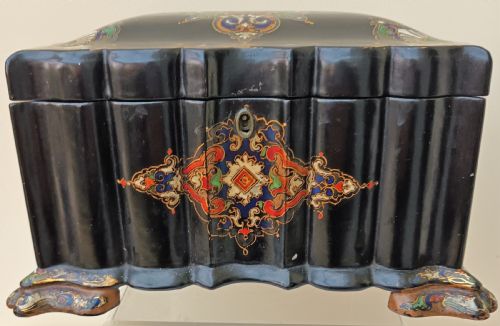
Papier-mâché forms another distinct group of pieces, moulded into smooth dark surfaces and embellished with mother of pearl inlay or hand-painted details. Interior compartments often retain traces of foil lining or delicate wooden lids designed to seal tightly against moisture.
Qualities that separate examples
Quality rests upon the selection of timber veneers and the precision of decorative inlays such as brass strings, penwork, and mother of pearl. Superior boxes maintain matching grain patterns across all panels and retain original internal fittings, including mixing bowls and secondary lids.
The sophistication of the silhouette defines the upper tier, seen in curved sarcophagus forms, bombé profiles, and well-proportioned teapoys on pedestals. Finer pieces demonstrate crisp carving, clean dovetail joinery, and functional locks with original keys.
The Nineteenth Century Tea Box Glossary
- Tea Caddy
- A box or chest specifically designed for storing loose tea leaves. These containers usually feature internal lidded compartments to keep different tea varieties separate.
- Teapoy
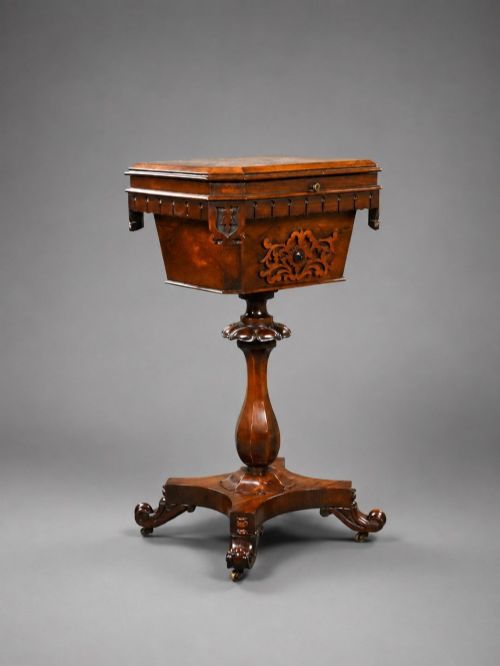
- A freestanding piece of furniture comprising a tea box mounted on a pillar and claw foot or a dedicated stand. They frequently include mixing bowls and sewing compartments.
- Sarcophagus
- A monumental casket shape with a domed or pitched lid, popular for Regency and Victorian tea containers. This architectural form provides generous internal volume for multiple caddies.
- Papier-mâché
- A composite material made from paper pulp or layers of paper bound with glue, then pressed and dried. It provides a smooth base for lacquer, paint, and mother of pearl inlay.
- Penwork
- A decorative technique utilising fine ink drawings on wood, often finished with a clear protective varnish. This painstaking method creates detailed monochrome ornamentation on small surfaces.
Nineteenth Century Tea Box: Frequently Asked Questions
How were nineteenth century tea boxes used?
These boxes sat in the parlour or drawing room, where the host unlocked the lid to dispense leaves for afternoon service. Because tea remained an expensive commodity, the boxes stayed securely locked when not in use.
Inside, twin canisters or lidded compartments kept black and green teas separate from one another. A central glass bowl often sat between them for blending leaves or sugar before pouring.
What is the difference between a tea caddy and a teapoy?
A tea caddy is a portable box designed to sit upon a table, sideboard, or tea tray. They range from small tabletop chests to elaborate double caddies housing multiple compartments.
A teapoy is an independent piece of furniture consisting of a large tea box raised on a central pillar and pedestal base. Some teapoys also incorporate work tables or sewing baskets beneath the main storage compartment.
How do I care for a wood tea box?
Keep wooden and papier-mâché boxes away from direct sunlight and sudden changes in temperature to prevent the delicate veneers from lifting. A light application of appropriate wax polish maintains the lustre of the timber without building up heavy residue.
Avoid placing damp items inside the compartments, as historic linings and foil inserts are sensitive to moisture. Handle the lids and internal covers gently to protect fragile hinges and original knobs.