

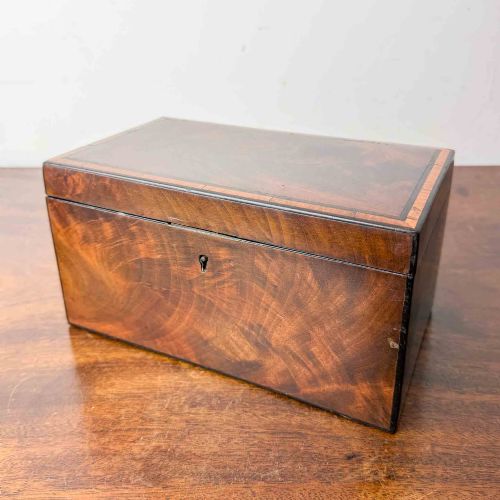
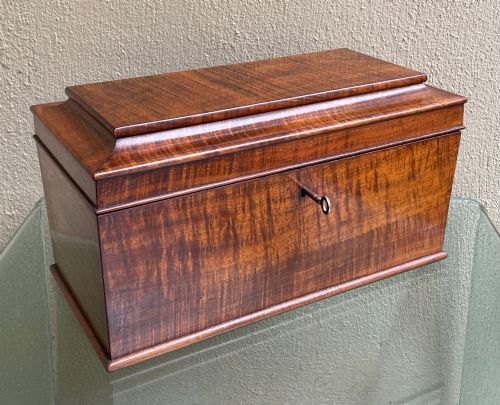


Flame Mahogany Tea Chest
These flame mahogany tea chest pieces are classic lidded boxes created to store loose leaf tea safely away from damp air.
Flame Mahogany Tea Chest
When you search for a flame mahogany tea chest, you encounter handsome lidded boxes and small cabinets designed during the Georgian, Regency, and William IV periods to store expensive loose leaf tea. The examples on this page span the nineteenth century, including the year 1800, taking the form of tea caddies, double tea caddies, and larger standing teapoys.
Most pieces date from the Regency era, often featuring fitted interiors with mixing glasses, canisters, and sometimes lead foil linings designed to preserve the aroma of the leaves. These items reflect a time when tea was a luxury commodity requiring secure storage under lock and key in the parlour or dining room.
How these chests were made
Cabinet makers utilised solid mahogany and applied highly figured flame mahogany veneers to exterior surfaces to create striking grain patterns. Artisans incorporated secondary materials such as brass for handles and escutcheons, alongside bone, ebony stringing, and lead foil within the internal compartments.
Some pieces display carved mahogany details, reflecting the skilled woodworking techniques of workshops from the period. Interiors frequently house cut glass mixing bowls and canisters designed to hold different varieties of tea.
Flame Mahogany Tea Chest Retail Price Guide 2026
Typical asking prices for flame mahogany tea chest among the pieces listed under this phrase on Sellingantiques today, from the lower quarter to the upper quarter. They describe what is for sale here now, not the wider market.
Some tea chests preserve the faint, lingering scent of dry leaves locked away two centuries ago.
What varies in quality
The visual impact of the timber grain sets finer examples apart, particularly the rich movement found in flame mahogany veneers contrasted with ebony stringing. Superior pieces often feature complex forms such as bombé shaping or retain original internal fitments like cut glass bowls and bone details.
Attribution to documented makers introduces a distinct tier of craftsmanship, as seen in pieces stamped or attributed to Gillows. The presence of robust brass hardware and intact internal lead foil linings further distinguishes higher grade examples.
Gillows
The Flame Mahogany Tea Chest Glossary
- Flame mahogany
- A highly figured veneer cut from the fork of the mahogany tree, prized for its swirling, flame-like grain patterns. It forms the defining visual characteristic of these chests.
- Teapoy
- A larger standing tea container mounted on a pedestal or legs rather than a smaller box meant for a table. These often incorporate internal mixing bowls and multiple canisters.
- Mixing glass
- A cut glass bowl fitted inside the tea chest used for blending different varieties of loose leaf tea before serving. They sit centrally between the internal lidded canisters.
- Bombé
- An outward-curving, swollen furniture profile found on certain Georgian and Regency forms. This curved shaping demands advanced cabinet making skill.
- Escutcheon
- A small decorative brass plate surrounding the keyhole of the tea chest. It protects the surrounding wood from wear and often matches other hardware on the piece.
Flame Mahogany Tea Chest: Frequently Asked Questions
What is a flame mahogany tea chest?
A flame mahogany tea chest is a lidded wooden box or small cabinet veneered in figured mahogany, designed to store loose leaf tea during the Georgian and Regency periods. These containers kept precious tea leaves dry and secure under lock.
Most examples include internal compartments, canisters, and glass mixing bowls for preparing the brew.
How were tea chests used historically?
Tea was an expensive commodity in the eighteenth and nineteenth centuries, so households kept it locked away in the parlour or dining room. The mistress of the house typically held the key and dispensed the leaves herself.
Internal mixing glasses allowed different tea varieties to be blended together before being brewed by the servants or the host.
How do I tell a Regency tea chest apart from a Victorian one?
Regency tea chests usually display crisp architectural lines, brass inlay, or ebony stringing, often drawing on classical design motifs from around 1800 to 1835. The wood figuring tends to be striking, with flame mahogany veneers carefully matched across the lid and sides.
Later nineteenth century pieces sometimes feature heavier proportions and more elaborate carving rather than the refined stringing of the earlier period.
What is the difference between a tea caddy and a teapoy?
A tea caddy is a smaller box intended to sit on a table, sideboard, or tea table. It contains one or more compartments for loose tea leaves.
A teapoy is a larger piece of furniture featuring its own pedestal, pillar, or legs, allowing it to stand independently on the floor while fulfilling the same storage function.