

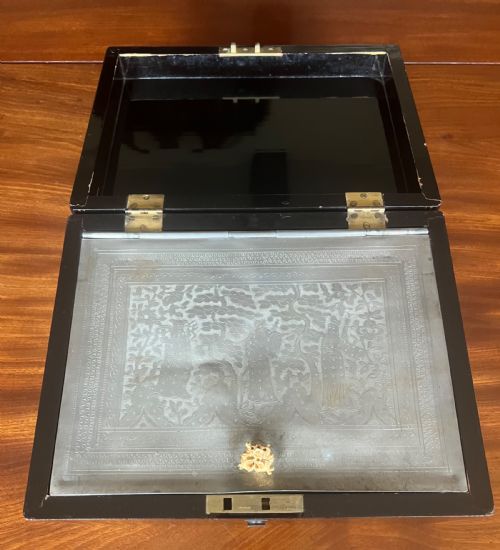


Black Lacquered Tea Box
These black lacquered tea box items bring polished surfaces and intricate gilt motifs into a room, offering both containment and historical presence.
Black Lacquered Tea Box
When you search for a black lacquered tea box, you encounter containers built to preserve dry leaf in domestic interiors. The pieces on this page span the nineteenth century, including Regency and Victorian periods.
You meet English productions alongside Chinese export examples designed for Western markets. Forms vary between dedicated tea caddies with compartment divisions and broader decorative boxes.
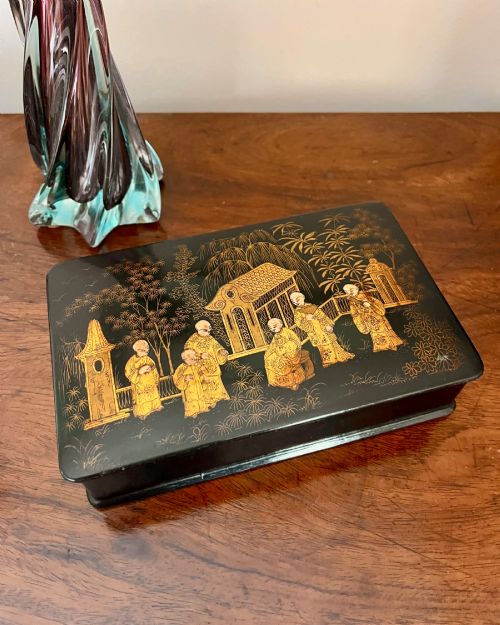
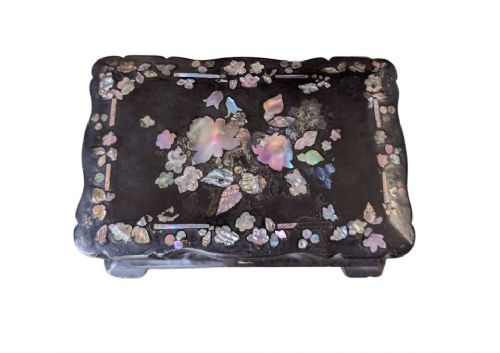
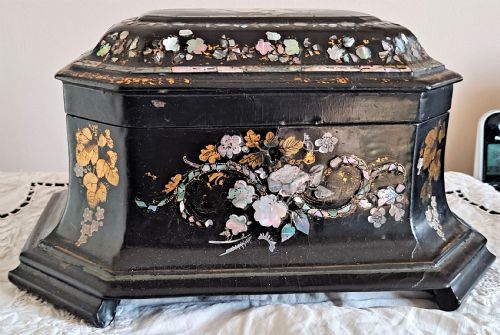
The Regency items often display delicate penwork and Chinoiserie scenes, while Victorian pieces lean towards papier-mâché construction embellished with mother-of-pearl.
Materials and construction methods
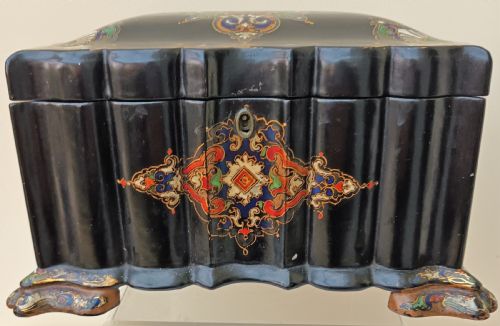
Wood, lacquer, and papier-mâché form the structural foundations of these pieces. Artisans applied successive coats of dark lacquer to create smooth, glossy exterior finishes.
Decoration relied on gold leaf applied for Chinoiserie motifs, alongside inlaid mother-of-pearl, paint, bone, and brass elements. Penwork details provided fine linear definition on Regency surfaces.
Materials across these listings include lacquer, wood, gold leaf, brass, papier-mâché, bone, mother of pearl, and paint.
Markers of distinction
The refinement of the surface preparation and the crispness of the painted or gilt Chinoiserie decoration define the upper tier of these pieces. Hand-drawn penwork requires steady execution to achieve lasting visual clarity.
The integration of inlays such as mother-of-pearl and bone separates simpler containers from elaborate examples. Interior fittings, including lidded compartments, reflect the original maker's investment of time.
The Black Lacquered Tea Box Glossary
- Chinoiserie
- European theatrical interpretation of Chinese artistic motifs, popular in Regency and Victorian decoration. It appears on lacquer surfaces as pagodas, figures, and landscapes.
- Penwork
- A decorative technique using fine ink lines on a prepared surface to simulate elaborate inlay or engraving. It is typical of Regency pieces.
- Papier-mâché
- A composite material made from paper pulp or layers of paper bound with glue, pressed, and dried. It formed a smooth base for lacquer and mother-of-pearl inlay.
- Tea caddy
- A box or jar designed to store tea leaves safely away from light and moisture. Many incorporate internal compartments for different varieties.
Black Lacquered Tea Box: Frequently Asked Questions
What is a black lacquered tea box?
These items are covered storage containers built to hold dried tea leaves in nineteenth-century homes.
They combine wooden or papier-mâché foundations with glossy dark finishes and decorative artwork.
How were these boxes used originally?
Tea was an expensive commodity, so leaves were kept locked inside these caddies by the head of the household.
Servants brought the container to the table when tea was prepared for guests.
How do I date a Regency piece?
Regency examples often feature precise penwork decoration and classical or Chinoiserie motifs characteristic of the early nineteenth century.
Construction details and compartment layouts help confirm this period.
Where were Chinese export pieces made?
These items were produced in workshops in China specifically for European and British buyers.
They reflect traditional domestic craftsmanship adapted to Western tastes.