





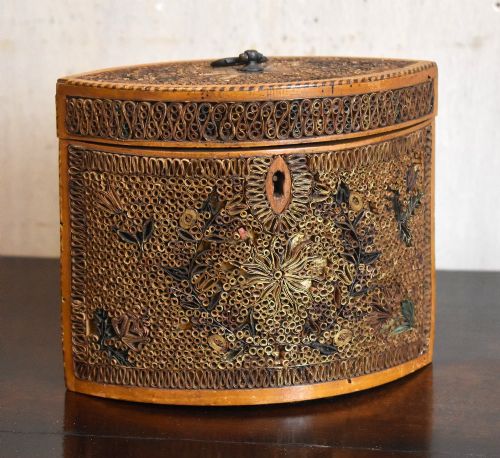
Decorative Tea Chest
A decorative tea chest is a repository of dry leaf and infusing history, built from timbers and shells to hold domestic treasure.
Decorative Tea Chest
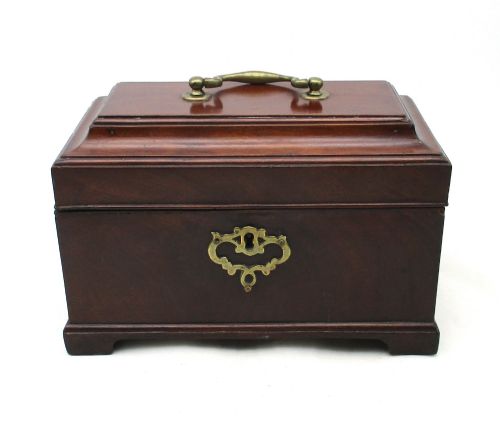
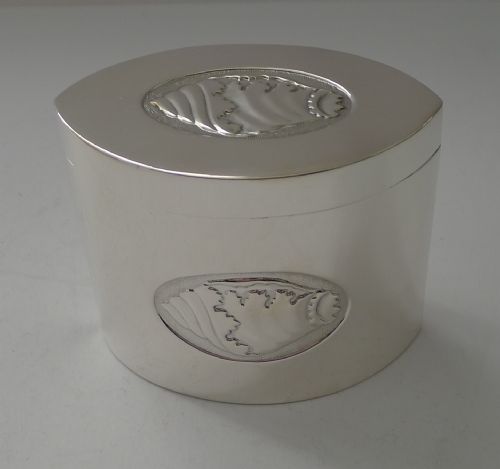
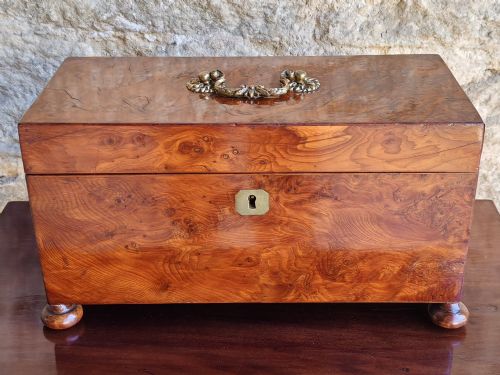
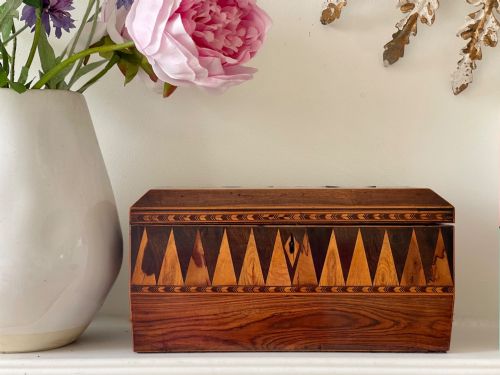
A decorative tea chest spans eras from the mid-eighteenth century through the Victorian age, taking shapes from simple caddies to sarcophagi. The pieces met here include tea caddies, keepsake boxes, and decanter boxes produced in mahogany, rosewood, and tortoiseshell.
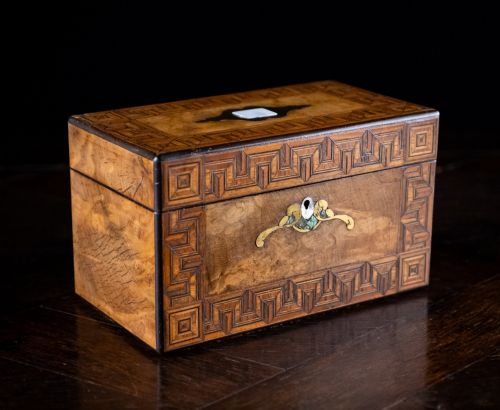
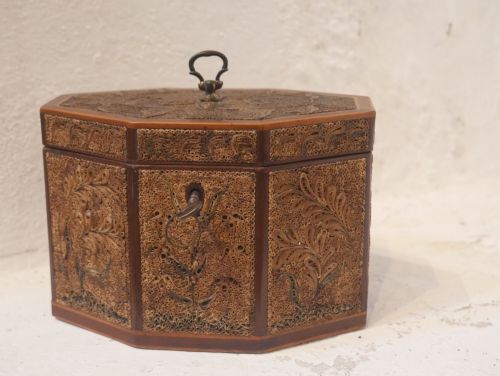
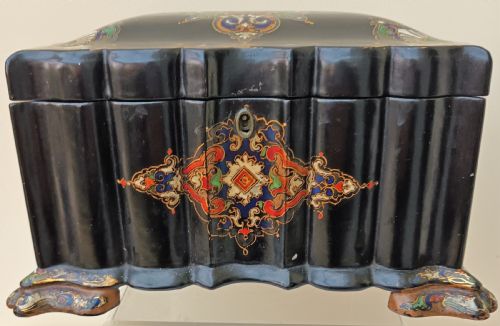
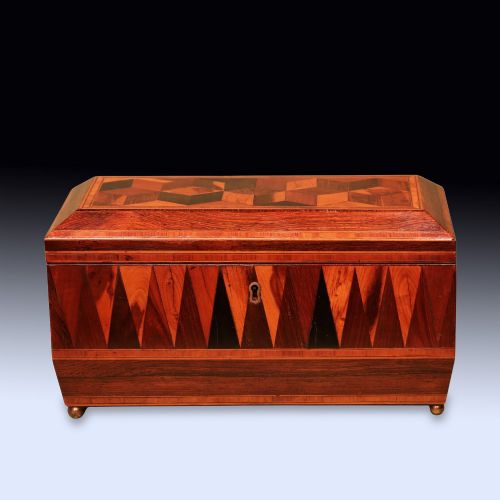
Georgian and Regency examples show particular geometry, employing navette curves, hexagonal bodies, and parquetry patterns. Later nineteenth-century iterations bring papier-mâché, boullework, and coromandel to the table.
Materials and technique
Cabinetmakers constructed these chests using dense timbers such as mahogany, padouk, and walnut, frequently applying veneers of satinwood, amboyna, or burr yew. Surfaces received embellishment through brass stringing, mother-of-pearl inlay, and paper scrollwork.
Interiors often featured fitted compartments, mixing bowls of glass, and individual metal canisters for distinct tea leaves. Specialised techniques like Tunbridge ware or tortoiseshell application required meticulous handling by period artisans.
Decorative Tea Chest Retail Price Guide 2026
Typical asking prices for decorative tea chest among the pieces listed under this phrase on Sellingantiques today, from the lower quarter to the upper quarter. They describe what is for sale here now, not the wider market.
Listings feature rosewood, mahogany, and tortoiseshell, spanning Georgian, Regency, and Victorian periods.
Quality distinctions
Distinctions in quality rest on the precision of the parquetry, the choice of burr veneer, and the integrity of the internal fittings. Superior examples retain original glass mixing bowls, functioning locks with keys, and precise brass inlays.
Weaker specimens display crude timber matching, lifting veneer, or replaced internal components that disrupt the historical cohesion of the chest.
Tahan of Paris
The Decorative Tea Chest Glossary
- Parquetry
- Geometric mosaic woodwork formed by small pieces of timber fitted together on a surface. This technique creates patterned lids and panels on Regency and Georgian chests.
- Sarcophagus
- A box shape featuring a domed or sloping lid reminiscent of an ancient stone coffin. Makers utilised this grand architectural profile during the Regency period.
- Tunbridge Ware
- Small wooden objects decorated with mosaic tile patterns made from thousands of tiny tinted wood blocks. This regional craft originated in Kent and adorns specific period caddies.
- Boulle
- Marquetry style combining tortoiseshell and brass inlay developed in France. The method yields shimmering surface contrasts on nineteenth-century boxes.
Decorative Tea Chest: Frequently Asked Questions
What were tea chests used for?
These chests stored valuable dry tea leaves under lock and key when tea was an expensive imported luxury commodity.
Servants or householders kept the caddy secured, often mixing green and black teas with sugar inside the integrated bowls before serving.
How do I date a tea chest?
Dating relies on timber choices, construction methods, and hardware styles observed across Georgian, Regency, and Victorian eras.
Early pieces favour mahogany and simple joinery, while Regency chests introduce brass inlay and sarcophagus silhouettes, and Victorian examples lean toward coromandel and papier-mâché.
Are original mixing bowls common?
Original glass bowls inside tea chests remain uncommon because glass easily suffered breakage during daily household use.
Finding a chest retaining its original glass mixing bowl or metal canisters adds significant completeness to the piece.
How do I care for antique wood?
Maintenance requires keeping wooden chests away from direct sunlight and fluctuating radiator heat to prevent veneer splitting.
Apply a light microcrystalline wax occasionally to nourish old timber surfaces without building up heavy chemical residues.