


Nineteenth Century Porcelain Urns
Nineteenth century porcelain urns bring classical elegance and intricate hand-painting to interior spaces, bridging European and Asian ceramic traditions.

Nineteenth Century Porcelain Urns
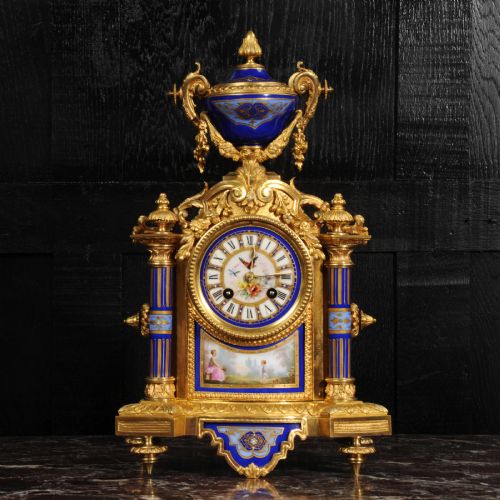
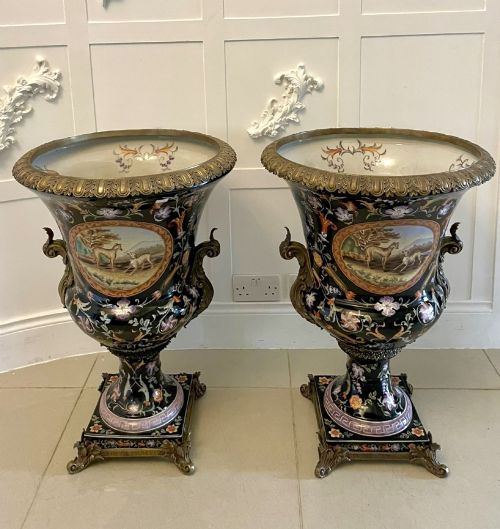
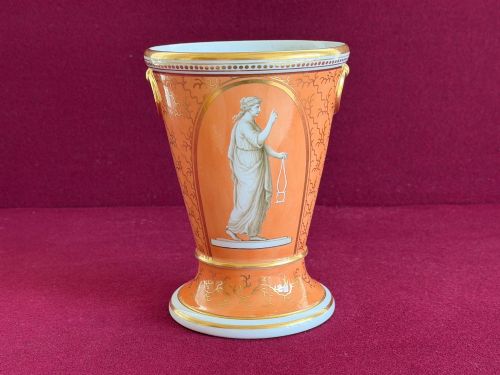
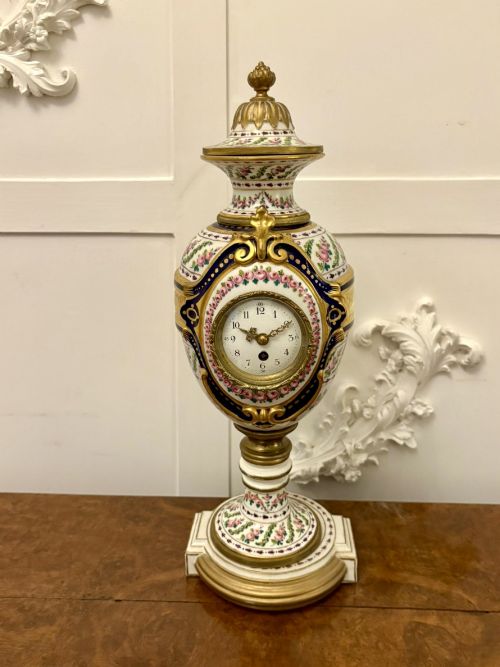
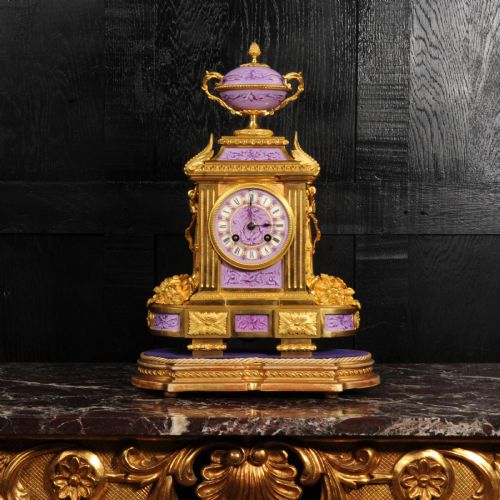
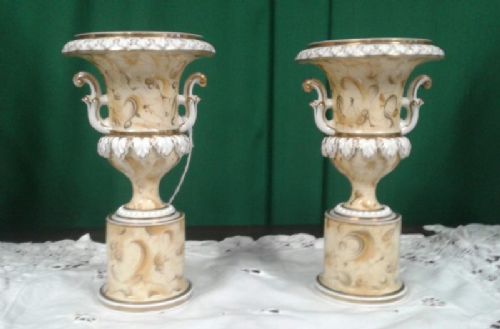
Nineteenth century porcelain urns encompass a diverse array of decorative vessels, ranging from campana and Medici shapes to lidded garnitures and clock sets. These objects originate from prominent European manufactories as well as Japanese and Chinese kilns active during the same era.
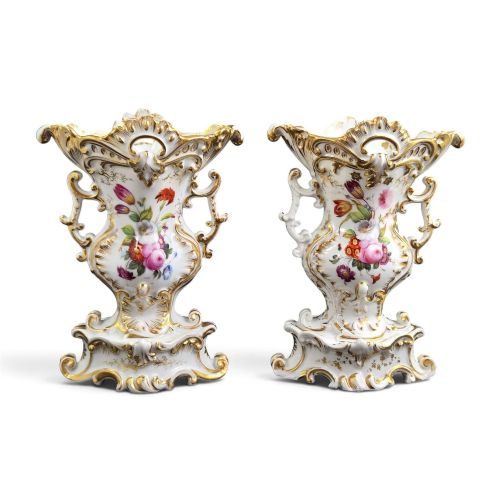
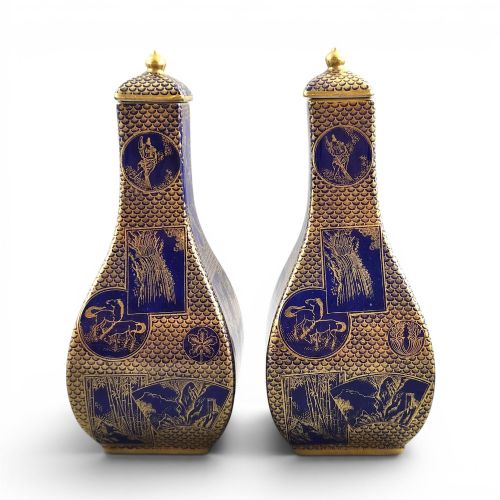
The most common examples on this page are French and English porcelain pieces styled in the Rococo Revival, Neoclassical, or Empire manner, often paired with gilt bronze or ormolu mounts. Alongside these sit Japanese Satsuma, Imari, and Kutani wares, reflecting the period's widespread fascination with Asian export aesthetics.
Materials and Technique
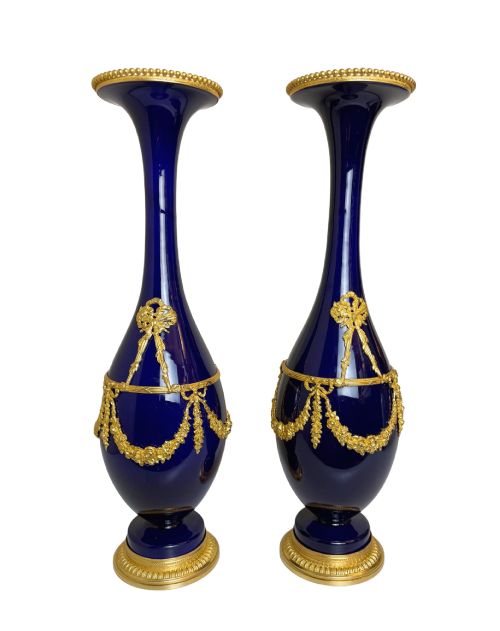
The creation of these pieces combines high-fired ceramic bodies - ranging from fine European paste to ironstone and Japanese porcelain - with elaborate surface decoration. Hand-painted enamels, cobalt grounds, and applied gold leaf frequently define the primary visual character of the vessels.
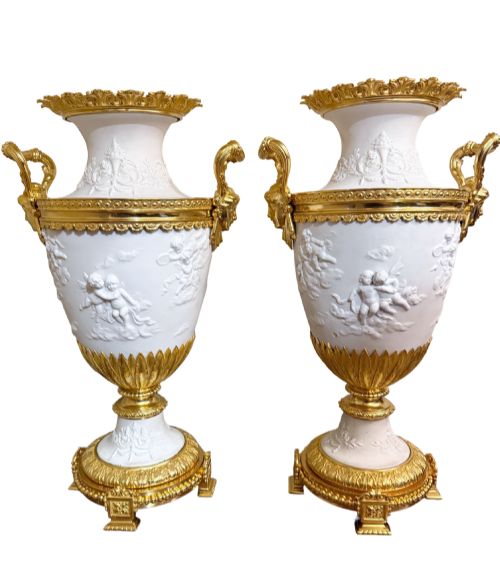
Many European and Japanese works incorporate metal components, utilising brass, ormolu, and gilt bronze mounts to frame the ceramic body or form handles and pedestals. Specialised techniques such as moriage relief work and transfer printing also appear across the inventory.
One determined pair of nineteenth century urns stands over a metre tall, testing the strength of any mantelpiece brave enough to hold them.
Assessing the Workmanship
Quality in these ceramics rests on the precision of the hand-painted details, the clarity of the enamel colours, and the crispness of any moulded relief work or gilt highlights. Superior examples display skilled brushwork and balanced compositions rather than mechanical uniformity.
The integration of metal mounts also dictates overall merit, as heavier, finely chased ormolu and securely fitted bronze mounts indicate higher production standards. Signed works and pieces from documented workshops demonstrate greater artistic ambition than unmarked domestic wares.
Japy Freres·Achille Brocot·Jacob Petit·Mason s·Wedgwood·Spode·Doulton Burslem·Royal Worcester·Kinrin Workshop
The Nineteenth Century Porcelain Urns Glossary
- Campana urn
- A bell-shaped vessel with a flared rim and footed base, frequently utilised in Neoclassical design.
- Ormolu
- Gilded bronze or brass applied as decorative mounts, feet, and handles on European porcelain vessels.
- Moriage
- A Japanese ceramic technique using trailing clay slip to create raised, decorative patterns beneath the glaze.
- Garniture
- A set of three or more matching vases or urns designed to be displayed together on a mantelpiece or sideboard.
- Ironstone
- A heavy, durable type of utilitarian ceramic patented in the nineteenth century to imitate Chinese porcelain.
Nineteenth Century Porcelain Urns: Frequently Asked Questions
Where were most of these porcelain urns made?
Production centres spanned Western Europe and East Asia during the nineteenth century. European examples typically emerged from French kilns in Paris and Sèvres, alongside English potteries in Staffordshire and Worcester.
At the same time, Japanese kilns in Satsuma, Kaga, and other regions produced distinct export wares. Chinese workshops also contributed heavily through Canton famille rose and blue and white export pieces.
How do I distinguish French styles from Japanese ones?
European pieces from this era generally draw on classical, Rococo, or Empire motifs, utilising symmetrical shapes, pastoral painted scenes, and gilt bronze mounts. The influence of Sèvres and Old Paris dominates these Western designs.
Japanese works, conversely, lean heavily into the Meiji period aesthetic, utilising cobalt grounds, dense brocade patterns, and raised moriage figures. They rarely employ European metal mounts, relying instead on integrated ceramic handles and bases.
How should I display porcelain urns at home?
Placement depends largely on the scale and form of the individual piece. Symmetrical pairs work well framing a fireplace, mirror, or doorway, while large floor vases suit open corners or hallways.
Because many nineteenth century pieces incorporate delicate gilding, enamel work, or ormolu mounts, stable surfaces away from direct sunlight and heavy foot traffic help protect them from accidental damage.