



Cobalt Blue Porcelain Garniture
Cobalt blue porcelain garniture sets bring symmetry and deep rich colour to a mantelpiece, combining matching vases or clock sets.
Cobalt Blue Porcelain Garniture
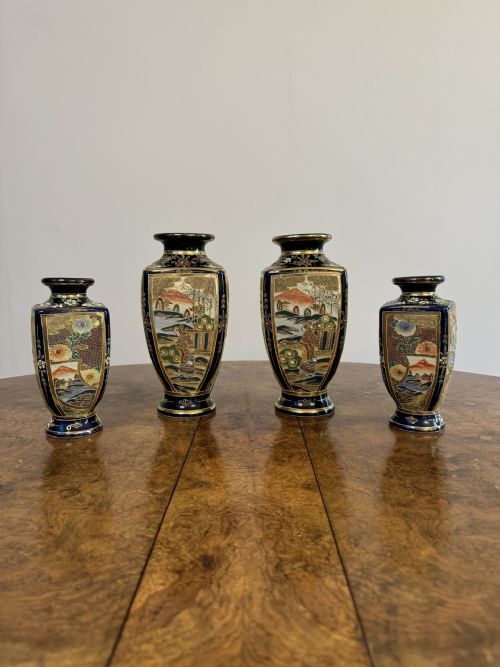
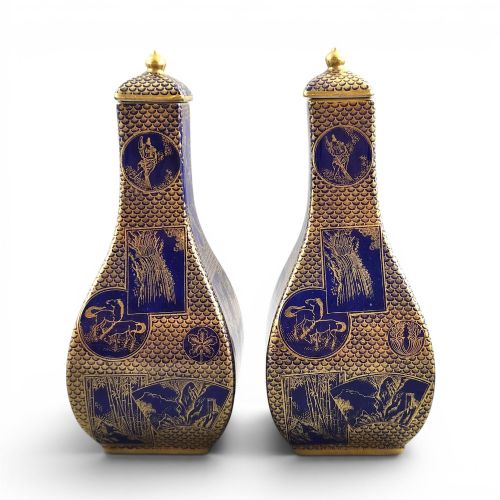
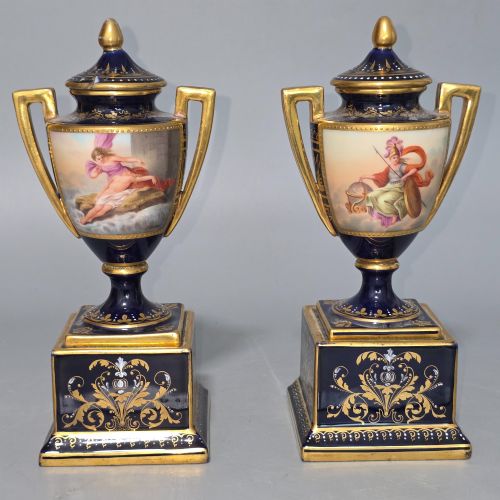
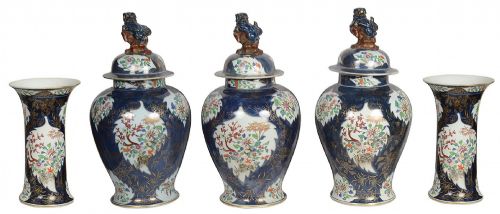
A cobalt blue porcelain garniture comprises matching sets of three to five vases, urns, or clock sets designed to be displayed together as a unified centrepiece. You will most frequently encounter nineteenth-century French and English porcelain sets, alongside Japanese Imari examples from the same era.
The configurations vary from pairs of vases with a central clock to complete sets of four or five matching vessels. These matching groups were originally created to decorate grand nineteenth-century interiors, utilising deep blue glazes and hand-painted details.
Makers ranged from major European factories like Sèvres, Vienna, and Minton to Japanese workshops producing export wares. The pieces survive in various combinations, from simple pairs of decorative urns to complete three-piece clock garnitures.
How they were made
Potters shaped the ceramic bodies from fine porcelain and applied rich cobalt blue glaze, often referred to as bleu de roi, before high-temperature firing. Many pieces received additional hand-painted decoration, enamel work, and gilding with gold leaf.
Metal mounts in ormolu, gilt bronze, and gilded metal were cast and chased to frame the porcelain bodies, particularly on French clock sets and garniture urns. Brass and glass elements also appear in specific nineteenth-century configurations.
Listings feature porcelain, ormolu, and glass across Victorian, Georgian, and nineteenth-century periods.
What varies in quality
The standard of hand-painting and the depth of the cobalt blue glaze distinguish standard production from exhibition pieces. Finer sets display crisp, detailed enamel work and precise gilding that has retained its original lustre over the centuries.
The weight and precision of the ormolu or gilt-bronze mounts also define the upper tier of garnitures. High-quality bronze mounts are deeply chased and fit the porcelain body seamlessly, whereas lesser examples show simpler casting and basic finishing.
Mason's Patent Ironstone·Thomas Steel·F. Koller
The Cobalt Blue Porcelain Garniture Glossary
- Garniture
- A set of matching decorative vases or vessels designed to be displayed together on a mantelpiece or sideboard. These arrangements typically comprise three or five matching pieces.
- Bleu de roi
- A deep, rich cobalt blue glaze utilised extensively by European porcelain factories during the eighteenth and nineteenth centuries. This intense blue often serves as the background for gilded highlights.
- Ormolu
- Finely chased and gilt bronze mounts used to decorate and support porcelain vases and clock garnitures. The technique involves applying a gold amalgam to bronze.
- Imari palette
- A traditional Japanese decorative style featuring deep cobalt blue, iron red, and gold highlights on porcelain. Pieces in this style were widely produced in Japan and later imitated in Europe.
Cobalt Blue Porcelain Garniture: Frequently Asked Questions
What is a garniture set?
A garniture set is a matching group of three or more ornamental vases, urns, or clock sets designed to be displayed together as a decorative unit. These sets were traditionally arranged along a mantelpiece or cabinet top.
Most surviving examples date from the nineteenth century and feature matching decorative schemes in porcelain with ormolu mounts or hand-painted glazes.
How do I clean cobalt porcelain?
Clean cobalt porcelain gently using a soft, dry cloth to remove dust from the glazed surfaces and metal mounts. Avoid harsh chemical cleaners or abrasive materials that might damage delicate gilding or enamel work.
If deeper cleaning is necessary, use a damp cloth with mild soap, ensuring the piece is dried immediately afterwards to protect any exposed metal components.
Where should I display a garniture?
Garniture sets look best when displayed on a long mantelpiece, sideboard, or console table where the matching pieces can be arranged symmetrically. The central element, such as a clock or larger urn, anchors the display.
Ensure the surface is stable and out of direct sunlight to protect the cobalt glaze, gold leaf, and ormolu mounts from gradual fading.
How do I date a porcelain garniture?
Dating a garniture involves examining factory marks on the base, the style of the porcelain body, and the craftsmanship of the metal mounts. Nineteenth-century pieces often bear stamps, painter signatures, or registration numbers.
Comparing the decorative style, such as French Rococo Revival or Japanese Imari, alongside the materials like ormolu and enamel, helps narrow the period of manufacture.