


Gilded Ceramic Vase Set
These gilded ceramic vase sets range from nineteenth-century Japanese garnitures to European porcelain pieces, offering matching arrangements for display.
Gilded Ceramic Vase Set
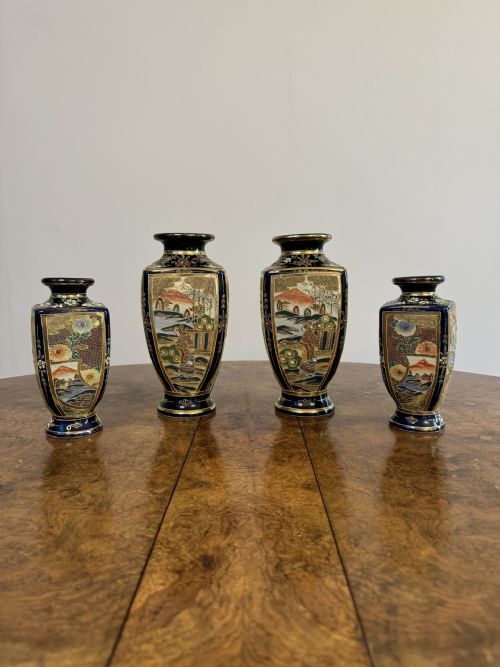
A gilded ceramic vase set comprises coordinated vessels designed to be displayed together as a garniture or matched arrangement. The selection spans nineteenth-century Japanese Satsuma and Imari wares alongside European porcelain and ironstone productions.
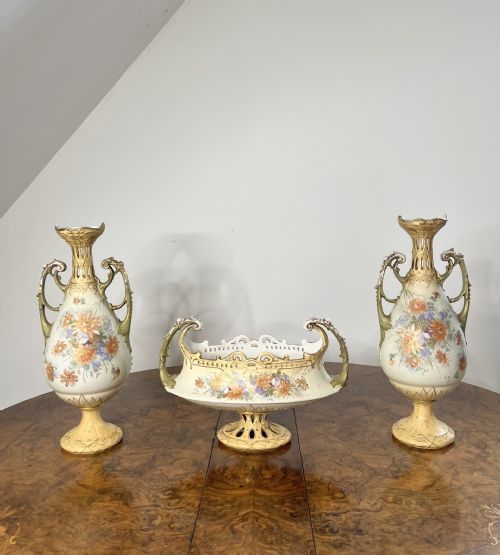
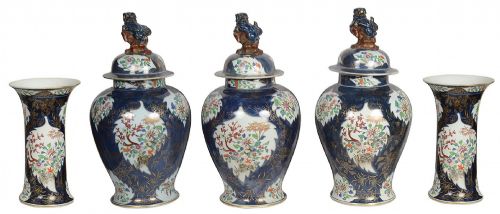
Most examples function as sets of three or four pieces, often including lidded jars or side vases created for mantelpieces and centrepieces. These groupings bring together ceramic bodies adorned with gold leaf, enamel, and hand-painted details.
The origin stretches across Japanese Edo and Meiji periods, Victorian English manufactories, and continental European workshops. Buyers encounter everything from miniature garlands to large lidded garnitures shaped as matching trios.
Materials and construction
The foundation relies on ceramic materials such as porcelain, earthenware, and ironstone shaped into vases, urns, and jars. These bodies are finished with glazes before receiving detailed hand painting and enamel work.
Gilding and gold leaf are applied to highlight rims, panels, and motifs, often complementing intricate oriental palettes or European floral scenes. Certain continental pieces incorporate ormolu mounts to secure and frame the ceramic structure.
Several sets feature fences and doves sharing space with traditional gilding.
Assessing the range
Quality rests in the precision of the hand-painted decoration, the crispness of the porcelain or ironstone body, and the intact survival of the gilding. Sets that retain all original matching components command stronger interest than assembled groups.
The complexity of the palette and the depth of the enamel work distinguish standard production from finer exhibition pieces. Continental and Japanese pieces show variation in the delicacy of the gilding applied over the glaze.
Doulton Lambeth·Royal Vienna
The Gilded Ceramic Vase Set Glossary
- Garniture
- A set of matching vases or pots designed to be displayed together on a mantelpiece or sideboard. They typically consist of three or five pieces.
- Imari
- A style of Japanese export porcelain featuring a distinctive palette of underglaze blue, iron red, and gilt. This aesthetic influenced European ceramic design significantly.
- Ironstone
- A patented heavy earthenware developed in nineteenth-century England to provide a durable alternative to porcelain. It takes enamels and gilding readily.
- Ormolu
- Gilded bronze mounts used on nineteenth-century European porcelain sets for decorative and structural support. The technique involves applying gold amalgam to bronze.
Gilded Ceramic Vase Set: Frequently Asked Questions
What is a ceramic garniture set?
A ceramic garniture set is a matching group of three or more vases or jars designed for unified interior display. They were traditionally placed along mantelpieces or furniture tops to create balanced decoration.
These sets include pieces of varying heights, such as central lidded urns flanked by smaller matching vases. The arrangement brings symmetry and decorative colour to a room.
How do I date a gilded vase set?
Dating relies on examining the ceramic body, the style of the gilding, and any factory marks on the base. Nineteenth-century examples often display specific regional characteristics, from Japanese Imari palettes to Victorian European porcelain.
Comparing the painting technique and the type of glaze helps narrow the period of manufacture. Consultation with listed materials and styles provides further context for attribution.
Where were these vase sets displayed?
These vase sets were placed in prominent reception rooms on mantelpieces, consoles, and centre tables. Their matching design provided a focal point that reflected formal interior decoration.
Large garnitures anchored the centre of a display, while side vases created balance across the width of a mantel. Their gilded surfaces caught candlelight and daylight alike.
Are all pieces in a garniture identical?
Garniture sets feature coordinated designs rather than identical pieces, usually following a scheme of matching shapes in graduated sizes. Central lidded vases often pair with slimmer side vessels sharing the same palette and motifs.
This variation in form created a balanced silhouette when arranged together as a complete set on display.