




Victorian Decorative Mantle Urns
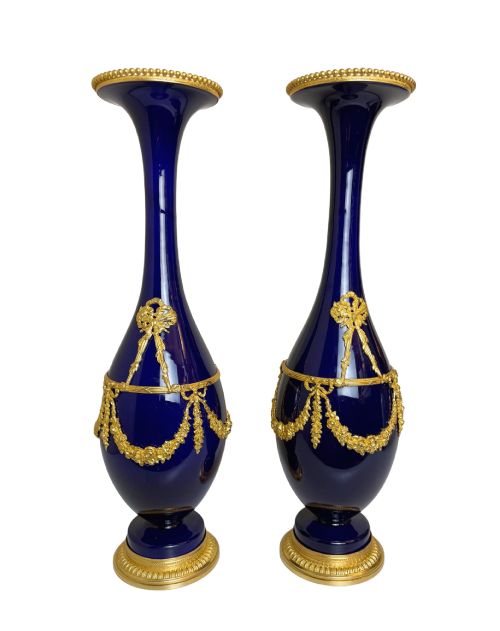
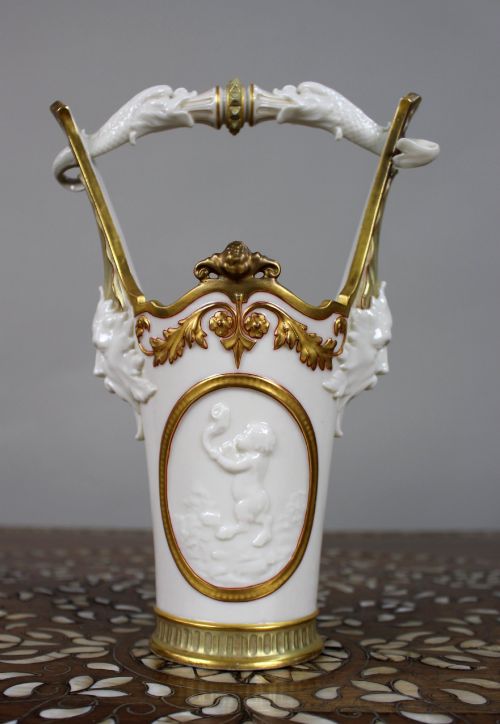
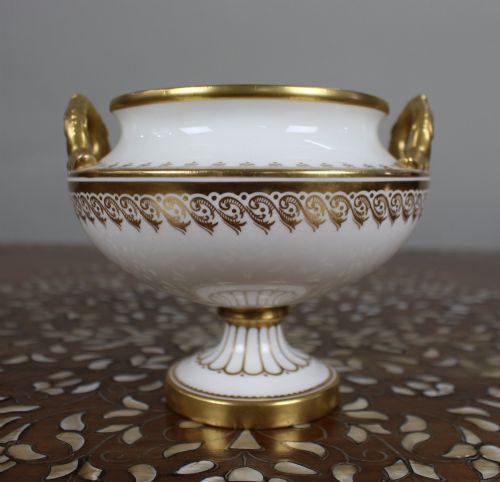
These Victorian decorative mantle urns are striking Victorian mantel pieces that bring character to a room.
Victorian Decorative Mantle Urns
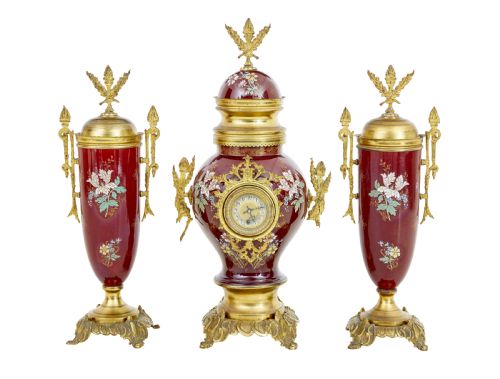
When you search for Victorian decorative mantle urns, you encounter a refined selection of ornamental vessels, clock garnitures and lidded vases designed for display on a mantelpiece. These pieces span the nineteenth century, drawing heavily on periods like the 1880s and 1890s.
The objects on this page range from porcelain pairs to elaborate garniture sets that anchor a room with period weight. You will find items originating from English potteries and continental workshops alike.
Most examples align with revival aesthetics such as Rococo, Louis XVI and Neo-Classical styles. Pairs feature prominently alongside single cabinet vases and mounted clocks.
What varies in quality
The distinction between standard production and exceptional quality rests in the crispness of the modelled detail and the depth of the gilding. Hand-painted portraits and delicate pate-sur-pate work elevate individual pieces far above simple factory output.
Mounts in ormolu and gilt bronze show variation in weight, chasing and how securely they fit the ceramic body. Pieces carrying retailer names or specific artist signatures demonstrate a higher level of workshop ambition.
Materials represented across the selection include porcelain, glass, gilt bronze, toleware and lacquered papier-mache.
Royal Worcester·Doulton Lambeth·Dresden·Minton·Royal Vienna·Jennens & Bettridge
The Victorian Decorative Mantle Urns Glossary
- Garniture set
- A matching set of ornamental vessels, usually comprising a central clock or large urn flanked by smaller matching vases. These sets were designed to display symmetrically across a mantelpiece.
- Ormolu
- Finely ground high-carat gold applied to a bronze base using a mercury-gilding technique, or cast brass finished to mimic gold. It provides rich decorative trim on nineteenth-century French and English pieces.
- Pate-sur-pate
- A method of ceramic decoration where wet white porcelain slip is built up in successive layers on a coloured clay body to create a low relief cameo effect. Minton famously utilised this technique.
- Bisque porcelain
- Unglazed white porcelain fired once to produce a matte, biscuit-like texture that resembles fine marble. It was frequently used for nineteenth-century figurative and decorative vases.
Victorian Decorative Mantle Urns: Frequently Asked Questions
What is a garniture set?
A garniture set consists of three or more matching decorative objects, typically a central mantel clock accompanied by two matching urns or vases. They were arranged symmetrically on a fireplace mantel to anchor the room's decorative scheme.
Today, these sets retain their original impact when placed together on a wide shelf or sideboard, though individual pieces from a set can also stand alone.
How do I identify a Victorian urn?
Victorian urns are identified through their distinct revival styles, such as Neo-Classical, Rococo or Louis XVI, combined with nineteenth-century manufacturing materials like porcelain, gilt bronze and ormolu. Many pieces bear maker marks, registry numbers or artist signatures on the underside.
Examining the weight of the metal mounts and the hand-painted quality of the surface decoration helps confirm the period of manufacture.
Where should I place a mantle urn?
Mantle urns belong on sturdy surfaces with sufficient depth, traditionally the mantelpiece above a fireplace, but they work equally well on bookcases, console tables or pedestals. Their height and decorative weight draw the eye, making them natural focal points in a room.
Keep them away from direct heat sources and high-traffic edges to protect delicate gilding and porcelain handles.
Are these urns purely decorative?
Most nineteenth-century mantle urns and vases served an entirely ornamental purpose rather than holding flowers or liquids. Their function was to display artistic skill, wealth and refined taste within the Victorian interior.
Paired with matching garniture clocks or displayed as cabinet pieces, they were status symbols designed purely for visual pleasure.