





Nineteenth Century Desk Tidy
A nineteenth century desk tidy keeps your writing surface in order through brass mounts, precious woods, and heavy glass.
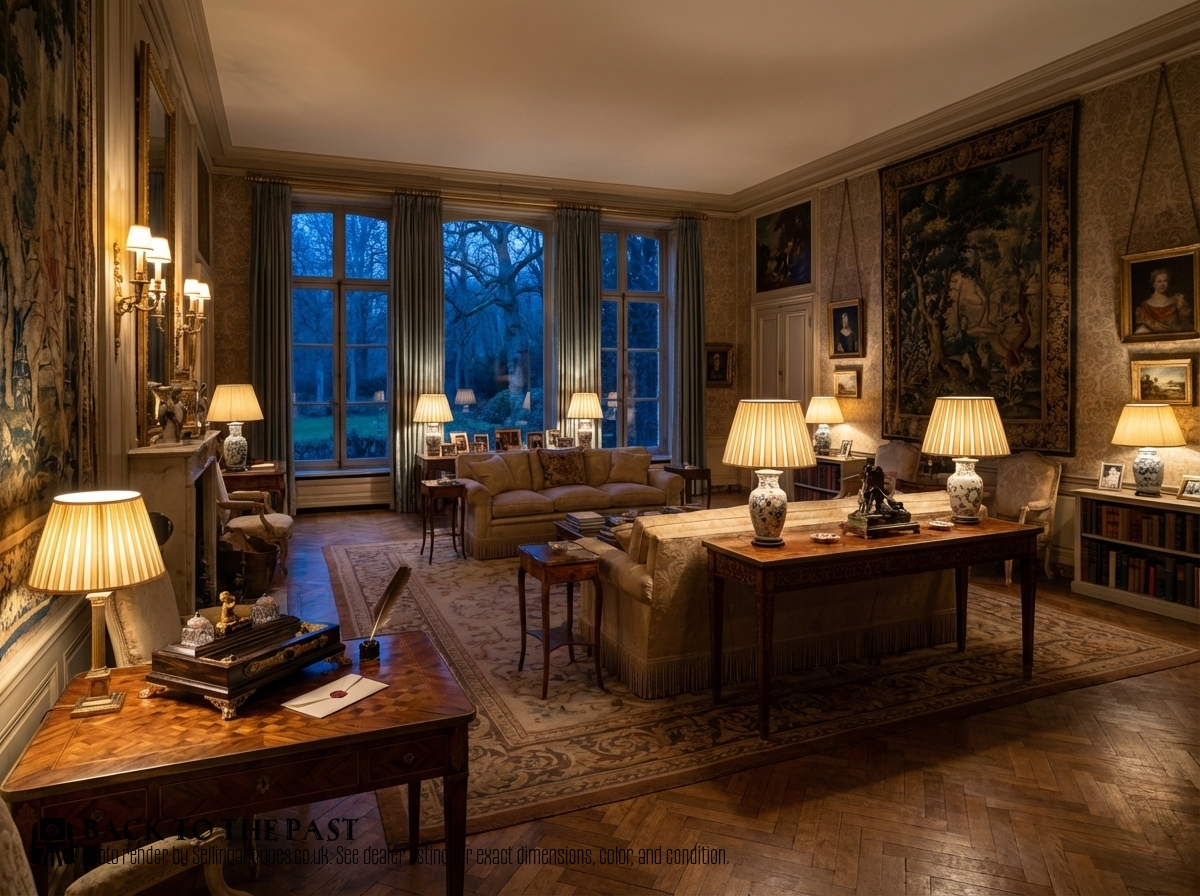
Nineteenth Century Desk Tidy
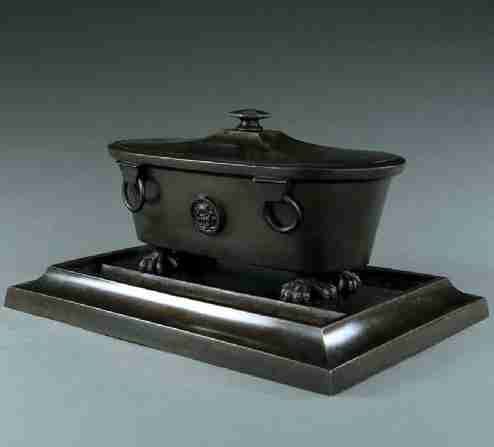
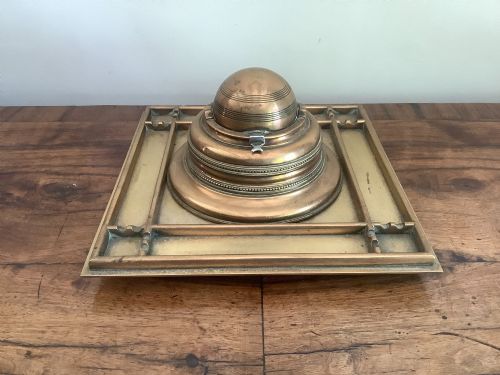
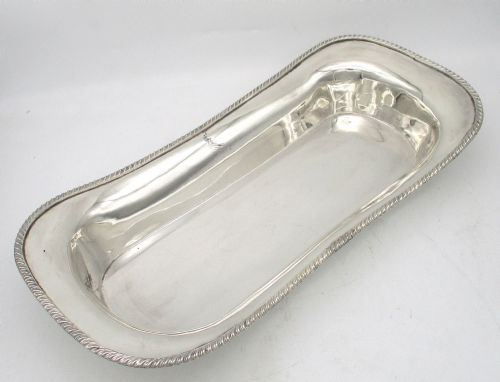
A nineteenth century desk tidy gathers the small implements of the correspondence table into one dedicated vessel or stand. These pieces range from simple book racks and knife trays to elaborate desktop cartonnieres and inkstands.
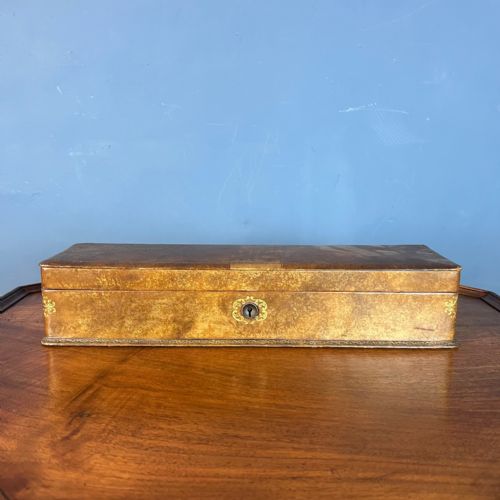
The version you meet most often on this page is constructed from rosewood or coromandel wood, frequently fitted with glass inkwells and brass or ormolu mounts. Other forms include novelty items such as a bulldog inkwell and brass-mounted correspondence boxes.
Origins span English Victorian workshops alongside French pieces reflecting Second Empire and Louis XV revival tastes, as well as Anglo-Indian brass-mounted boxes. Regency examples also appear among the selection of desk accessories.
Materials and construction
Makers utilised dense exotic hardwoods such as rosewood and coromandel wood as the primary foundations for these desktop articles. These timber bodies frequently receive metal mounts in brass, ormolu, gilt bronze, and silver plate.
Book racks and carriers rely on robust wooden joinery to support heavy volumes, whilst novelty inkwells integrate cast metal animal figures with hinged lids to conceal glass inserts.
Nineteenth Century Desk Tidy Retail Price Guide 2026
Typical asking prices for nineteenth century desk tidy among the pieces listed under this phrase on Sellingantiques today, from the lower quarter to the upper quarter. They describe what is for sale here now, not the wider market.
Listings feature items from the Regency period through to the late nineteenth century, including Victorian and French Second Empire styles.
Distinctions in quality
The standard of a nineteenth century desk tidy depends on the crispness of its metal mounts and the selection of its timber veneers. Finely chased ormolu and heavy cast-brass elements elevate a piece above simpler brass-mounted alternatives.
Material choice marks another division, with richly figured coromandel wood and rosewood sitting at the upper end of the scale alongside gilt bronze and fitted tooled leather interiors. Robust construction without clumsy repairs dictates the longevity of book slides and correspondence boxes.
The Nineteenth Century Desk Tidy Glossary
- Cartonnier
- A desktop cabinet designed to hold papers, letters, and documents. These pieces often feature tiered compartments.
- Ormolu
- Gilt bronze mounted onto furniture and decorative objects. This technique creates a bright golden finish through the application of mercury and gold.
- Coromandel wood
- A dense, heavy timber from Asia featuring dark brown grain with dramatic black stripes. Makers utilised it for luxury nineteenth century boxes and desk stands.
- Inkstand
- A tray or stand holding one or more inkwells along with pen rests. They form the central apparatus of a writing table.
- Novelty inkwell
- An inkstand shaped to represent an animal, figure, or object. Examples include cast metal figures with hinged components.
Nineteenth Century Desk Tidy: Frequently Asked Questions
What is a nineteenth century desk tidy?
A nineteenth century desk tidy is a decorative desktop accessory designed to hold writing instruments, inkwells, and correspondence.
These pieces encompass inkstands, correspondence boxes, book racks, and cartonnieres created from woods like rosewood and coromandel.
How were desk tidies used?
Victorian writers used these accessories to organise loose papers, dip pens, and wet ink supplies on a writing desk.
The inclusion of glass inkwells and pen boxes kept the desktop clean and prevented ink stains on valuable wood surfaces.
What woods are common?
Rosewood and coromandel wood appear frequently across the selection of nineteenth century desk accessories.
These rich timbers were chosen for their durability and striking grain patterns, often paired with brass or ormolu mounts.
How do I date a desk tidy?
Dating relies on stylistic clues such as French revival influences, Regency forms, or Victorian novelty designs.
Materials like ormolu, gilt bronze, and tooled leather also point toward specific decades within the nineteenth century.