
Victorian Writing Desk Accessory
These pieces for a victorian writing desk accessory bring order and distinction to a working surface through inkwells, stands, and boxes.
Victorian Writing Desk Accessory
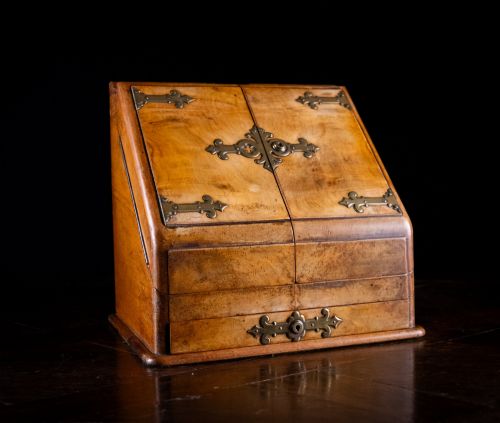
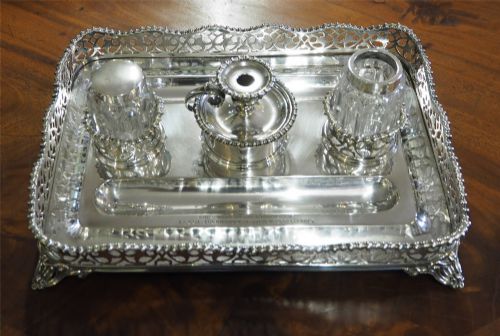
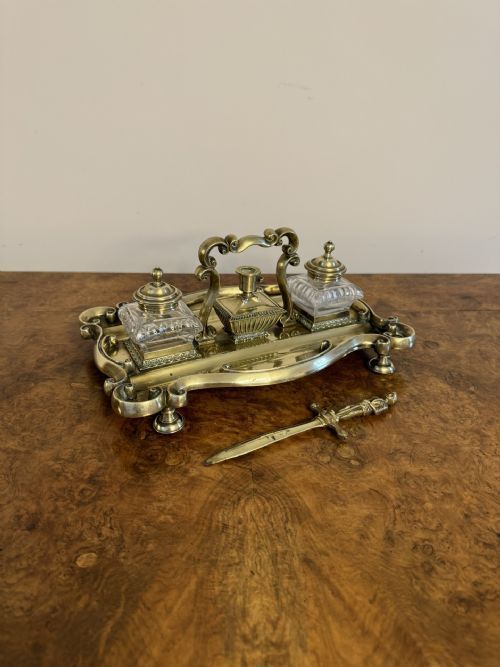
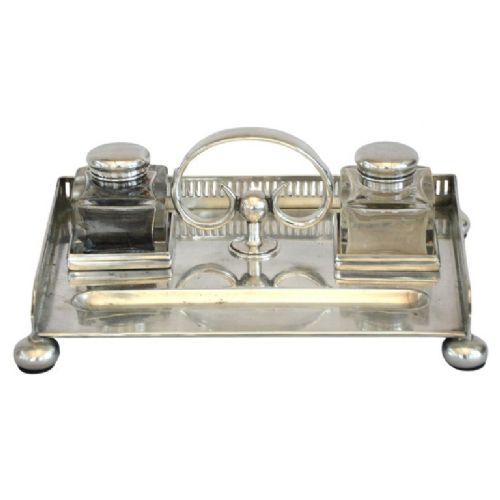
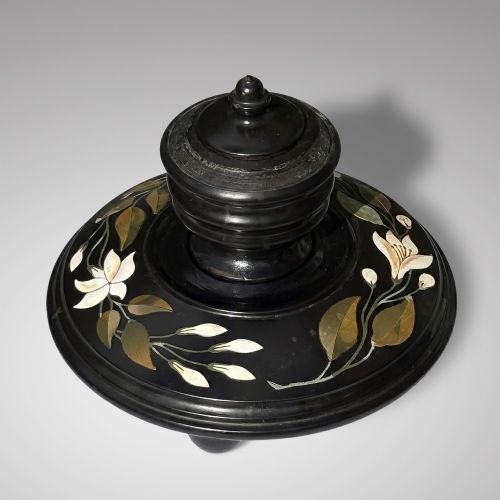
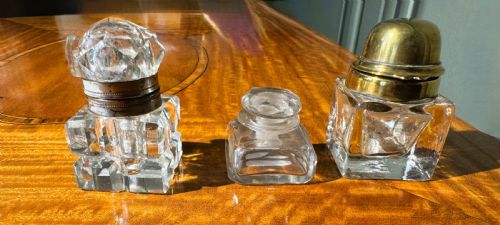
A victorian writing desk accessory encompasses inkstands, stationery boxes, desk sets, and writing instruments designed to organise correspondence during the nineteenth century. The selection ranges from modest glass inkwells to elaborate double inkstands fitted with chambersticks and pen rests.
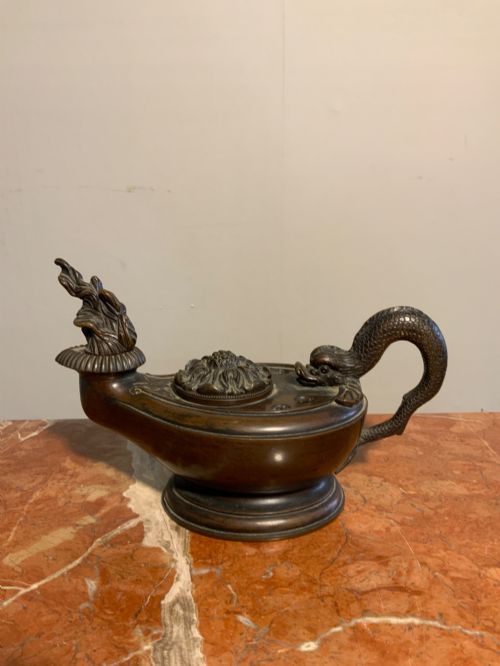
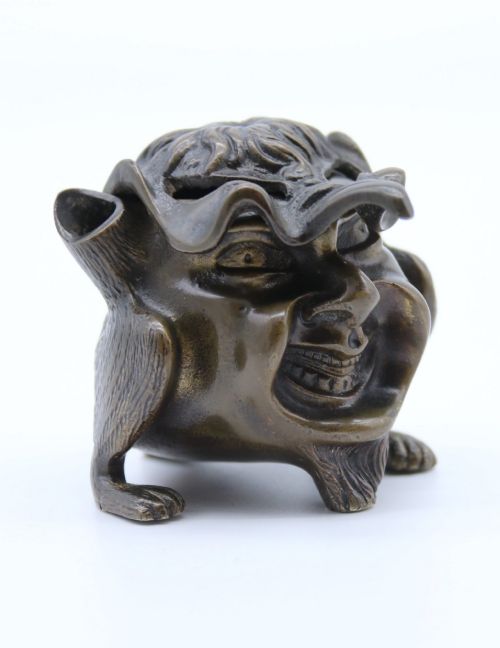
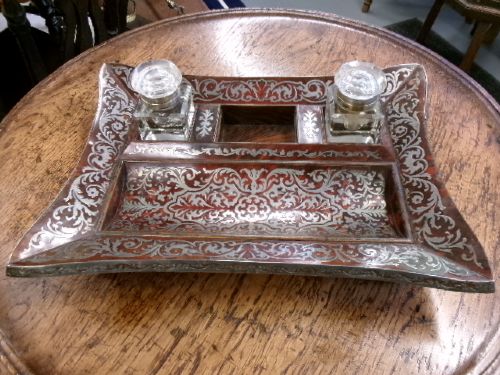
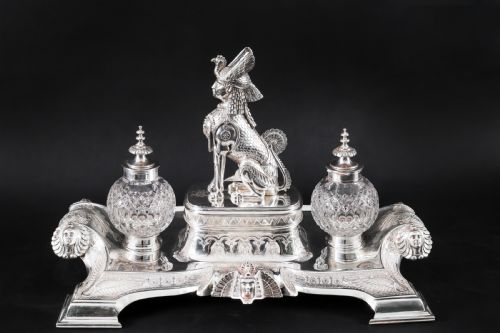
Materials span walnut, brass, silver plate, and cut glass, alongside decorative treatments such as Boulle work, champleve, and Tunbridge ware. Forms include novelty items in the shape of animals or grotesque creatures, alongside traditional campaign writing slopes and blotters.
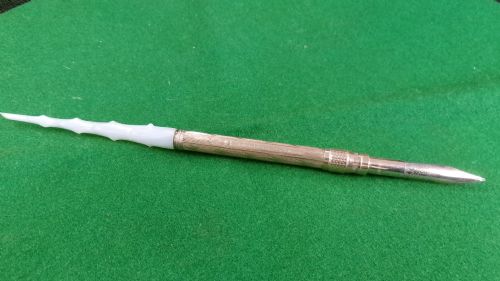
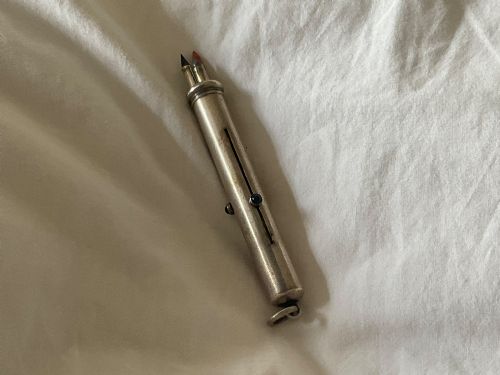
Origins represented on this page stretch from English workshops to French ormolu ateliers and Grand Tour souvenirs in bronze. Buyers encounter both domestic desk tidies and specialised items like dip pens and propelling pencils.
How they were made
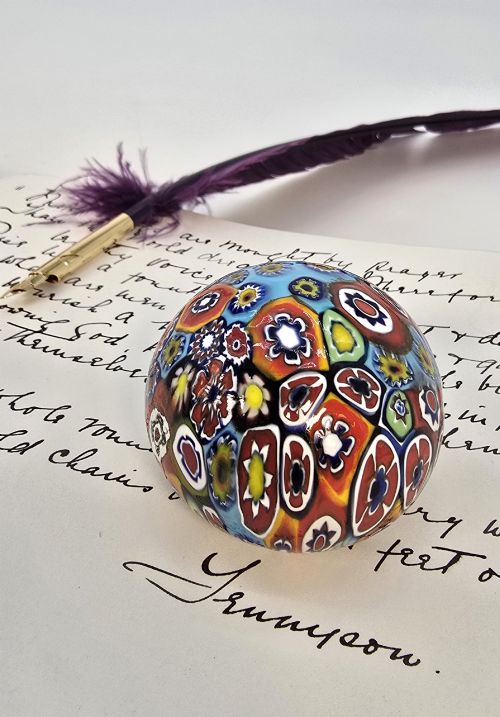
Metals such as brass, bronze, and silver plate form the structural mounts and housings for many inkstands, often combined with cast ornamentation or gilt bronze details. Glass components rely on heavy cut glass or millefiori techniques to create durable receptacles for liquid ink.
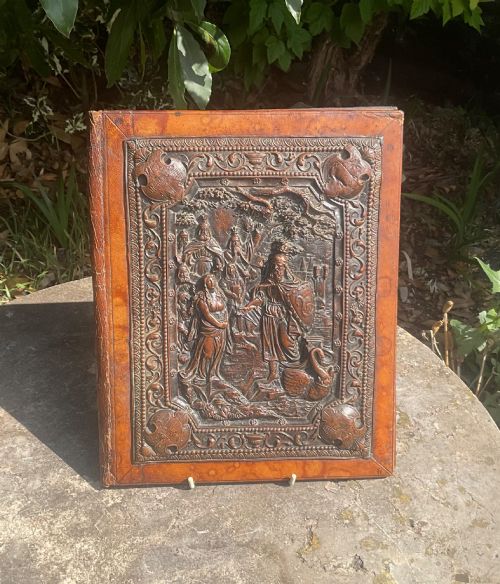
Cabinet makers utilised hardwoods including walnut, coromandel, and burr walnut, frequently embellished with brass inlay, tortoiseshell, or tooled leather panels. Specialised surface treatments involve champleve enamel, hand-carved wood, and papier-mache.
Desk accessories occasionally take whimsical forms, including a heavy silver boot scraper meant to double as a pen wipe.
What varies in quality
The distinction between standard items and exceptional pieces rests upon the precision of the cabinet work, the weight of the cast metal mounts, and the complexity of decorative inlays such as Boulle or Tunbridge ware. Finer examples incorporate integrated accessories, matched cut-glass inserts, and signed silver or plated components.
Design ambition separates basic desk tidies from sculptural novelties and Grand Tour bronzes, where artistic execution and figurative detail determine the standing of the object.
Elkington·Wilkinson and Co·Walker and Hall·Sampson Mordan and Co·Edward Todd and Co·Mabie Todd and Co
The Victorian Writing Desk Accessory Glossary
- Inkstand
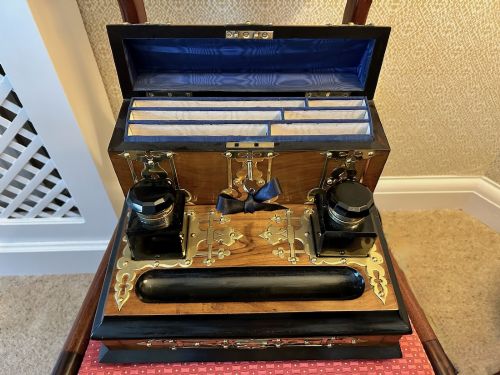
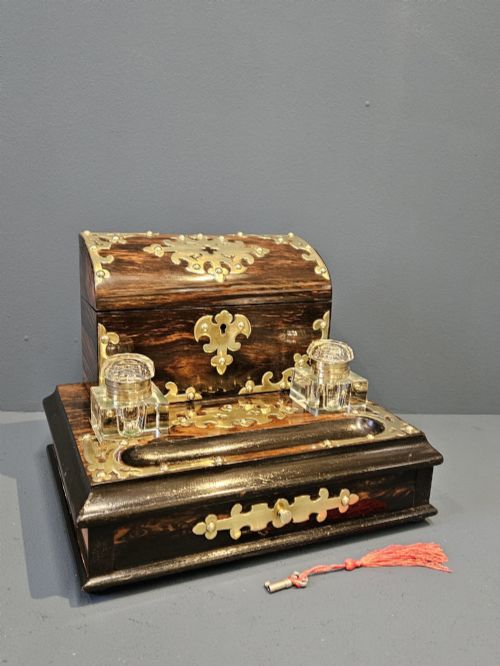
- A fitted tray or stand holding one or more inkwells, pen rests, and sometimes a sander or bell. These assemblies anchored the writing surface of a Victorian desk.
- Stationery box
- A desk cabinet designed to hold writing paper and envelopes upright in tiered compartments. They often feature sloping folding lids and brass mounts.
- Champleve
- An enamelling technique where troughs or cells are hollowed out in a metal surface and filled with vitreous enamel before firing. It appears frequently on nineteenth-century bronze desk sets.
- Boulle work
- A form of marquetry employing brass and tortoiseshell inlaid in contrasting patterns. Named after a French royal cabinet maker, it adorns decorative desk stands.
- Dip pen
- A writing instrument consisting of a nib mounted on a handle, used by dipping into an inkwell. They are often found paired with matching desk stands and pen wipes.
Victorian Writing Desk Accessory: Frequently Asked Questions
What is an inkstand?
An inkstand is a portable tray or stand designed to hold inkwells, pens, and desk accessories together in one place.
They kept the writing surface tidy and allowed writing implements to move easily between rooms.
How do I use a stationery box?
A stationery box holds notepaper and envelopes in upright wooden slots behind a hinged lid.
Place it on a desk or side table to keep correspondence neatly sorted and close at hand.
What is Tunbridge ware?
Tunbridge ware is wood marquetry made from tiny tinted wooden blocks assembled to create mosaic pictures.
It appears on boxes and desk accessories produced in Kent during the nineteenth century.
How do I date a brass desk set?
Dating relies on stylistic clues like Gothic Revival motifs, Art Nouveau curves, or Victorian registration marks.
Material combinations and manufacturing techniques also help narrow the period of production.