


Victorian Inkstand Organiser
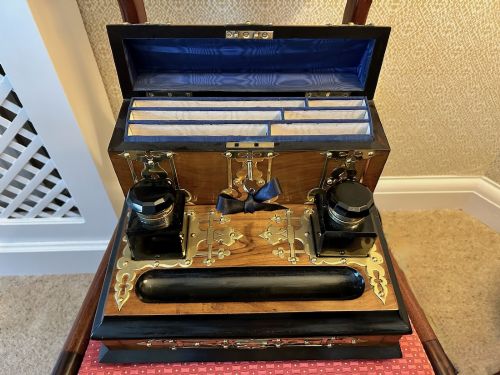
These walnut, brass and oak pieces for the desk are what a Victorian inkstand organiser is, built to keep correspondence and writing materials in order.
Victorian Inkstand Organiser
A Victorian inkstand organiser brings together inkwells, pen rests, and storage for stationery into a single desk accessory. These pieces serve to keep writing desks orderly while offering a handsome centrepiece for the study or library.
The selection here includes solid oak, walnut, and coromandel stands alongside brass, silver-plated, and papier-mâché pieces. Makers across Britain and Europe produced these desk sets in various stylistic revivals during the nineteenth century.
Buyers will find items ranging from simple wooden ink stands with a single glass bottle to elaborate sets featuring letter boxes, drawers, and carved Black Forest animal figures. Many incorporate slots for envelopes and compartments for nibs and stamps.
Materials and construction methods
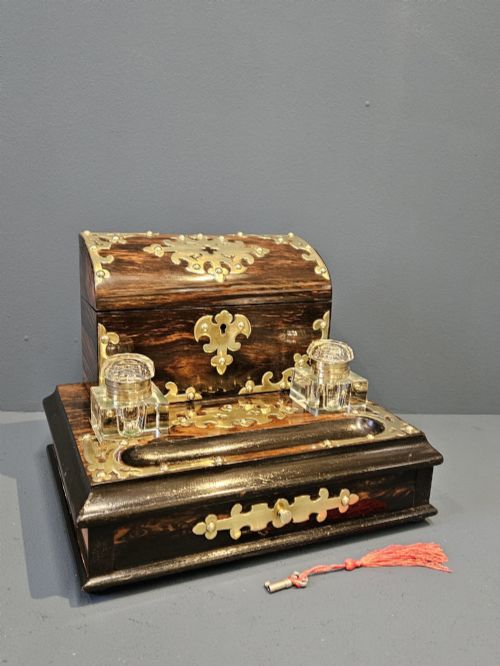
Cabinet makers utilised dense hardwoods like walnut, oak, and coromandel, often enhancing the timber with brass mounts, inlay, or mother-of-pearl. Carved wooden pieces from the Black Forest demonstrate detailed hand-carving techniques.
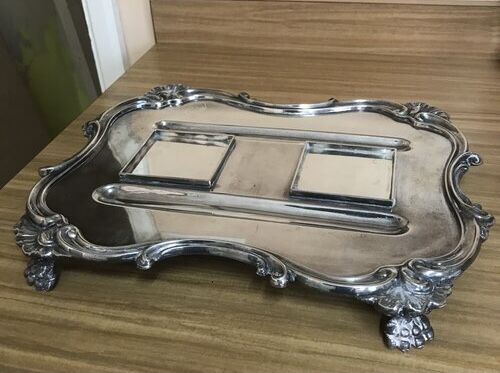
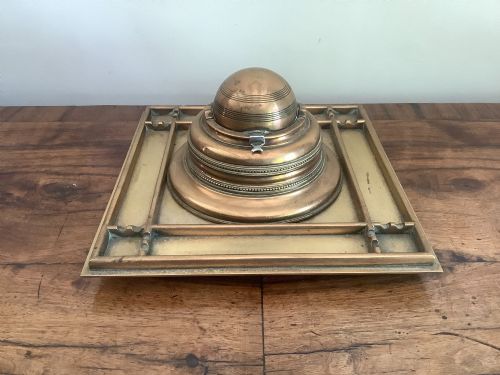
Metal components involve cast brass, silver plating, and gilded bronze, paired with clear or coloured glass for the ink bottles. Papier-mâché provides a smooth, dark surface suited to painting and mother-of-pearl ornamentation.
Fittings such as hinged lids, small drawers, and pen trays require precise carpentry and metalwork to function smoothly together on the base.
Several items double as miniature menageries, featuring carved wooden bears and gilded bronze kittens guarding the ink.
Distinctions in construction and material quality
Superior examples display crisp casting in the metal mounts, tight joinery in the wooden chassis, and intact interior fittings such as original glass ink bottles with matching tops. Lesser pieces show simplified decoration and replacement elements.
The choice of base material influences the distinction, with exotic timbers like coromandel and tortoiseshell or finely detailed Black Forest carvings occupying the upper tiers of workmanship. Standard oak and simpler brass sets offer sturdy utility without elaborate decorative flourishes.
The Victorian Inkstand Organiser Glossary
- Standish
- A portable tray or stand holding inkwells, sanders, and pen holders for a desk. It represents the formal predecessor to the desk set.
- Stationery box
- A desk accessory featuring upright compartments designed to hold envelopes and writing paper neatly. These boxes often form the back portion of an inkstand organiser.
- Coromandel
- A dense, dark brown timber with contrasting black stripes imported from Asia and used for luxury boxes. Cabinet makers prized it for high-end Victorian desk accessories.
- Ormolu
- Gilded bronze or brass applied as decorative mounts on furniture and desk stands. The technique involves applying a gold amalgam to the metal surface.
- Black Forest carving
- Detailed wooden sculpture originating from the Brienz region of Switzerland, often depicting bears or cats. These carved animals frequently incorporate inkwells into their bodies.
Victorian Inkstand Organiser: Frequently Asked Questions
What is a Victorian inkstand organiser used for?
These pieces hold ink bottles, pens, and paper to keep a writing desk tidy and organised.
They provided a designated place for correspondence essentials in the study or parlour during the nineteenth century.
How do I care for wooden desk stands?
Keep wooden pieces away from direct sunlight and sudden temperature changes to protect the polish and timber.
Dust them gently with a dry cloth and apply a quality wax polish occasionally to nourish the wood.
How can I tell the period of a desk set?
Examine the materials, construction methods, and stylistic cues such as Gothic or Rococo revival details.
Victorian pieces often employ coromandel, heavy brass mounts, and hand-cut glass ink bottles characteristic of nineteenth-century manufacturing.
Are ink bottles usually original to the stand?
Many sets retain their original glass ink bottles, though some have replacements that fit the designated apertures.
Look for matching glass colour, weight, and wear around the neck that matches the age of the base.