
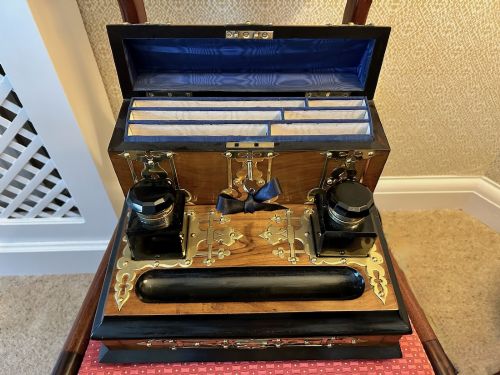



Vintage Wooden Inkstand
A vintage wooden inkstand brings tactile desk organisation to your room, holding glass inkwells and pens in rich timber.
Vintage Wooden Inkstand
When you search for a vintage wooden inkstand, you are looking at nineteenth-century and early twentieth-century desk accessories designed to hold writing materials. These pieces combine fitted timber stands with glass inkwells, brass mounts, and occasionally stationary boxes or drawers.
On this page, you are most likely to meet Victorian and Edwardian examples fashioned from oak, mahogany, walnut, coramandel, and rosewood. Styles range from plain utilitarian oak stands to heavily carved Black Forest animal subjects.
The forms vary from simple double inkwells to large desk tidies featuring letter racks and pen trays. Originating from nineteenth-century British and continental workshops, they reflect the serious correspondence habits of the period.
Materials and construction
Cabinet makers utilised dense hardwoods such as oak, walnut, mahogany, and exotic coramandel to build the structural stands and stationary boxes. These timbers were selected for stability and grain figure, often enhanced with brass inlay or mother-of-pearl.
Carved pieces, particularly those in the Black Forest style, display intricate hand-chiselled details depicting animals or foliate motifs. Glass inserts and cut glass inkwells were fitted directly into the timber chassis, frequently accompanied by hinged brass lids.
Some nineteenth-century desk companions take the surprising form of fierce terrier dogs and cats guarding the ink.
Distinctions in quality
The standard of a vintage wooden inkstand rests on the choice of timber and the precision of its joinery. Superior examples employ solid hardwoods and feature well-fitted drawers or integrated stationery compartments that operate smoothly.
Fittings also dictate excellence, where heavy cast brass mounts, original cut glass inkwells, and crisp, deep hand-carving elevate an ordinary desk tidy into a substantial piece of desk furniture.
The Vintage Wooden Inkstand Glossary
- Inkstand
- A portable tray or stand fitted to hold one or more inkwells and frequently a pen rest. It sits upon a desk to keep writing materials orderly.
- Desk tidy
- A multi-compartment desk accessory designed to hold pens, stamps, sealing wax, and small stationery items alongside inkwells.
- Coramandel
- A dense, heavily figured tropical hardwood from South-East Asia and India with dark brown and black grain patterns, prized for nineteenth-century luxury boxes.
- Black Forest
- A nineteenth-century carving style originating from the Brienz region of Switzerland, characterised by naturalistic animals and foliage rendered in limewood or walnut.
Vintage Wooden Inkstand: Frequently Asked Questions
What is a vintage wooden inkstand?
A vintage wooden inkstand is a desktop accessory made from timbers like oak, walnut, or mahogany, designed to hold inkwells and writing implements.
These pieces typically date from the nineteenth and early twentieth centuries, serving both a functional and decorative role in period studies and offices.
How were these inkstands used?
They were placed on writing desks to provide a stable station for dipping pens into liquid ink without spilling.
Many examples include integrated trays for pen nibs, compartments for postage stamps, and stationery boxes to keep correspondence neatly organised.
How do I date a wooden inkstand?
Dating relies on observing the timber types, construction methods, and stylistic cues such as Victorian Gothic or Edwardian simplicity.
Pieces often incorporate brass hardware, cut glass inserts, or hand-carved animal motifs characteristic of specific nineteenth-century European workshops.
How do I care for a wooden inkstand?
Keep the timber clean with dry dusting and occasional wax polish suited to hardwoods, avoiding excess moisture near the wood and glass.
Glass inkwells can be lifted out and washed separately to prevent liquid residue from damaging the interior wood housing.