

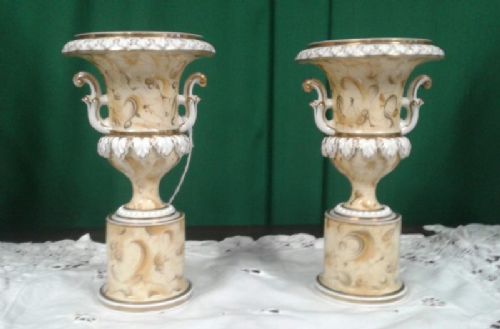


Nineteenth Century Ceramic Pair
Nineteenth century ceramic pairs bring symmetrical presence to a room, taking the form of matched vases, figures, and vessels made across European and Asian potteries.
Nineteenth Century Ceramic Pair
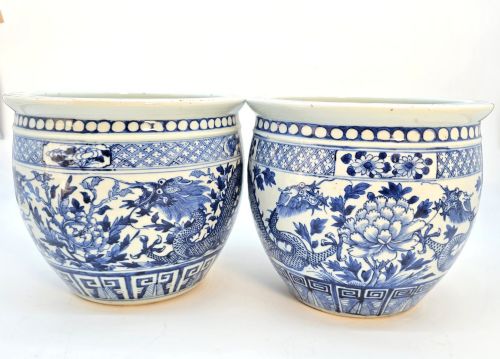
A nineteenth century ceramic pair comprises two matching ornamental or functional objects created to balance a mantelpiece, table, or sideboard. These pairings include Staffordshire figures and animals, porcelain vases, earthenware jars, and ironstone vessels.
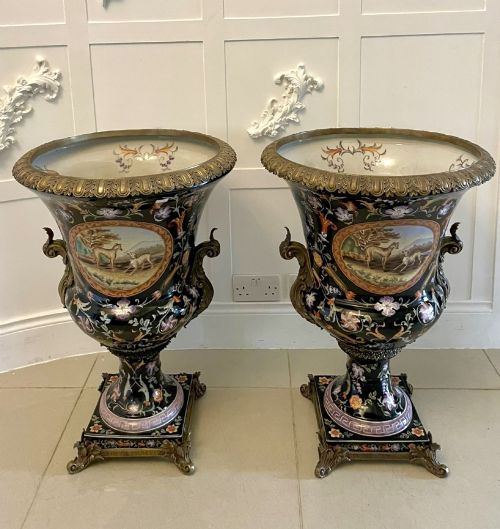
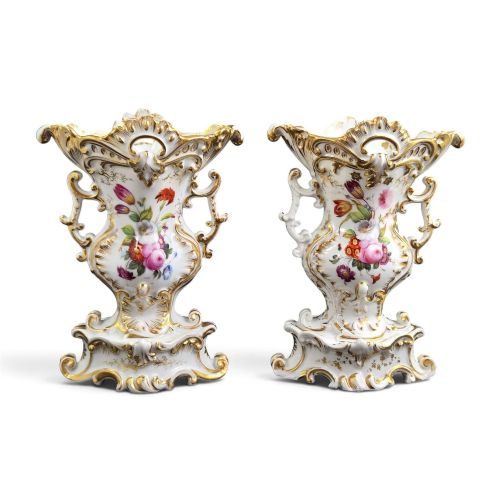
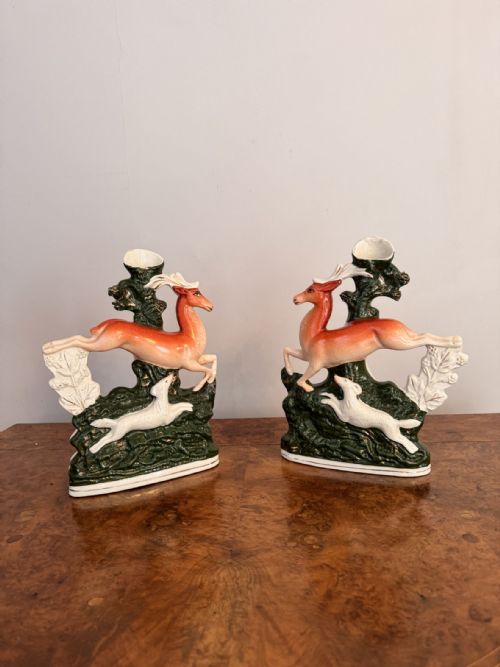
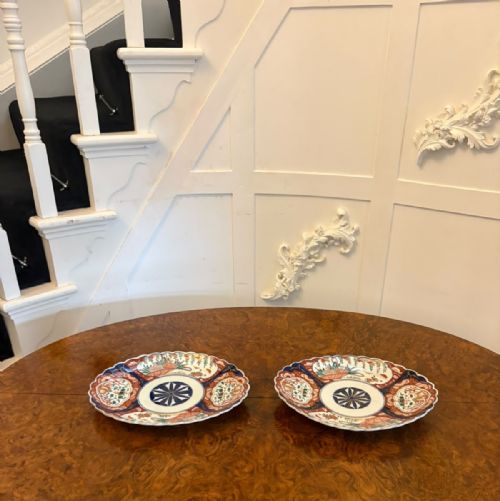
Staffordshire pottery animals, theatrical figures, and spill vases appear frequently among these listings, alongside French porcelain urns and blue and white Japanese Imari porcelain dishes. English ironstone and earthenware also form a substantial part of the available selection.
Makers from England, France, Germany, Japan, and China produced these matched items throughout the Victorian, Regency, and Georgian periods. Buyers encounter both utilitarian garden seats and highly decorative mantel garnitures.
Materials and Techniques
Potters utilised earthenware, porcelain, ironstone, and faience, shaping them through casting, moulding, or turning on a wheel. Ironstone provided a dense, durable body suitable for large garden seats and heavy vases, whilst porcelain allowed for finer detail in painted figures.
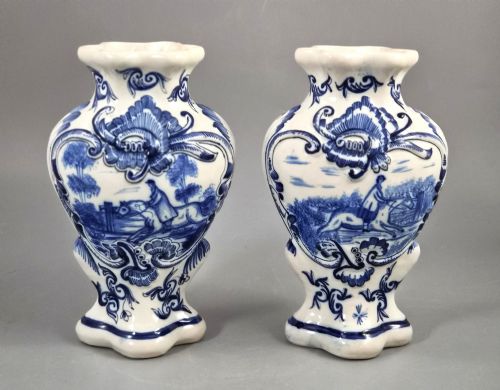
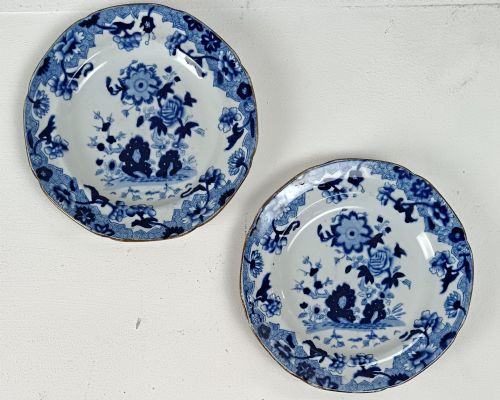
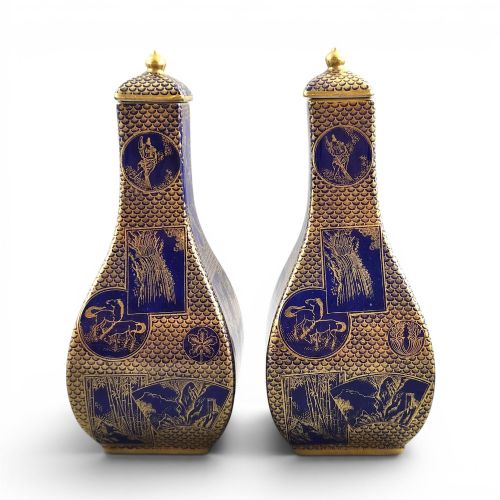
Glazes, enamels, and gold leaf finished the surfaces, often combined with hand-painted blue and white pigments or polychrome designs. Some items incorporated transfer printing beneath the glaze, while others received overglaze gilding and lacquered panels.
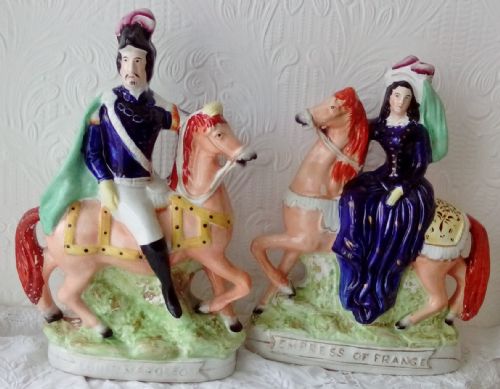
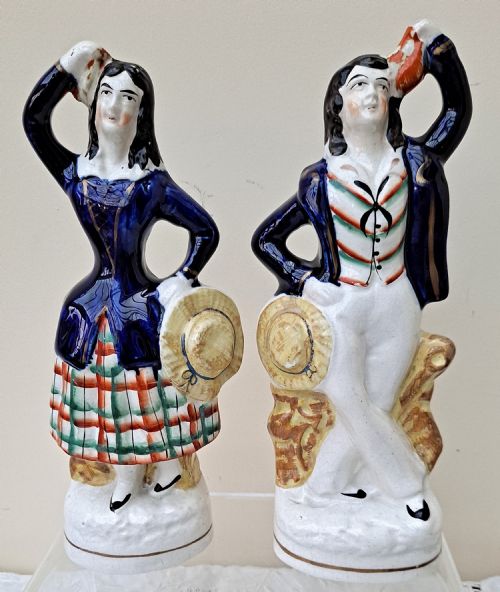
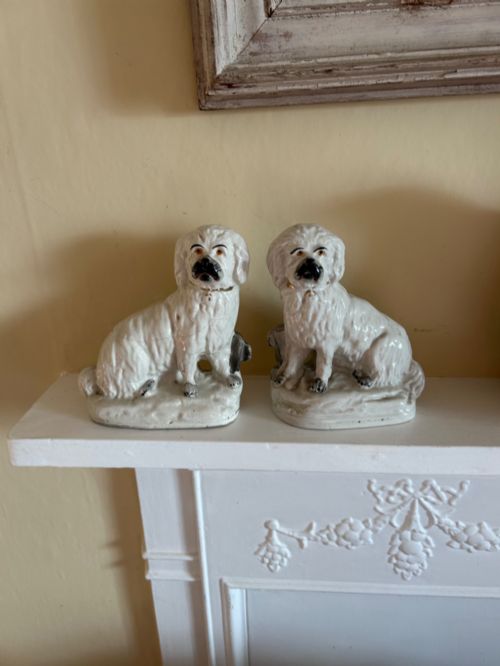
Staffordshire potters immortalised contemporary news in clay, pairing Louis Napoleon with the Empress of France and pairing courtly dogs with eager gardeners.
Variations in Quality
Quality rests in the crispness of the moulding and the skill of the hand-painting, where finely rendered brushwork distinguishes superior studio pieces from standard commercial output. Richness in enamelling and the deliberate application of gold leaf further elevate a pair.
The survival of both matching pieces in original condition, with harmonious colour matching between the two, dictates the desirability of the set. Well-preserved relief details and cleanly fired glazes separate standard domestic wares from exhibition-grade productions.
Jacob Petit·Mason's Patent Ironstone·Doulton Burslem·Sitzendorf·Ernst Bohne and Sohne
The Nineteenth Century Ceramic Pair Glossary
- Ironstone
- A patented ceramic body invented to imitate porcelain while offering greater strength and durability. It takes heavy glazes and prints well.
- Spill vase
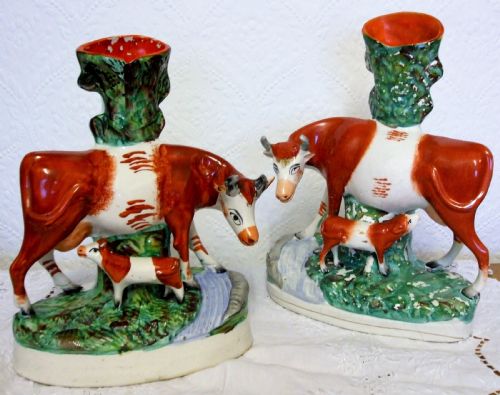
- A small hollow vessel designed to hold taper spills used for lighting candles and fires. These often matched in pairs on nineteenth century mantelpieces.
- Faience
- Tin-glazed earthenware produced in various European centres. It presents an opaque white ground suitable for painted decoration.
- Campana urn
- A bell-shaped classical vessel form popular for decorative urns and vases. Potters rendered these in porcelain, ironstone, and jasperware.
- Biscuit porcelain
- Unglazed porcelain fired once to produce a matte, marble-like texture. It was frequently used for nineteenth century figural groups.
Nineteenth Century Ceramic Pair: Frequently Asked Questions
What were nineteenth century ceramic pairs used for?
These matched objects primarily served as decorative garnitures on mantelpieces, dining tables, and sideboards to create visual balance in a room. Some forms, such as jardinières, albarello drug jars, and garden seats, also fulfilled practical domestic and horticultural functions.
Figurines, spill vases, and candlesticks added both narrative interest and utility to nineteenth century interiors. Their dual arrangement reflected classical ideas of symmetry in room decoration.
How do I distinguish Staffordshire pottery from porcelain?
Staffordshire pieces consist of heavier earthenware bodies that feel opaque and porous if unglazed, often finished with bright lead glazes and hand-painted colours. Porcelain is denser, rings when tapped, and can appear translucent under strong light.
Figures made in Staffordshire frequently depict animals, theatrical characters, or historical personalities with robust modelling. Porcelain items from European factories tend to show finer facial details and more delicate moulding.
Where were these ceramic pairs manufactured?
Production centred in major ceramic regions across Europe and Asia, with English potteries in Staffordshire, Derbyshire, and Leeds contributing large numbers of figures and earthenware. French porcelain works in Paris and Sèvres, alongside German factories like Meissen and Sitzendorf, supplied continental markets.
Japanese Imari wares and Chinese Canton porcelain were also imported in matched pairs to satisfy nineteenth century European tastes for Asian export art. Each region employed distinct regional clays and decorative techniques.
How should I care for antique ceramic pairs?
Keep these items away from direct sunlight to prevent fading in painted enamels and hand-applied gilding. Dust them gently with a dry, soft cloth and avoid submerging pieces with old repairs or ironstone bodies in water.
Display them on stable surfaces where vibrations cannot cause the matched pieces to tip over. Secure heavier items like garden seats or large urns appropriately if placed in active areas.