

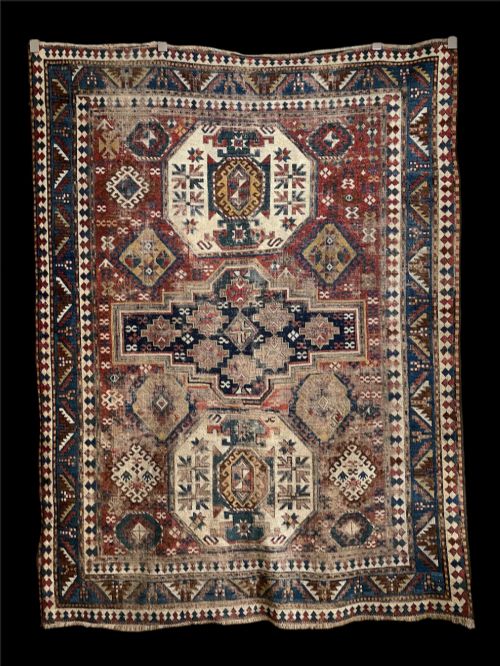
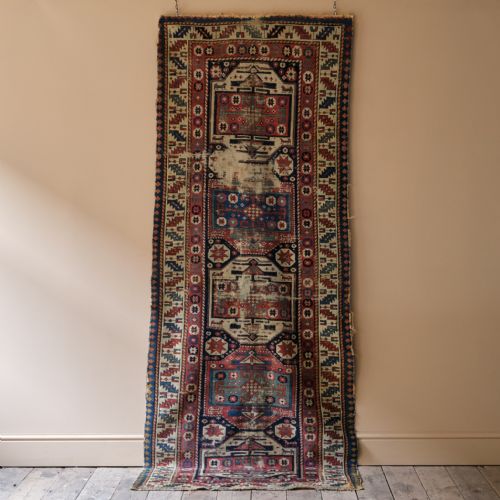


Nineteenth Century Caucasian Rug
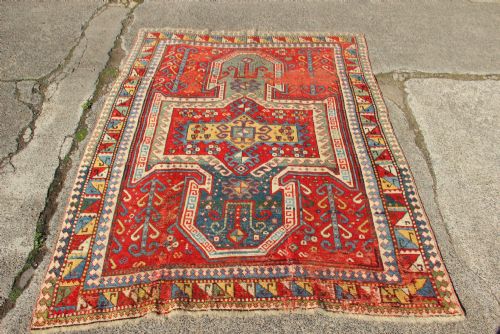
A nineteenth century caucasian rug brings geometric tribal design and saturated natural colour directly into a room.
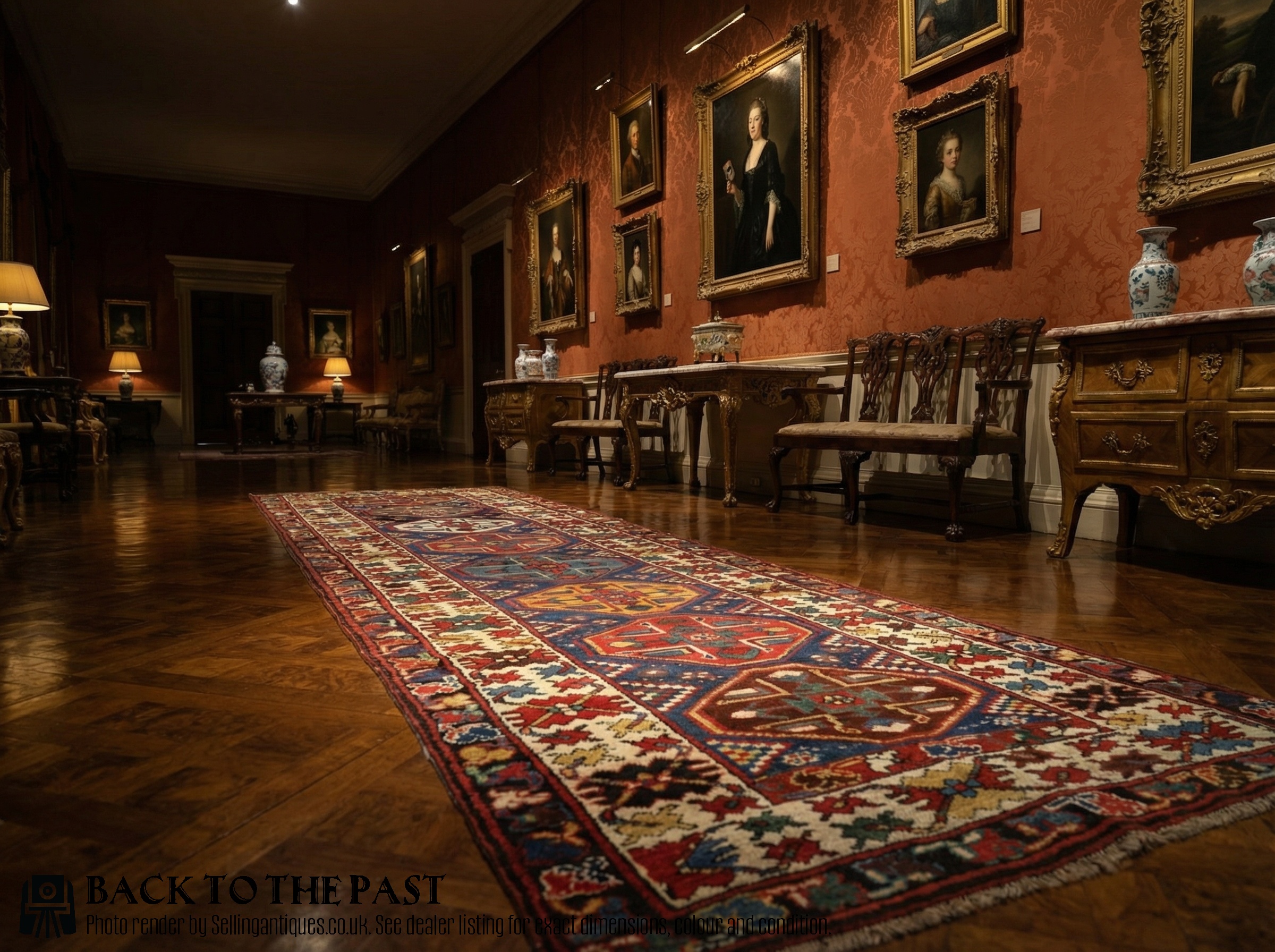
Nineteenth Century Caucasian Rug
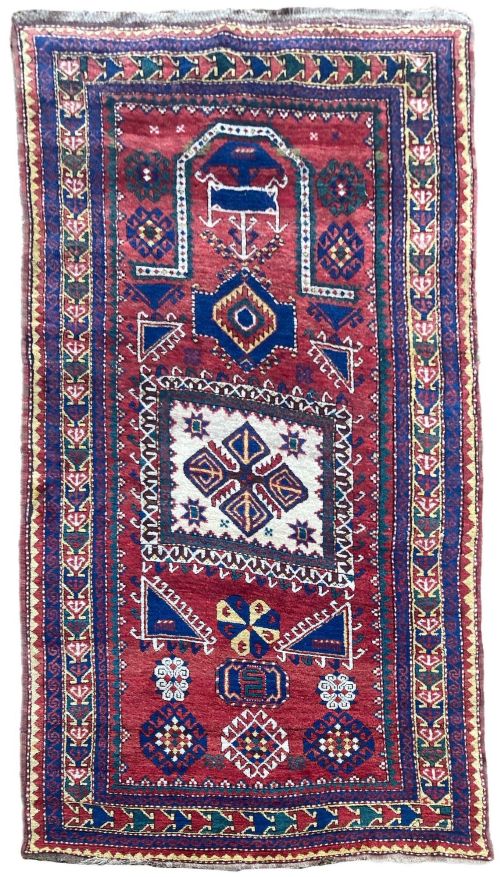
A nineteenth century caucasian rug is a woven textile originating from the Caucasus region, spanning diverse local styles such as Kazak, Shirvan, Karabagh, and Talysh. These pieces take forms including area rugs, runners, prayer rugs, and functional saddlebags or bag faces.
Buyers encounter tribal formats defined by bold geometric medallions, hooked motifs, and star patterns rather than curved floral court designs. The visual language relies on regional traditions that repeat specific geometric symbols across different villages and nomadic groups.
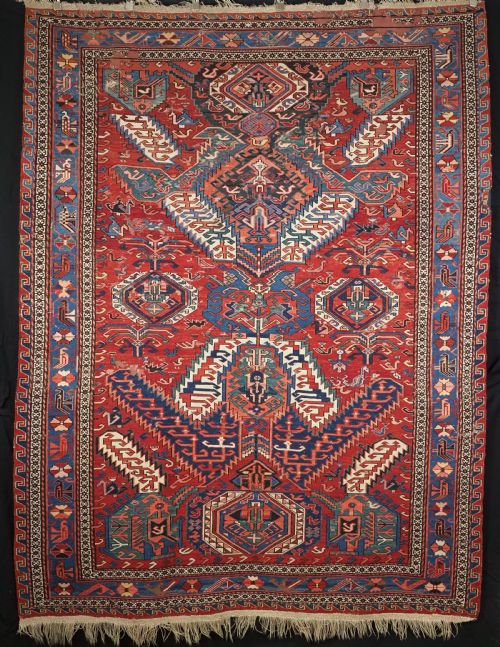
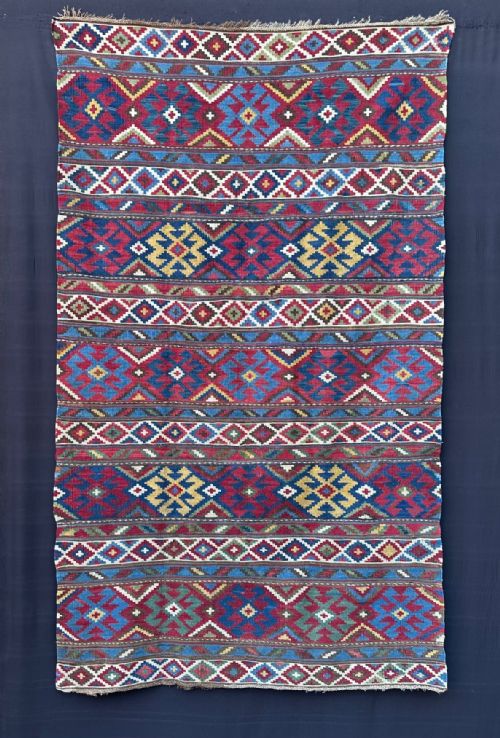
Production clusters around distinct weaving centres and tribal groups, including Shahsavan and Soumak flatweaves alongside pile-woven pieces. Most examples on this page date from the middle decades of the nineteenth century up to the early twentieth century.
How they were made
Weavers constructed these textiles primarily using wool for both the pile and the foundation threads, often incorporating hand-spun wool alongside cotton. The application of natural dyes and vegetable dyes yielded enduring colour saturation that developed rich patination over time.
Techniques varied between piled knotting for heavy floor rugs and flatweaving methods such as Soumak work used for durable bags and decorative panels. Artisans structured warps and wefts manually on traditional upright or horizontal looms within village and nomadic settings.
Materials recorded across current pieces include hand-spun wool, cotton foundations, and natural vegetable dyes.
What varies in quality
Quality rests upon the crispness of the geometric drawing and the complexity of the medallion structures, such as Memling guls or Lezghi stars. Superior examples exhibit precise symmetry within tribal motifs and balanced compositional proportions across the field.
The vibrancy and depth of the natural dyes separate finer weaving from standard production, as skilled dye work creates harmonious colour transitions. Tighter knot density and robust handling of hand-spun wool also elevate the structural integrity of individual pieces.
The Nineteenth Century Caucasian Rug Glossary
- Kazak
- A style of rug originating from the western Caucasus, known for bold geometric designs and saturated primary colours. These pieces frequently feature large medallions and strong tribal character.
- Soumak
- A flatweave technique utilising a wrapping stitch over warp threads to create a durable textile without a cut pile. This method allows for crisp, intricate graphic patterns.
- Gul
- A medallion or repeating octagonal motif commonly found in tribal weaving traditions. The term describes distinct botanical or geometric design units set within the field.
- Prayer rug
- A format characterised by a mihrab or niche design at one end, traditionally orientating the user during daily devotions. These rugs serve both functional and decorative purposes.
- Shahsavan
- A nomadic or semi-nomadic tribal group inhabiting northwestern Iran and the southern Caucasus. Their output is celebrated for distinctive flatweaves and saddlebags.
Nineteenth Century Caucasian Rug: Frequently Asked Questions
How do I care for a nineteenth century caucasian rug?
Vacuum gently without using a rotating brush roll to protect the vintage wool pile and foundation threads. Professional cleaning tailored to antique textiles preserves the natural vegetable dyes.
Keep the rug out of direct sunlight to prevent colour fading over the years. Use a quality underlay to reduce friction and movement against hard flooring.
Where were these rugs made?
They were woven across the Caucasus region, bridging Europe and Asia between the Black Sea and the Caspian Sea. Specific producing areas include Shirvan, Karabagh, Moghan, and regions associated with the Shahsavan nomads.
Different villages and tribal groups developed distinct local palettes and geometric iconographies. This regional variation allows collectors to attribute specific pieces to particular valleys or weaving communities.
What is a Soumak weave?
Soumak is a flatweave technique where coloured weft threads are wrapped around vertical warps in a continuous motion. This creates a dense, durable structure with a smooth face and unclipped floats on the reverse.
It differs from pile weaving because no knots are tied during the construction process. Artisans utilised this method extensively for sturdy bags, salt bags, and flatwoven carpets.
How do I identify a Kazak rug?
Kazak rugs feature bold, large-scale geometric motifs, hooked polygons, and primary colour palettes dominated by red, blue, and ivory. The drawing tends to be robust and folk-art in character rather than refined or courtly.
They generally possess a relatively coarse, heavy wool pile compared to finer city carpets from the same era. Regional subtypes like Fachralo and Moghan display specific variations of these central medallion layouts.