


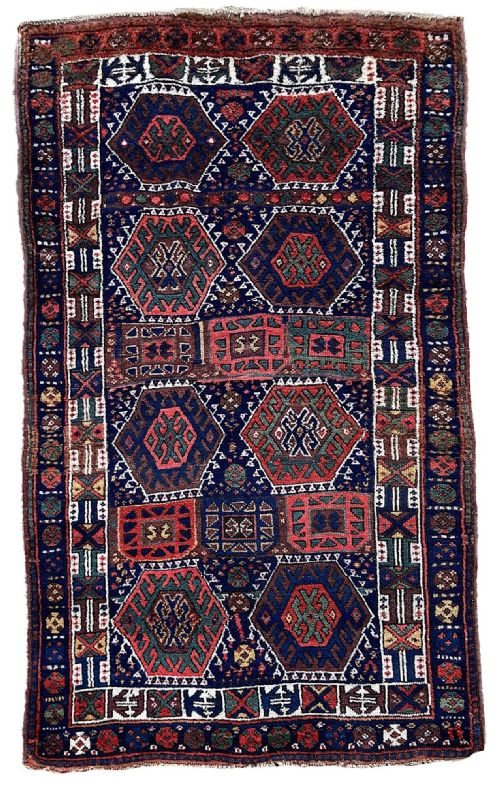
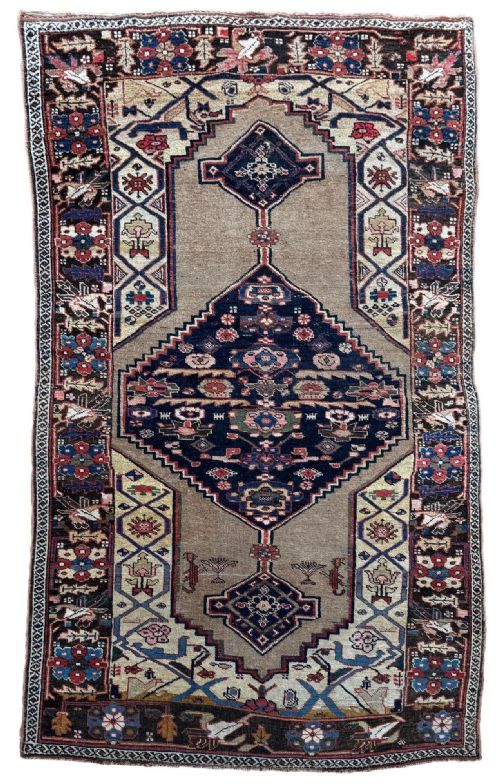


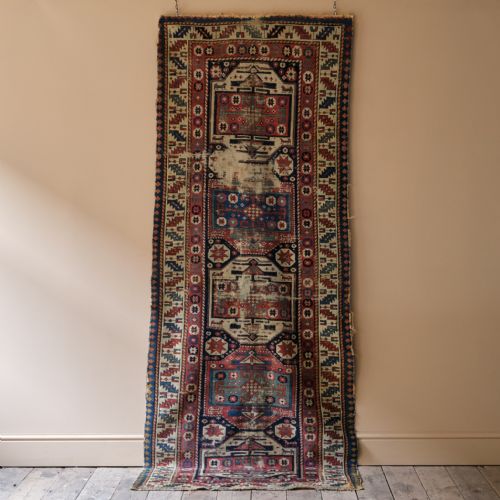

Indigo Blue Wool Runner
An indigo blue wool runner brings deep vegetal tone and tribal geometry to a hallway, offering durable floor coverage woven by nomadic makers.
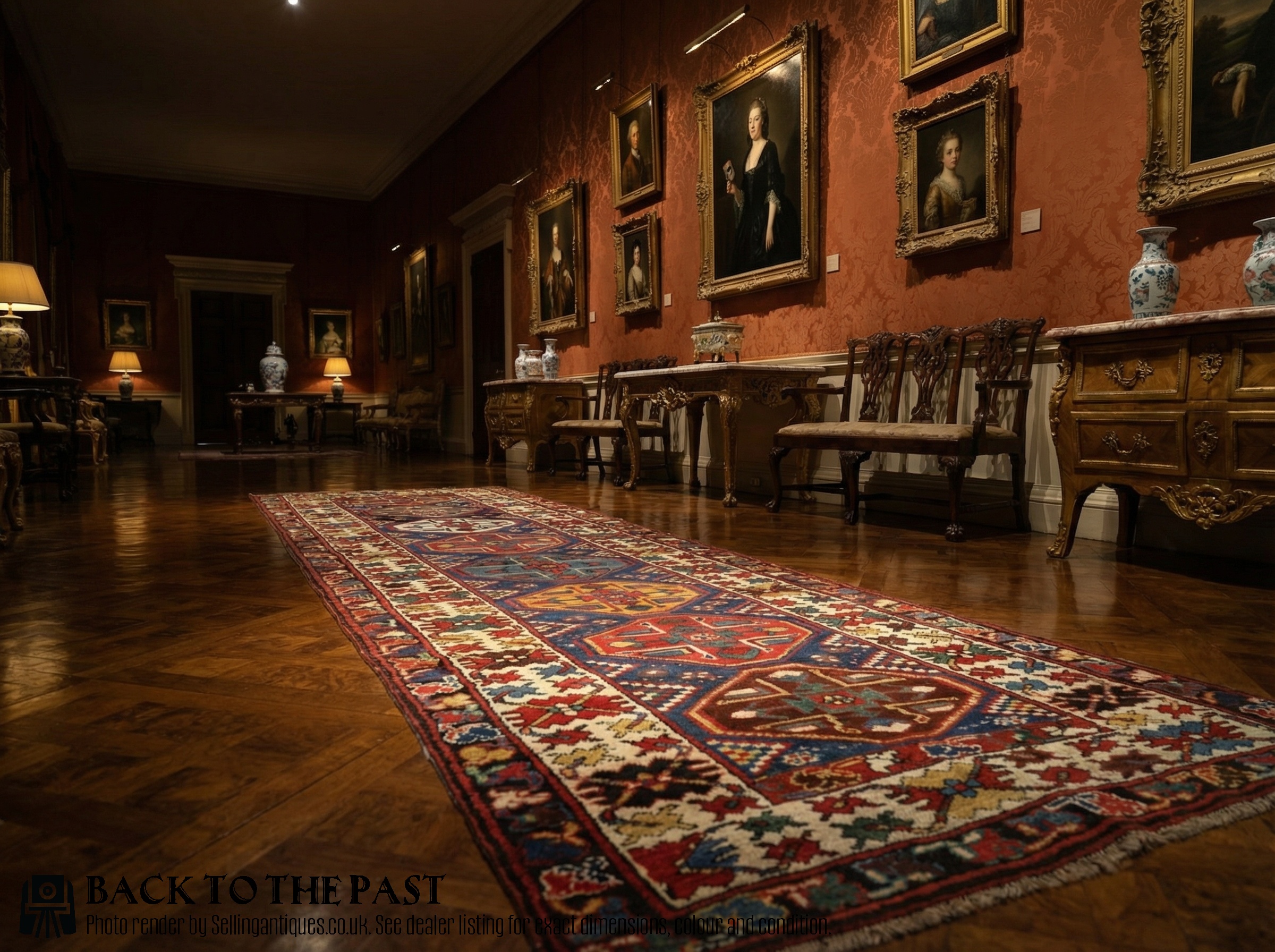
Indigo Blue Wool Runner
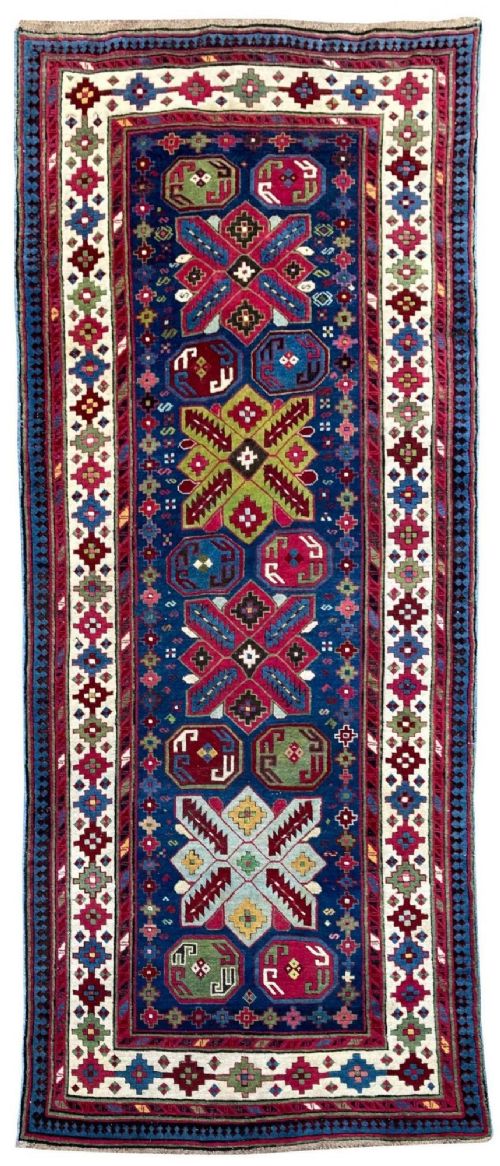
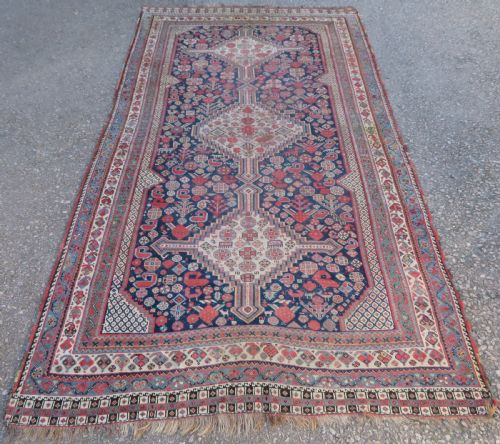
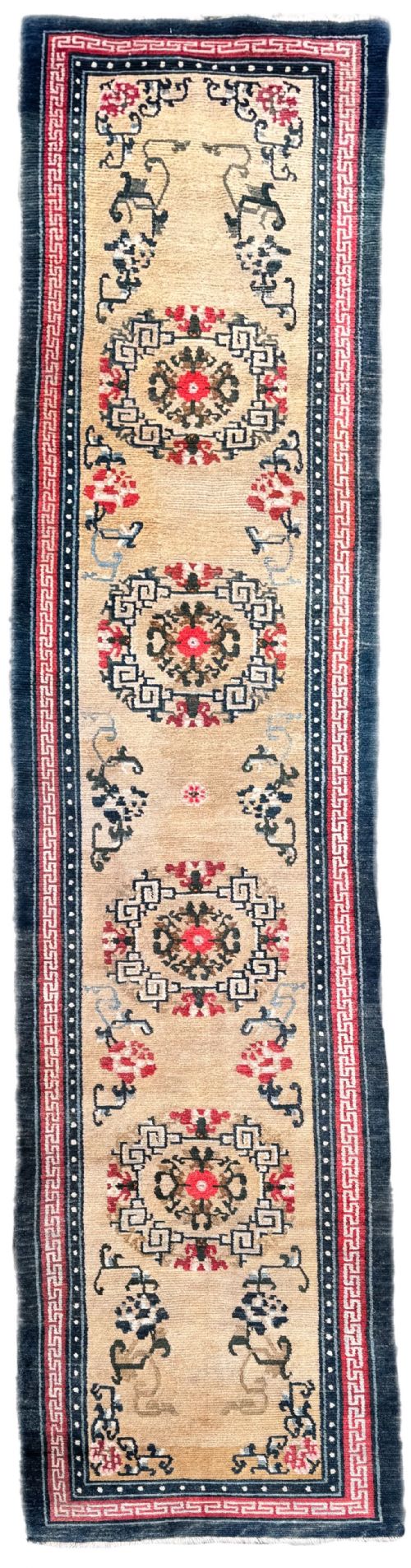
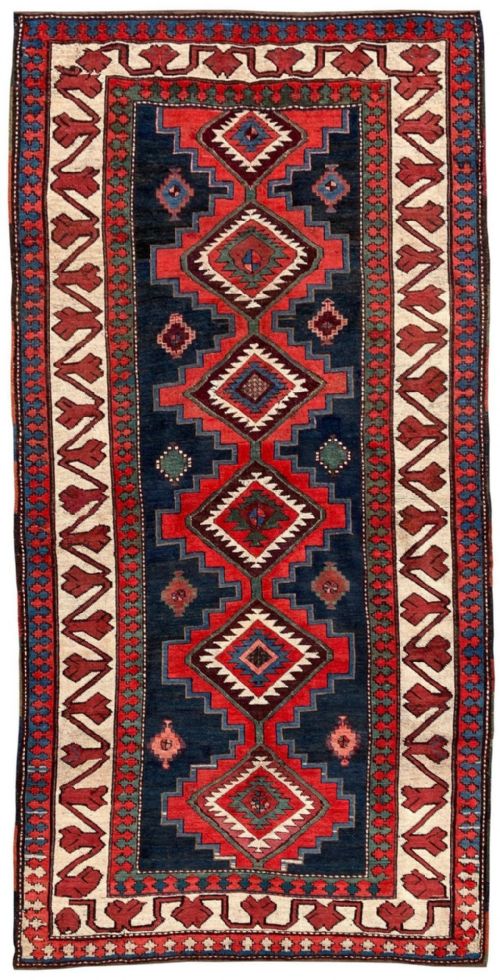
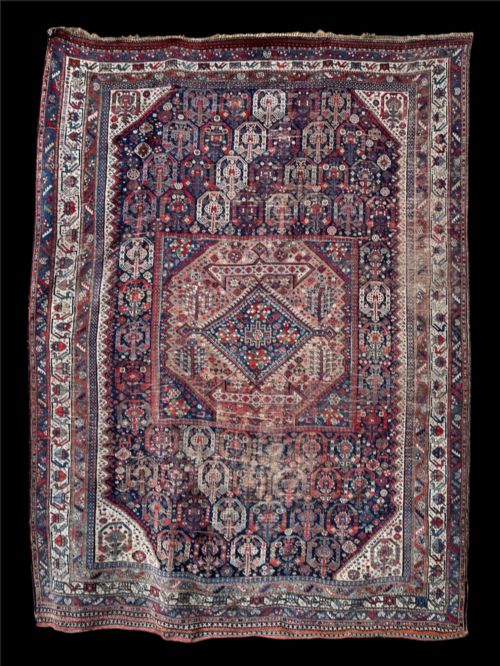
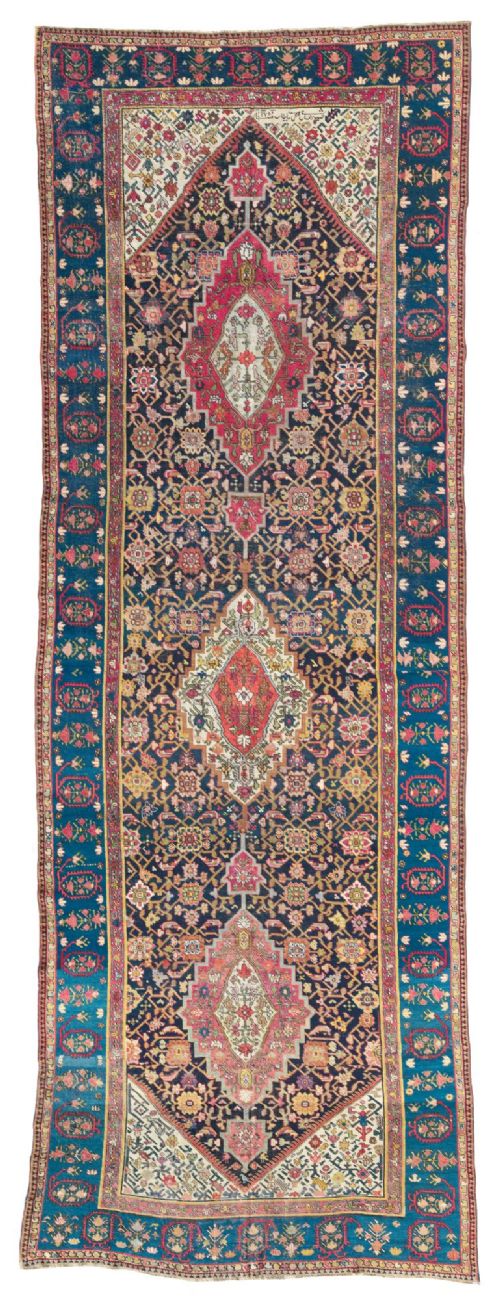
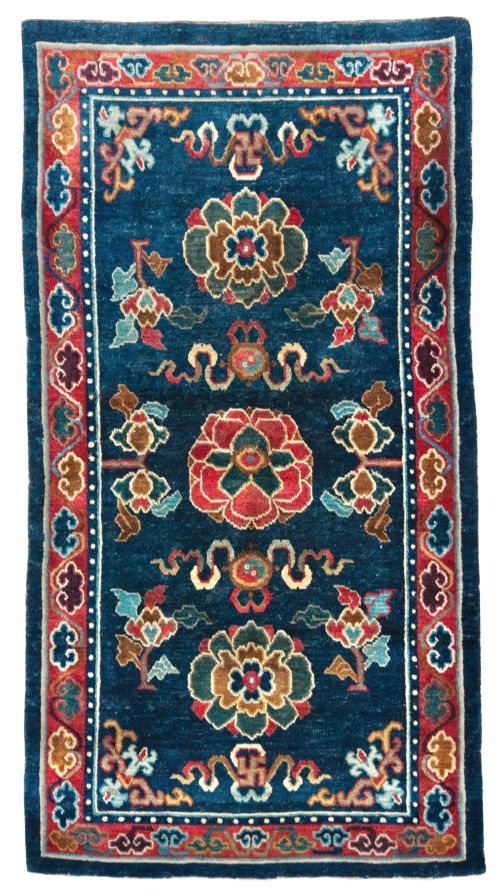
An indigo blue wool runner is a long, narrow textile designed for corridors, hallways and narrow spaces, combining practical floor protection with traditional tribal artistry. When you examine this selection, you encounter pieces originating from Caucasian, Persian, Kurdish and Tibetan weaving traditions that span the nineteenth and early twentieth centuries.
The format typically manifests as elongated formats such as long Kurdish runners, Caucasian Talish rugs with blue grounds, and Tibetan room lengths. These carpets deploy saturated indigo dyes derived from natural sources, creating dark, rich fields that anchor interior schemes.
Makers from tribal confederacies and regional workshops utilised traditional looms to produce flat-weaves, kelims and pile carpets. Each runner carries the distinct geometric vocabulary, medallion layouts and border patterns of its specific origin, whether from the Caucasus, Persia or Anatolia.
How they were made
The construction relies predominantly on sheep wool spun by hand, occasionally incorporating goat hair for structural rigidity along the selvages and cotton for foundations. Natural dyes supply the palette, with indigo plant matter yielding the characteristic deep blue grounds that define these runners.
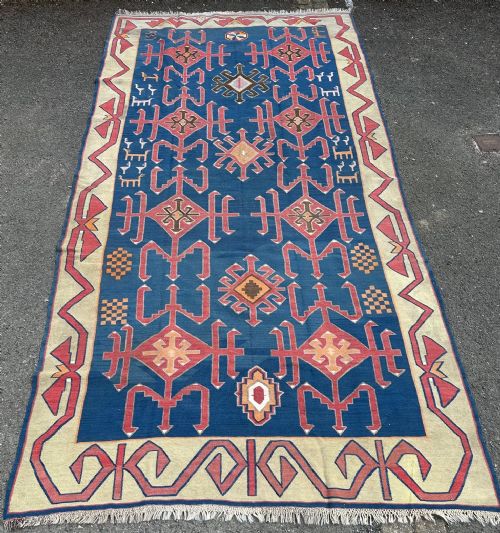
Weavers knotted pile wool onto warp threads using symmetrical or asymmetrical knots, or interlaced wefts to create flat-woven kilim panels. Rugs like the Uzbek kilim panel demonstrate construction in joined strips, reflecting traditional nomadic textile assembly methods.
Listings feature pieces from the mid-nineteenth century through the 1940s, including Caucasian, Persian, Kurdish and Tibetan origins.
What varies in quality
Quality in these runners rests on the density of the knotting, the precision of the geometric drawing, and the depth of the natural dye work. Finer examples display tightly packed piles and crisply rendered medallions, whereas simpler pieces show broader tribal abstraction.
The integrity of the wool, the stability of the natural indigo coloration, and the original condition of the outer edges and ends distinguish the finer survivals. Variations in tribal execution mean that regional idiosyncrasies directly influence the visual impact of the weaving.
The Indigo Blue Wool Runner Glossary
- Indigo
- A natural vat dye extracted from plants of the Indigofera genus, yielding deep blue hues found across nineteenth-century tribal weaving.
- Runner
- A long, narrow carpet format specifically proportioned for corridors, hallways and stairs.
- Kilim
- A flat-woven carpet or textile panel produced without a pile by tightly interweaving warp and weft strands.
- Medallion
- A central decorative motif or cluster of geometric shapes positioned in the field of a rug.
- Selvage
- The reinforced side edges of a carpet, finished to prevent the unravelling of the foundational warp threads.
- Warp
- The stationary vertical threads stretched across a loom onto which the pile knots or weft rows are tied.
Indigo Blue Wool Runner: Frequently Asked Questions
Where were these runners used?
Nomadic and village weavers produced these textiles for domestic flooring, tent interiors and communal living spaces. Long formats suited narrow halls and passageways within traditional dwellings.
Over time, these durable floor coverings transitioned into decorative interior elements, prized for their ability to withstand heavy foot traffic while adding historic character to modern corridors.
How do I clean an old wool runner?
Gentle surface cleaning and regular low-suction vacuuming without a rotating brush help maintain wool pile without damaging historic fibres. Professional textile conservators should handle deep washing to protect natural indigo dyes.
Avoiding excessive moisture and direct sunlight preserves the structural integrity of the wool and prevents the natural dyes from fading over years of domestic use.
Are natural dyes easy to identify?
Natural indigo displays a rich, deep tonality with subtle variations across the yarn, resulting from traditional plant-based dyeing vats. Chemical dyes introduced later often appear more uniform and flat in comparison.
Examining the individual wool strands under natural light reveals the characteristic depth andabrash associated with nineteenth-century organic colorants.
What is a kelim panel?
A kelim panel is a flat-woven textile created without pile, often constructed in separate strips and joined together to form a larger covering or hanging. Uzbek and Afghan weavers frequently utilised this technique.
These pieces function effectively as wall hangings or light floor coverings, showcasing geometric patterns inherent to flat-weave construction.