

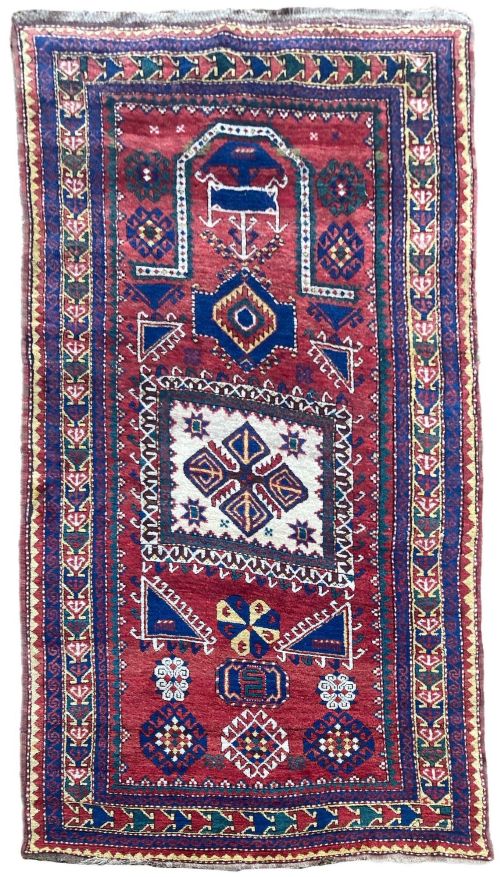


South Caucasian Runner Carpet
A south caucasian runner carpet brings bold tribal geometry and saturated wool dye into a hallway, offering durable craft from the late nineteenth and early twentieth centuries.
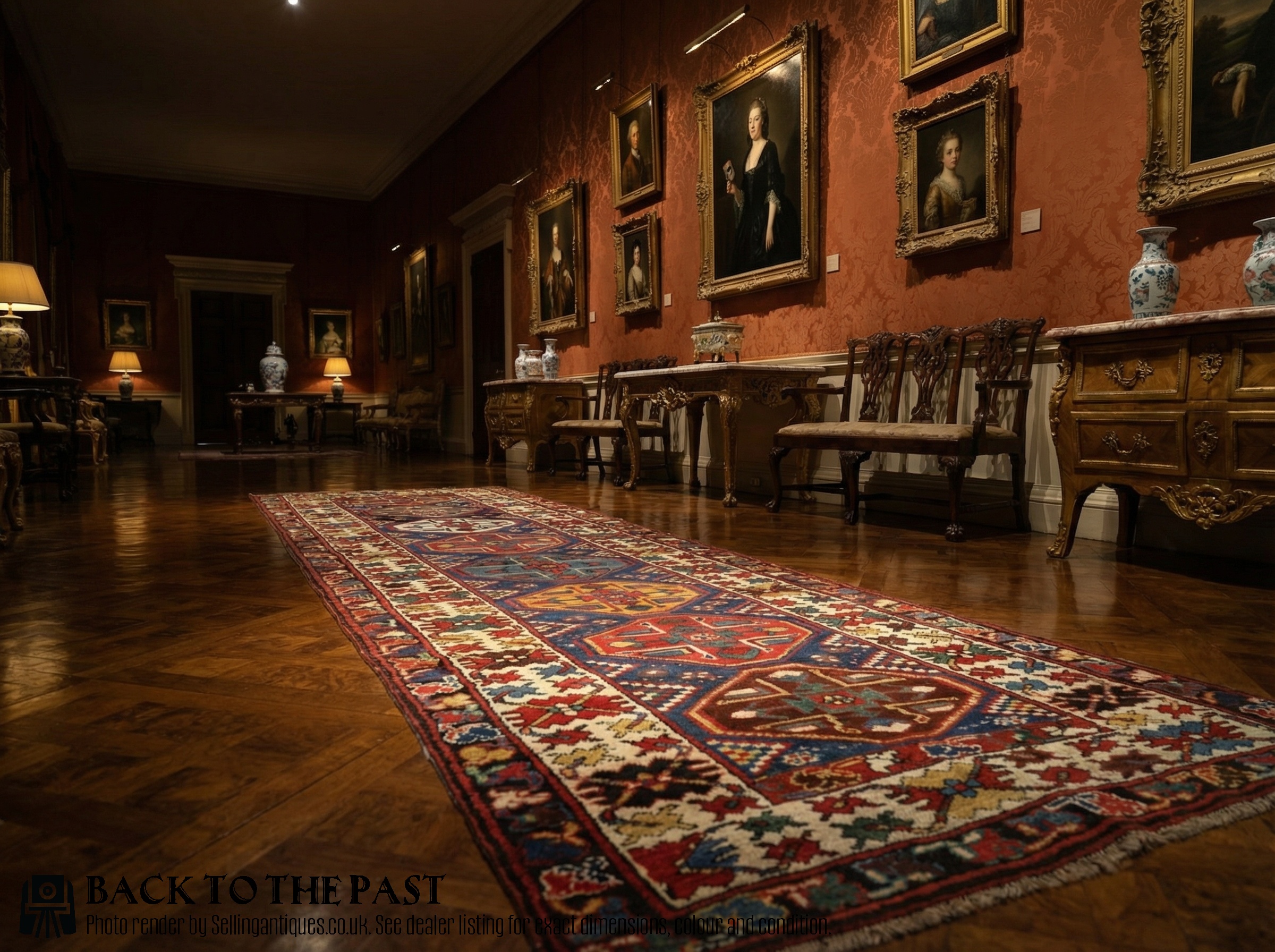
South Caucasian Runner Carpet
A south caucasian runner carpet is a long, narrow floor covering originating from the Caucasus region, frequently displaying tribal motifs such as latch hook medallions or garden designs. Buyers searching for a south caucasian runner carpet encounter formats tailored for corridors and long spaces, woven across periods spanning from 1880 to 1920.
The styles associated with these pieces include Caucasian tribal and Persian tribal expressions, alongside related weaving traditions like Shahsavan, Kazak, Karabagh, and Kurdish attributions. Most examples on this page reflect the aesthetic of regional workshops and nomadic weavers working towards the end of the nineteenth century and the early twentieth century.
Forms range from traditional long rugs and corridor carpets to prayer rugs and flatwoven kilims sharing the same geographic provenance. Each south caucasian runner carpet exhibits distinct regional traits in its border arrangements and field geometry.
Materials and construction
These textiles are constructed using wool and hand-spun wool for the pile, combined with cotton foundations that provide structural stability. The use of hand-spun wool allows the material to take natural dyes unevenly in small variations that create visual depth across the surface.
Weavers employed traditional knotting techniques characteristic of Caucasian tribal production, binding the wool to warps and wefts to produce dense, hard-wearing piles designed for heavy domestic traffic. Flatwoven kilim variations utilise slit-weave techniques without a pile, resulting in lighter, reversible structures.
Current listings feature materials including wool, cotton, and hand-spun wool across periods ranging from 1880 to 1920.
Evaluating quality and condition
Quality in these textiles rests upon the integrity of the wool, the clarity of the design drawing, and the vibrancy of the palette, such as scarce yellow grounds or soft secondary tones. Stronger examples maintain pile density and crisp geometry without excessive restoration.
The precision of the tribal motifs and the preservation of original borders distinguish finer weaving. Even wear across the wool indicates balanced material durability over decades of use.
The South Caucasian Runner Carpet Glossary
- Runner
- A long, narrow carpet designed specifically for corridors, hallways, and staircases. It balances length with a restricted width to fit transitional spaces.
- Kazak
- A style of Caucasian weaving known for bold geometric medallions and primary colour palettes. These pieces originate from the southwestern region of the Caucasus.
- Medallion
- A central ornamental design motif placed in the middle of the carpet field. It often takes polygonal or stepped geometric forms in tribal weaving.
- Latch hook
- A recurring geometric hook motif extending from the edges of medallions or borders. This detail is characteristic of Caucasian and tribal rug design.
- Kilim
- A flatwoven textile produced without a pile by tightly interweaving warp and weft strands. These pieces function as lightweight floor coverings or wall hangings.
South Caucasian Runner Carpet: Frequently Asked Questions
How do I clean a south caucasian runner carpet?
Professional specialist cleaning is necessary for antique wool rugs to protect the delicate natural dyes and hand-spun fibres.
Regular gentle vacuuming without a rotating brush bar helps remove surface dust from the pile.
Where should I place a south caucasian runner carpet?
These narrow formats work effectively in corridors, hallways, entryways, and beside beds where length is required.
Using a quality underlay beneath the textile prevents slipping and reduces friction against hard flooring.
How can I tell the age of these carpets?
Dating relies on examining the specific characteristics of the hand-spun wool, natural dye palettes, and regional knotting structures.
Evidence from nineteenth and early twentieth century production provides a comparative baseline for stylistic analysis.