









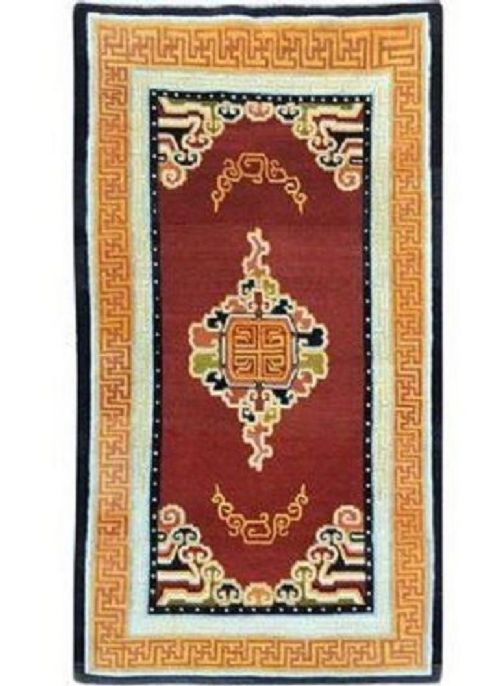
Geometric Oriental Carpet
A geometric oriental carpet brings structured medallions, village wools, and tribal borders into a room.
Geometric Oriental Carpet
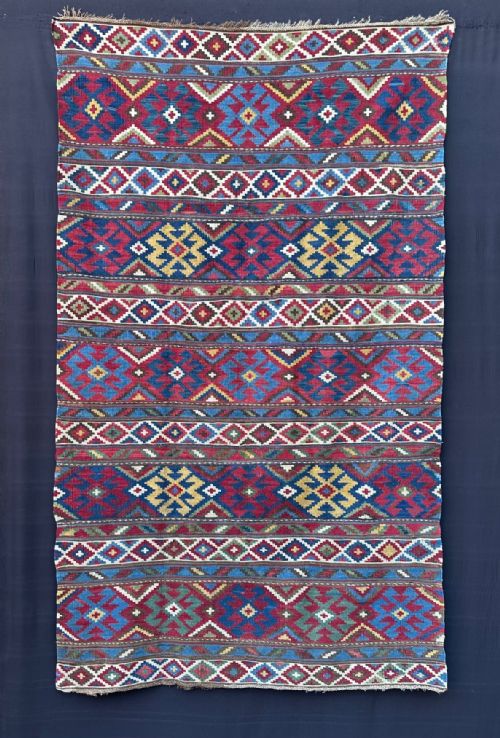
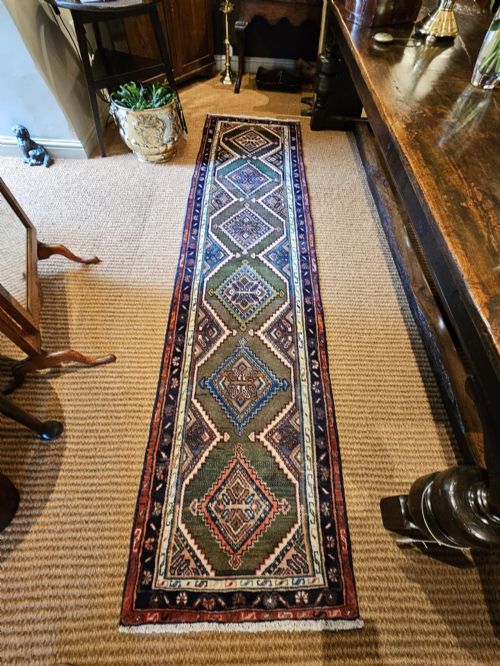
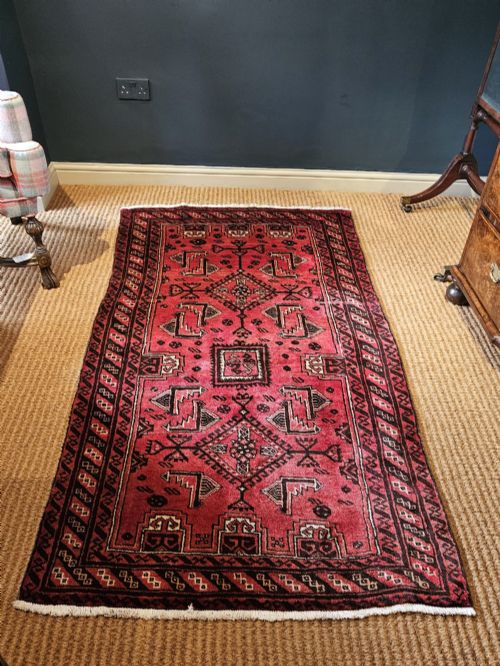
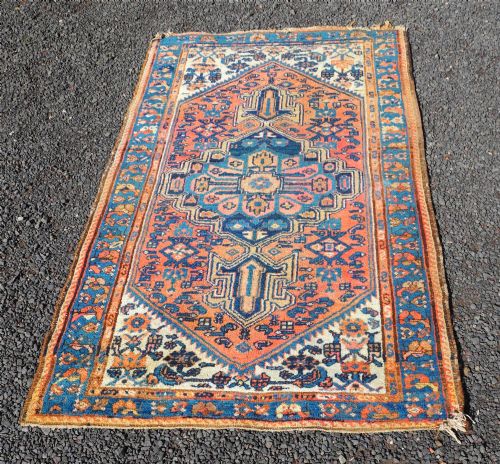
A geometric oriental carpet comprises hand-woven rugs, runners, and village carpets originating from Persian, Caucasian, Turkmen, Kurdish, and Anatolian traditions. These textiles date from the nineteenth century through the early twentieth century, spanning decades such as eighteen-seventy, eighteen-eighty, nineteen-ten, and nineteen-thirty. Buyers encounter room-sized carpets, long runners, prayer rugs with mihrabs, and square saddle bag cushions.
The aesthetic relies on rectilinear medallions, repeating guls, cruciform motifs, and angular lattice patterns rather than sweeping floral curves. Pieces emerge from specific weaving groups and regions including Heriz, Kazak, Shirvan, Baluch, Afshar, Hamadan, and Bidjar. Village and tribal weavers produce the majority of these floor coverings, working within established regional geometric repertoires.
Materials and construction
Weavers construct these carpets primarily from wool, pure wool, hand-spun wool, and camel wool, often set upon cotton foundations. Natural dyes supply the characteristic colour palettes, yielding warm reds, olive greens, and mellow hues that age with distinct patination across the pile.
Village and tribal workshops knot or weave each piece by hand, incorporating techniques passed down through generations. The structural integrity depends on tight wool packing and sturdy selvages, which support heavy domestic use over centuries.
Geometric Oriental Carpet Retail Price Guide 2026
Typical asking prices for geometric oriental carpet among the pieces listed under this phrase on Sellingantiques today, from the lower quarter to the upper quarter. They describe what is for sale here now, not the wider market.
Listings feature pieces spanning from the nineteenth century through the nineteen-thirties, utilising wool, cotton, and natural dyes.
What separates the grades
Quality rests in the precision of the rectilinear drawing, the saturation and depth of the natural dyes, and the density of the wool pile. Finer knotting allows intricate geometric details and crisp medallion edges to remain legible across the field.
The integrity of the foundation and the preservation of original borders distinguish exceptional weaving from standard village production. Dyes that retain their vibrancy and wool that maintains its lanolin content elevate a textile's enduring appeal.
The Geometric Oriental Carpet Glossary
- Mihrab
- A niche design on a prayer rug, indicating the direction of prayer. This architectural motif often frames the central field of Caucasian and Anatolian examples.
- Gul
- A repeating medallion or octagonal motif found frequently in Turkmen and Baluch weaving. Each tribe utilises distinct variations to denote lineage and origin.
- Kazak
- A style of rug originating from the Caucasus region, known for bold primary colours and large geometric medallions. These pieces typically feature sturdy wool and tribal asymmetry.
- Heriz
- A Persian carpet style characterised by large, bold geometric corner spandrels and a dominant central medallion. Artisans in this region utilise resilient wool suited for heavy wear.
- Selvage
- The reinforced finishing edge along the sides of a carpet that prevents fraying. Original hand-finished edges indicate careful conservation and traditional craftsmanship.
Geometric Oriental Carpet: Frequently Asked Questions
How do I place a runner in a hallway?
Long runner formats suit narrow passageways and corridors, adding warmth and texture underfoot. Ensure you leave a uniform margin of bare floor exposed around the perimeter of the textile.
Pair the runner with a breathable underlay to prevent slipping and protect the wool pile from heavy foot traffic.
What rooms suit a tribal rug?
These structured wool textiles anchor living rooms, studies, and bedrooms by introducing rich colour and historical character. The angular patterns contrast effectively against minimalist modern furnishings.
Keep direct sunlight exposure managed to protect natural dyes from fading unevenly over extended periods.
How do I identify a prayer rug?
Prayer rugs feature a distinctive arched mihrab motif at one end, designed to be pointed toward Mecca during daily devotions. Their compact dimensions distinguish them from larger room-sized carpets and runners.
Historically, owners used these portable textiles for personal worship rather than permanent floor decoration.
How do regional styles differ?
Caucasian pieces tend to display crisp, primary-coloured geometric medallions, while Persian village rugs often incorporate more intricate lattice work and earthy tones. Turkmen weaving relies heavily on repeating octagonal guls and deep red wool.
Examining the knotting density and border motifs helps collectors attribute a piece to its specific nineteenth or early twentieth-century origin.