
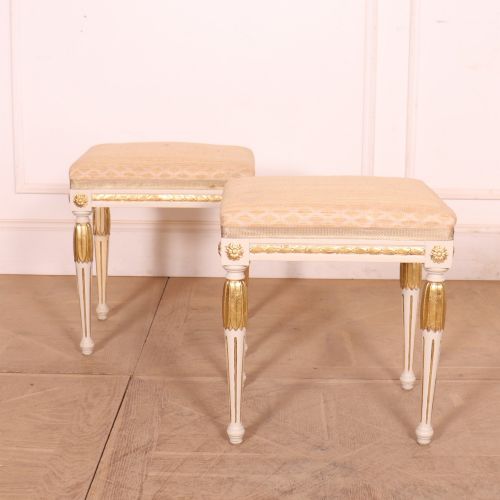


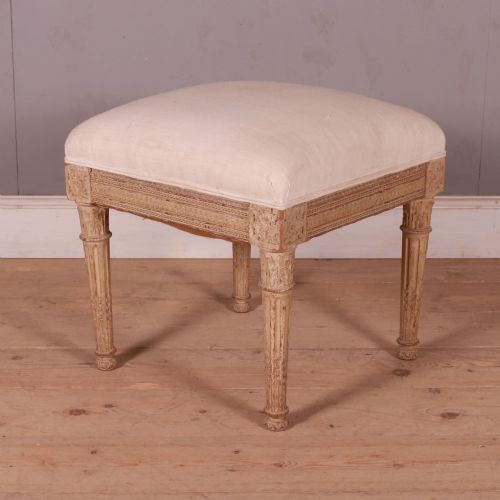


Neoclassical Vanity Stool
These neoclassical vanity stool options bring restrained classical proportion and practical seating to a dressing room.
Neoclassical Vanity Stool
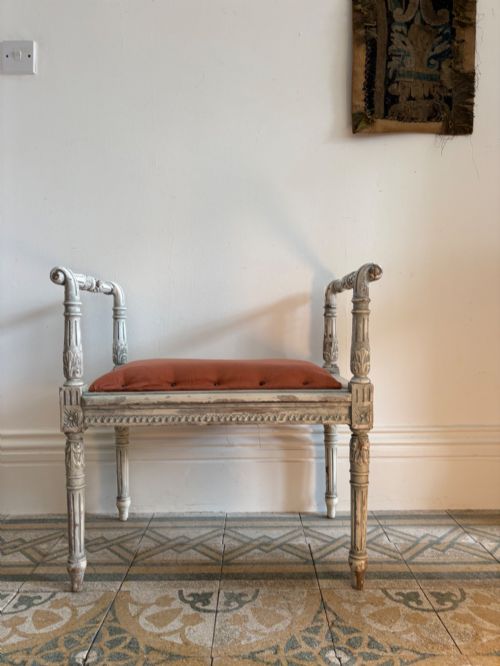
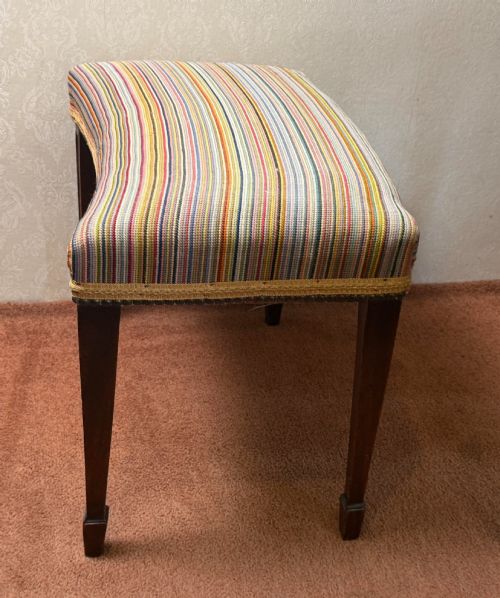
A neoclassical vanity stool provides low, decorative seating designed for a dressing table or bedroom. The pieces on this page span the eighteenth, nineteenth, and early twentieth centuries, drawing upon George III, Louis XVI, and Gustavian traditions.
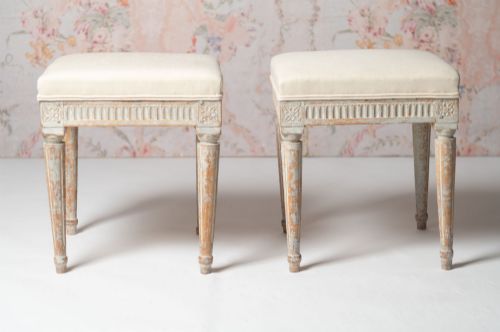
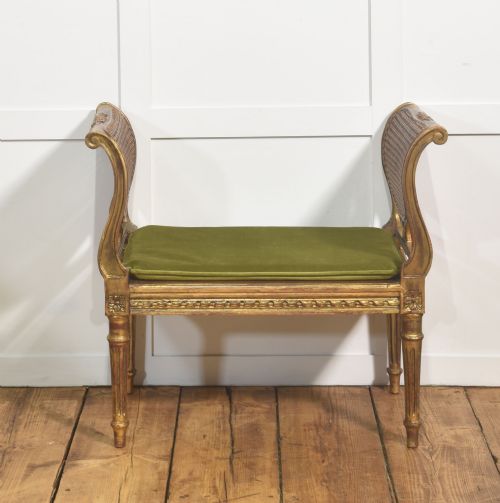
Forms vary from simple square mahogany frames to elaborate giltwood curule benches and painted Swedish seats. Many examples feature upholstered tops in silk, linen, or damask, while others utilise cane or needlework.
The buyer meets regional variations ranging from gilded Italian and French seating to pale painted Swedish stools. These seating options serve functionally as footstools, benches, or duet stools alongside their primary vanity use.
How they were made
Construction relies on timber framing, predominantly utilising mahogany, oak, and pine beneath painted or gilded surfaces. Joinery methods include traditional carving and turning to shape legs and frames.
Surface finishes involve applied gesso, gold leaf, and painted layers, often distressed or preserved in original condition. Upholstery utilises traditional textiles such as silk, damask, and linen stretched over supportive webbing and stuffing.
Several Swedish pieces wear their original paint stubbornly beneath decades of history, refusing to look newly made.
What varies in quality
Quality rests in the crispness of the wood carving, the retention of original paint or gilding, and the integrity of the frame. Superior examples demonstrate balanced proportions and refined detail work on legs and rails.
Materials elevate the piece, where hand-woven silk or needlework upholstery and genuine gold leaf distinguish finer workshop output from simpler painted alternatives.
The Neoclassical Vanity Stool Glossary
- Gustavian
- The Swedish interpretation of French neoclassical design, characterised by pale painted finishes and restrained symmetry. It developed during the reign of Gustav III and remains popular for light interiors.
- Curule stool
- An ancient Roman magistrate seat design featuring intersecting X-shaped legs. This form reappeared frequently in neoclassical revivals.
- Giltwood
- Timber coated with a thin layer of gold leaf over a prepared gesso ground. It provides a bright, reflective surface characteristic of formal seating.
- Needlework
- Hand-stitched textile work using wool or silk yarn on a canvas ground. It appears on period seat covers.
- Damask
- A reversible figured fabric woven on a jacquard loom with patterns formed by contrasting warp and weft threads. It is frequently chosen for formal upholstery.
Neoclassical Vanity Stool: Frequently Asked Questions
Where do I place a vanity stool?
These stools fit comfortably beneath a dressing table, beside a bedroom mirror, or as a decorative accent in a hallway.
Their compact scale allows them to slide out of the way when not in use while adding a distinct period focal point to the room.
Are these seats comfortable for daily use?
Most examples provide firm, upright support intended for short periods while dressing or grooming.
The historical padding uses traditional stuffing materials rather than modern foam, prioritising a correct period profile.
How do I care for painted wood frames?
Dust the carved and painted surfaces gently with a dry, soft cloth to prevent accumulation.
Avoid liquid cleaners or abrasive materials that can damage fragile nineteenth-century paint or gilding layers.
What distinguishes Gustavian from Louis XVI styles?
Gustavian design originates from Sweden and tends toward simpler, lighter painted surfaces with understated neoclassical carving.
Louis XVI style furniture typically displays richer gilding, gesso ornamentation, and closer ties to French court aesthetics.