





Painted Wood Footstool
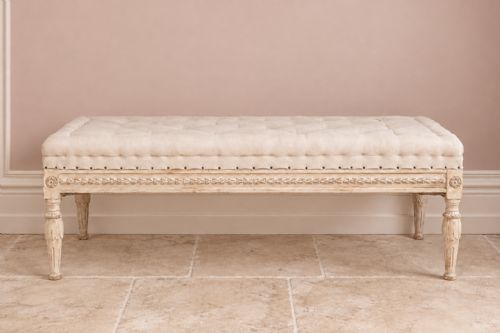
These painted wood footstools bring tactile colour and period character to a room, spanning Gustavian style, French country and Victorian designs.
Painted Wood Footstool
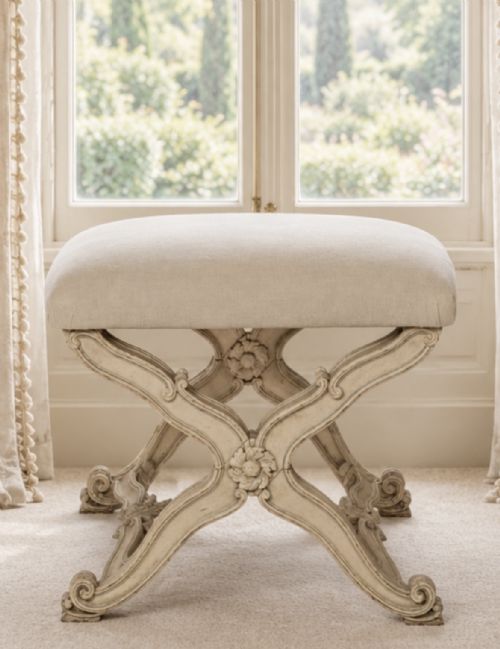
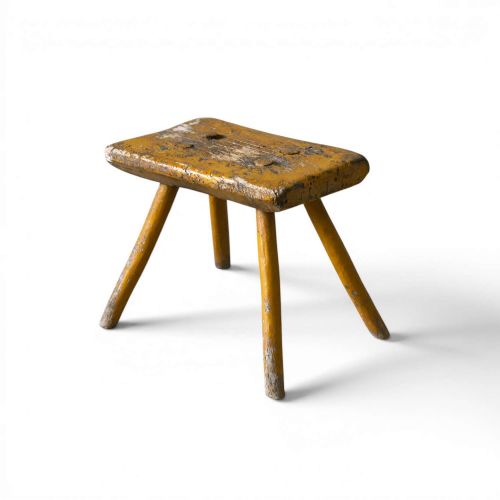
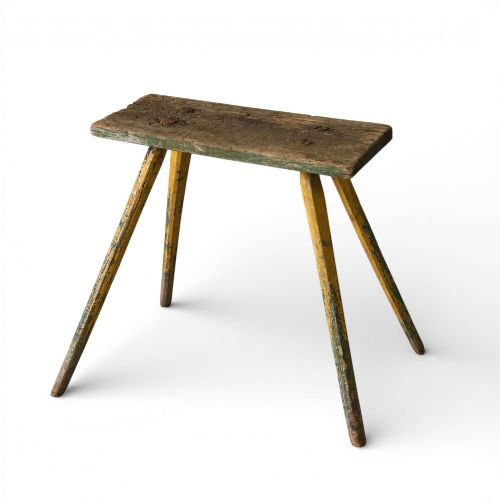
A painted wood footstool provides a low, portable seat or footrest, taking forms from simple milking stools to ornate X-frame curule bases, window seats, and circular boudoir designs.
The pieces on this page span the nineteenth century, the Victorian era, and into the 1920s and 1930s, originating from English, French, Swedish, Italian, and wider continental workshops.
Buyers encounter regional interpretations ranging from rustic Eastern European ochre pieces and Asian elephant seats to refined Louis XVI style boudoir stools and Chinoiserie creations.
Materials and construction
Constructed from timber and pine, these frames rely on traditional joinery before receiving layers of paint, sometimes augmented with gold leaf highlights.
Upholstery materials include fabric, linen, and needlework, applied to seat pads that complement the painted wooden structures underneath.
Painted Wood Footstool Retail Price Guide 2026
Typical asking prices for painted wood footstool among the pieces listed under this phrase on Sellingantiques today, from the lower quarter to the upper quarter. They describe what is for sale here now, not the wider market.
Among the seating options, carved wooden Asian elephant seats incorporate sculpted bodies and tusks into functional furniture.
Assessing quality and finish
Quality rests in the survival of original paint surfaces, where authentic ochre, white, or polychrome finishes show natural patination rather than later re-workings.
Carving detail and structural form separate standard utilitarian milking stools from high-style Continental rococo, Regency, and bespoke maker-attributed pieces.
Miles & Edwards·Whytock and Reid
The Painted Wood Footstool Glossary
- Gustavian style
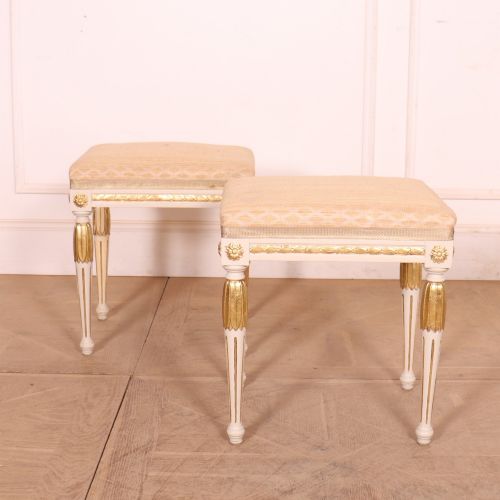
- A Swedish interpretation of French neoclassical design, characterised by pale painted finishes, restrained carving, and functional elegance. It emerged in the late eighteenth century and remained influential through the nineteenth.
- Curule footstool
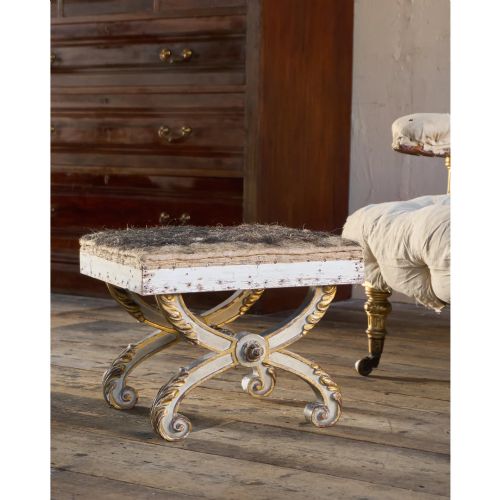
- An X-frame stool design modelled on ancient Roman magistrate seats. This form provides inherent structural strength and a distinct architectural profile.
- Chinoiserie
- European decorative style reflecting Chinese artistic motifs and techniques. Applied to furniture through painted scenes and decorative detailing.
- Needlework
- Stitched textile decoration worked in yarn upon a canvas ground. Frequently used for the upholstered tops of nineteenth-century stools.
Painted Wood Footstool: Frequently Asked Questions
How do I date a painted wood footstool?
Dating relies on examining the timber preparation, tool marks, and the chemical composition or wear patterns of the paint layers. Regional stylistic clues also help narrow down the period of manufacture.
Comparison with documented examples from makers or specific design movements provides further chronological context.
Are these stools suitable for daily seating?
Most pieces function well as occasional seats or low footrests, provided the underlying wooden frame remains sound. Consideration should be given to the vintage structure.
Lighter milking stools and delicate boudoir pieces are best utilised with care to preserve their historic fabric and original painted surfaces.
What is original paint?
Original paint refers to the initial decorative or protective coating applied to the timber when the piece was first made. It retains authentic age-related wear and craquelure.
Surfaces that avoid subsequent stripping or modern overpainting command greater interest from collectors seeking untouched historical pieces.
How do French and Swedish styles differ?
French pieces often display greater ornamentation, drawing on Louis XV, Louis XVI, and rococo influences with curved lines and gilded details. Swedish pieces lean towards Gustavian restraint, featuring paler monochromatic paint and geometric clarity.
Both national traditions utilise wood and paint, but express different regional interpretations of formal European design.