
Pair of Stools
When you search for a pair of stools, you encounter a surprisingly varied lineage of seating that spans centuries and domestic uses.
Pair of Stools
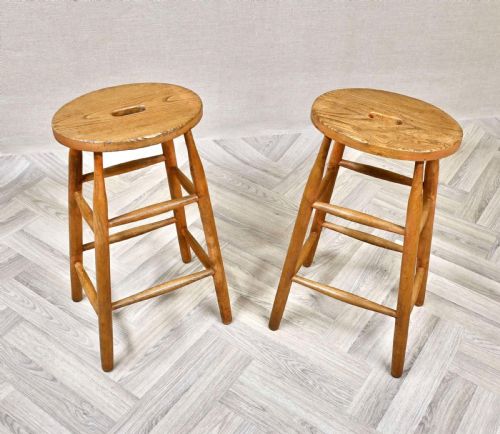
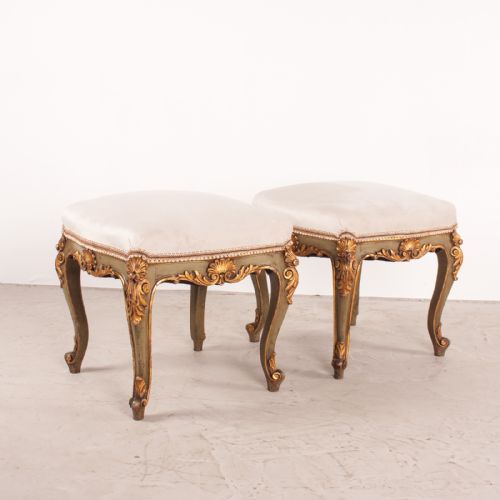
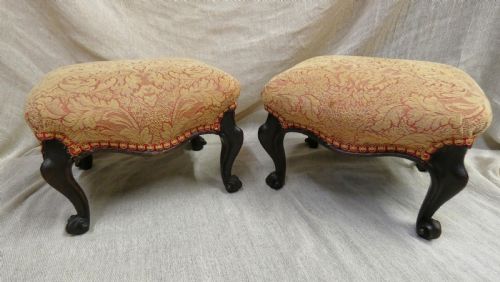
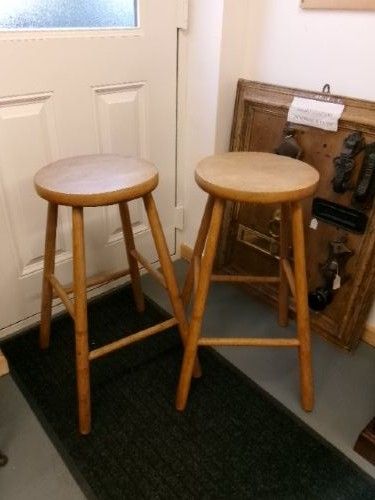
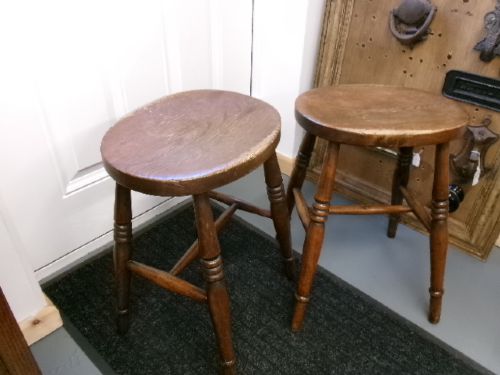
A pair of stools serves multiple purposes across domestic spaces, appearing as footstools, low seats, bar stools, and occasional stands.
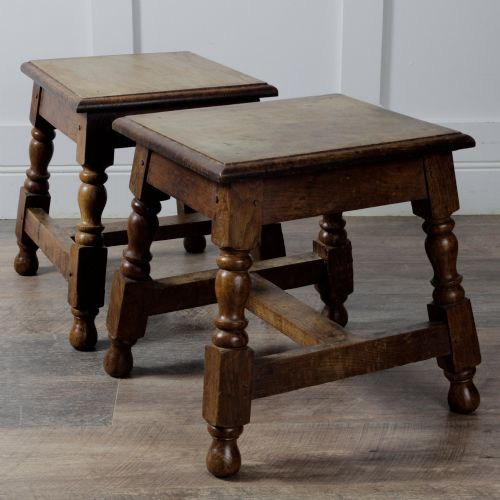
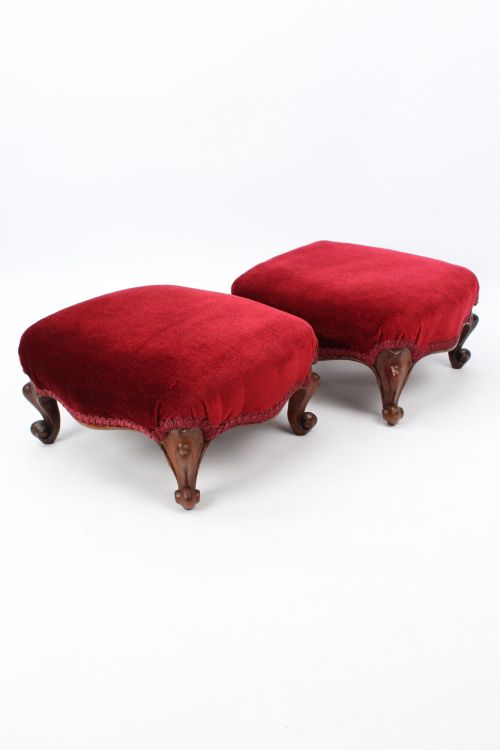
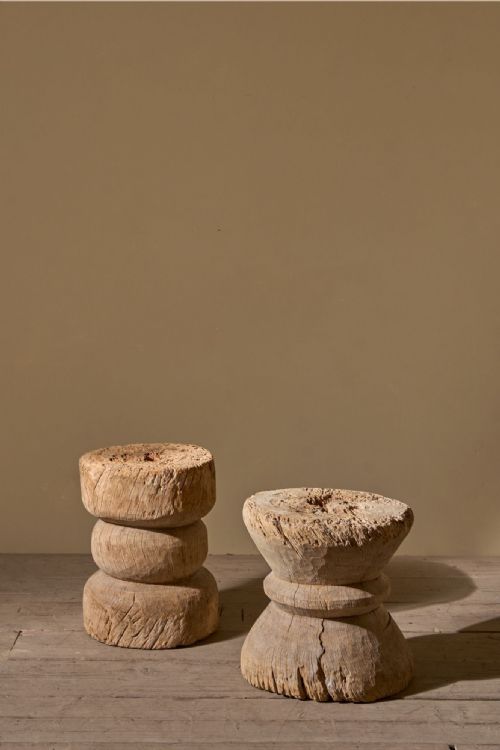
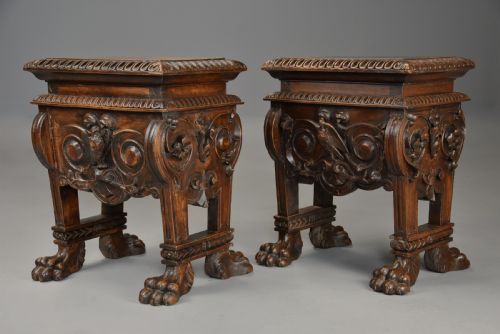
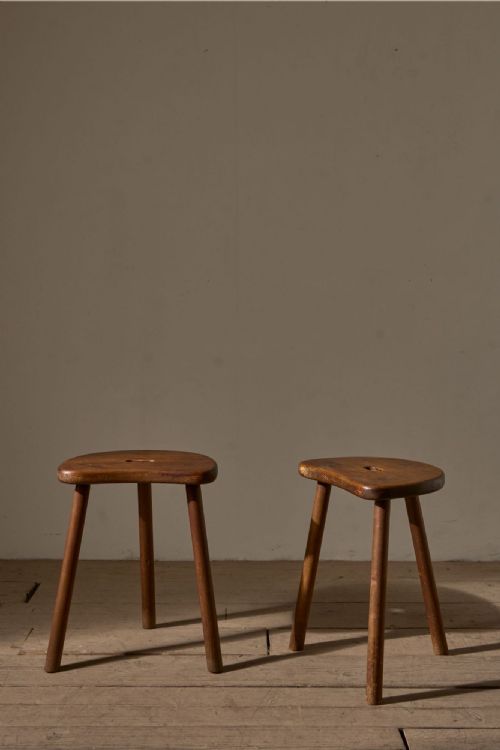
The selections span traditional forms like 18th-century walnut pieces and Victorian footstools alongside rustic vernacular designs in oak, elm, and beech.
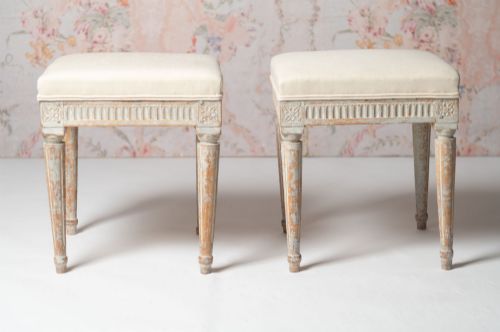
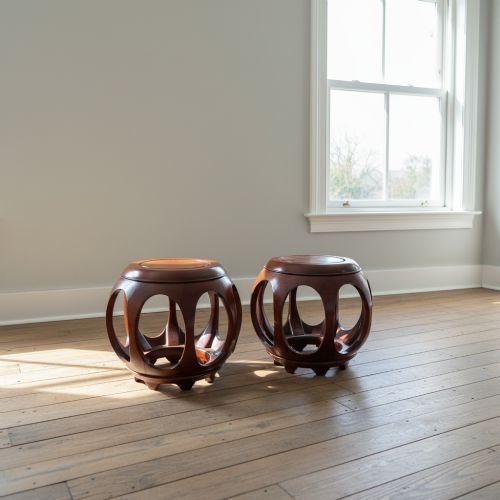
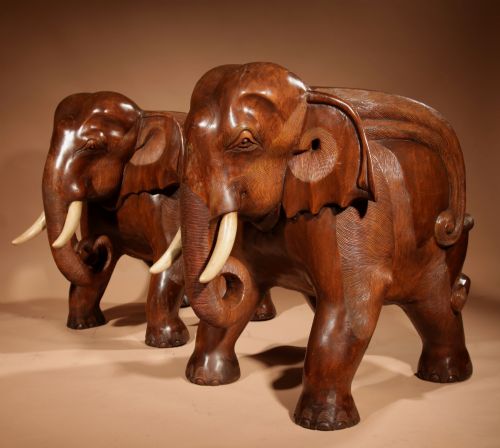
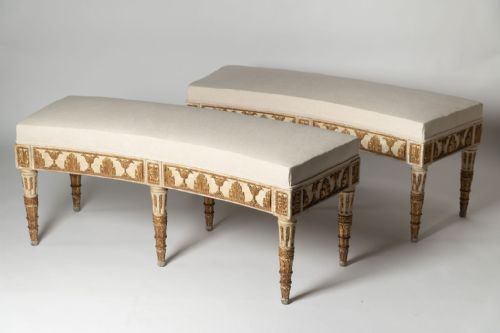
Continental examples introduce Swedish Gustavian styles, French gilt framework, and Chinese hardwood barrel forms into the category.
How they were made
Joinery methods define the older wooden examples, utilising traditional pegged joints in oak, yew, and pine to secure the framework.
Upholstered variations incorporate fabric, velvet, and leather surfaces, often finished with buttoning and brass studs.
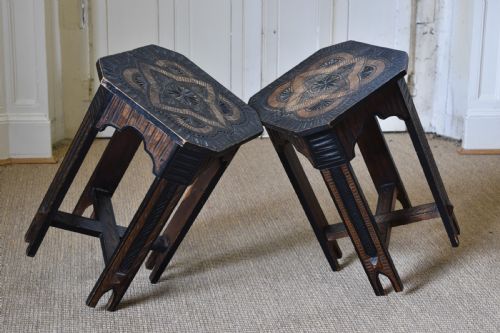
Decorative detailing ranges from chip carving and gilding to satinwood stringing and inlaid walnut.
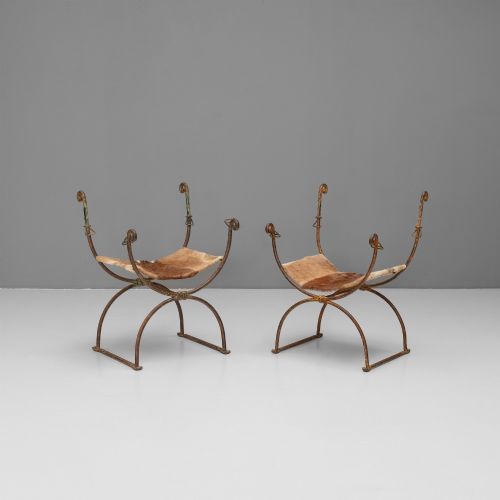
Periods represented stretch from the 18th century through Victorian and Arts and Crafts movements into mid-century industrial metal designs.
What varies in quality
The grade of timber and the crispness of the carving distinguish standard utilitarian seating from finer salon pieces.
Proportion and structural integrity dictate the success of a pair, particularly when matching turned legs or scroll supports.
James Shoolbred And Co·Jack Grimble
The Pair of Stools Glossary
- Joint stool
- A low wooden stool constructed with mortise and tenon joints, common in early English vernacular furniture. These sturdy pieces often doubled as side tables.
- Footstool
- A low seat designed to support the feet while sitting in an armchair. Victorian iterations frequently feature buttoned upholstery and walnut frames.
- Giltwood
- Wood that has been coated with a thin layer of gold leaf or powder. This finish appears frequently on Continental and Regency decorative seats.
- Gustavian
- The Swedish interpretation of French neoclassical design, characterised by pale painted finishes and restrained classical motifs. Pieces often utilise birch or pine.
- Burr wood
- Sourced from tree growths where the grain has grown in a deformed manner, producing intricate swirling patterns. It is typically used for decorative veneers on tabletops and stool tops.
Pair of Stools: Frequently Asked Questions
How were joint stools used historically?
Joint stools served primarily as sturdy seating around the dining table or beside the hearth in early households. Their solid construction also allowed them to function as portable surfaces for holding objects.
Over time, their roles evolved within domestic interiors, occasionally acting as makeshift steps or bedside stands depending on their height and build.
What distinguishes a Victorian footstool?
Victorian footstools typically feature low wooden frames in walnut, mahogany, or rosewood, often shaped with cabriole legs or scroll supports. Their top surfaces are heavily padded and upholstered in fabrics such as wool, velvet, or needlework.
Many examples incorporate buttoning or brass-studded trim, reflecting the ornate aesthetic favoured during the period for domestic comfort.
How do I identify a Gustavian stool?
Swedish Gustavian stools display lighter painted surfaces, often in cream, grey, or white, paired with restrained neoclassical carving. The timber beneath the paint is frequently birch or pine, reflecting Scandinavian material availability.
Their tapered legs and simple fluting separate them from the more exuberant gilt styles found in French furniture of a similar date.
Where should I place a pair of stools in a modern room?
A pair of low stools works effectively positioned beneath a console table, ready to be pulled out for extra seating when guests arrive. Alternatively, matching footstools can sit before armchairs to anchor a seating arrangement.
In larger spaces, taller bar stools or vernacular wooden forms function well as standalone display surfaces for plants and lamps.