



Walnut Footstool Pair
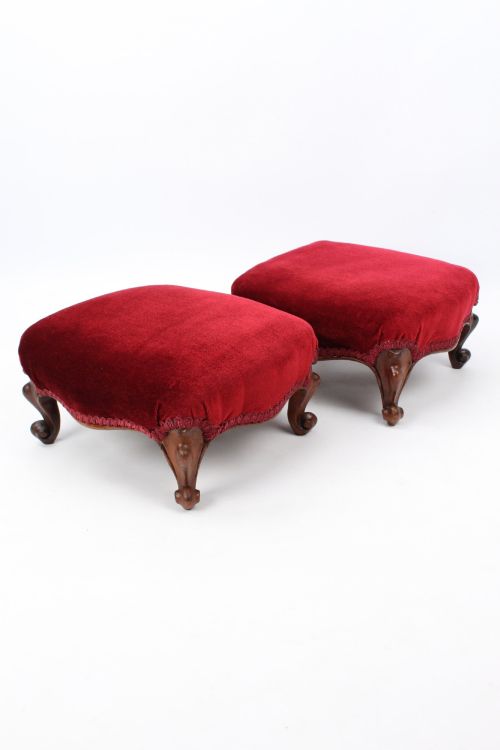
A walnut footstool pair brings matching timber warmth and period textile upholstery directly to a fireside or bedroom.
Walnut Footstool Pair
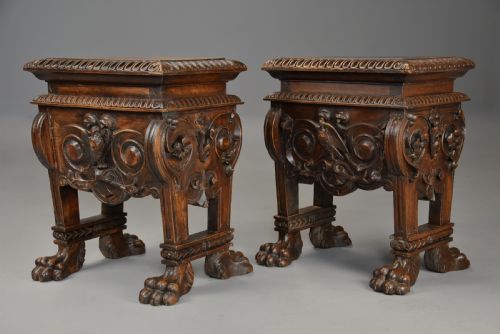
A walnut footstool pair consists of matched low seats constructed primarily from walnut timber, historically designed to support resting feet or serve as low occasional seating. These matching sets appear frequently in Victorian iterations alongside earlier eighteenth century designs and revival styles such as Louis XIV and Italian Renaissance.
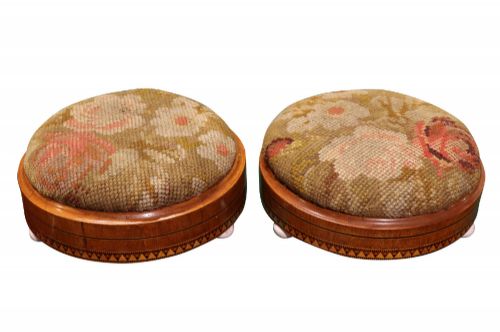
The physical forms on this page range from small circular upholstered stools to larger carved frames and library window seats. Alongside dedicated footstools, the evidence records occasional matching sets linked to armchairs or larger seating configurations.
Origin and period markers span the eighteenth and nineteenth centuries, taking in specific dates like eighteen sixty and eighteen eighty alongside broader Victorian eras. Buyers seeking a cohesive pair often select from these nineteenth century walnut examples which frequently incorporate needlepoint, velvet, or leather upholstery.
How they were made
Construction relies heavily on solid walnut timber shaped through carving, turning, and occasional inlay work. Artisans built sturdy frames designed to support upholstery while displaying the rich grain and deep colour inherent to walnut.
Upholstery techniques visible across the evidence include buttoning, petit point tapestry, needlepoint, and textile coverings secured over padding. Brass details occasionally appear alongside ceramic components, wool, and leather to complete the fabric and structural finish.
Walnut Footstool Pair Retail Price Guide 2026
Typical asking prices for walnut footstool pair among the pieces listed under this phrase on Sellingantiques today, from the lower quarter to the upper quarter. They describe what is for sale here now, not the wider market.
Listings feature walnut timber paired with velvet, wool, leather, and ceramic elements across nineteenth century Victorian and eighteenth century styles.
What varies in quality
Quality in a walnut footstool pair is determined by the crispness of the timber carving and the fidelity of the period style. Finer examples display deeply sculpted walnut frames with balanced proportions, whereas simpler pieces rely on plain turned legs.
The standard of the upholstery work and the preservation of original textiles also set pieces apart. Superior items retain skilled needlepoint or buttoned leather work that complements the architectural quality of the walnut frame underneath.
The Walnut Footstool Pair Glossary
- Walnut
- A dense, dark hardwood prized for its rich grain and stability in furniture making. It was widely utilised across eighteenth and nineteenth century seating.
- Petit point
- A fine needlepoint canvas embroidery executed with a single stitch per intersection. This technique allows for intricate pictorial or geometric patterns on stool tops.
- Buttoned
- An upholstery method where depressions are created by pulling twine tightly through padding and securing with buttons. This creates a tufted surface common on Victorian pieces.
- Gout stool
- A specialised low footrest historically designed to elevate a foot affected by gout. Many period examples feature adjustable angles or padded top surfaces.
- Revival style
- A design movement that imitates historical aesthetics from earlier centuries, such as Louis XIV or Italian Renaissance. Makers applied these historicist motifs to nineteenth century walnut frames.
Walnut Footstool Pair: Frequently Asked Questions
How were footstools used historically?
Footstools provided practical warmth and comfort by keeping feet elevated away from cold draughty floors in period rooms.
They also served as convenient low seats near firesides or window benches where larger chairs were impractical.
How do I spot a Victorian footstool?
Victorian examples frequently utilise dark walnut timber combined with buttoned upholstery, needlepoint, or patterned textiles.
They often exhibit turned legs or carved frames reflecting the eclectic revival tastes popular during the nineteenth century.
Are these stools sturdy enough for daily use?
Most period walnut stools were constructed from robust hardwood timbers designed for regular weight bearing and daily service.
However, fragile antique textiles or delicate nineteenth century carving may require gentler placement in modern domestic settings.
What is the difference between petit point and needlepoint?
Petit point uses a much finer mesh and smaller individual stitches than standard needlepoint canvas work.
This finer stitch count permits greater detail in decorative motifs found on antique stool upholstery.