





18th Century Style Stool
These 18th century style stool pieces bring classic seating forms into the room, offering carved woodwork and traditional upholstery.
18th Century Style Stool
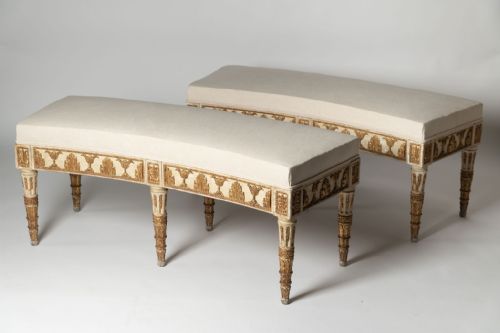
An 18th century style stool takes inspiration from historic seating designs, appearing in forms ranging from compact footstools to large window seats and long benches. Buyers searching this phrase will frequently encounter walnut and mahogany examples drawing on Georgian, Chippendale, and Queen Anne aesthetics.
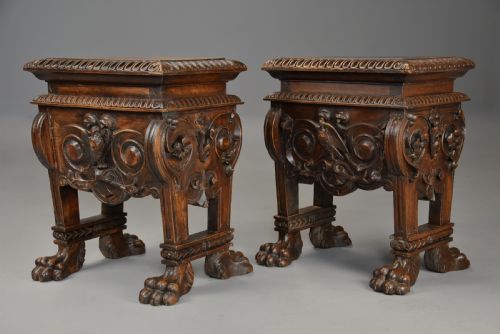
The selection includes pieces spanning from the actual 18th century and Georgian periods through to later 19th and early 20th century revivals. Walnut and oak versions dominate the earlier stylistic interpretations, whilst mahogany forms often display decorative carving along the frame.
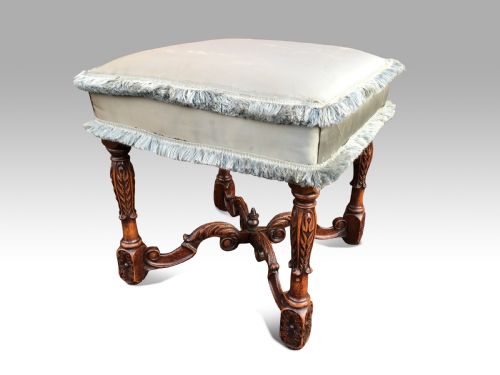
Variations extend to specialised seating, including X-frame structures and long stools designed for specific domestic spaces. These items provide functional seating whilst reflecting the decorative tastes of past centuries through carved details and upholstered pads.
Materials and construction
Cabinetmakers constructed these frames primarily using hardwoods such as walnut, mahogany, and oak, often shaping the timber with hand-carved ornamentation. Giltwood accents and brass details occasionally appear on Italian Neoclassical and Rococo interpretations.
Upholstery fabric provides the seating surface, supported by traditional padding and framing methods. Joinery techniques range from simple pegged joints in primitive oak pieces to elaborate carved joinery on formal walnut and mahogany frames.
18th Century Style Stool Retail Price Guide 2026
Typical asking prices for 18th century style stool among the pieces listed under this phrase on Sellingantiques today, from the lower quarter to the upper quarter. They describe what is for sale here now, not the wider market.
Listings feature walnut, mahogany, and oak frames across Georgian, Queen Anne, and Italian stylistic revivals.
Distinctions in quality
The standard of a piece depends on the depth and crispness of the carved woodwork, particularly on walnut and mahogany frames where floral or classical motifs appear. Superior examples demonstrate careful timber selection and balanced proportions that reflect their period inspiration accurately.
The execution of the upholstery and the integrity of the frame construction further define the grade of the item. Pieces retaining original timber patination and precise joinery stand apart from simpler or later reproductions.
The 18th Century Style Stool Glossary
- Georgian
- A period spanning the reigns of the first four Georges, known for refined furniture design and the use of mahogany and walnut. It encompasses several stylistic shifts including Palladianism and Chippendale.
- X-frame
- A structural furniture form utilising intersecting diagonal timbers to support the seat. This ancient design gained popularity during various revival periods for formal stools and benches.
- Giltwood
- Timber treated with a thin layer of gold leaf or gilt finish. It appears frequently on decorative Italian furniture styles.
- Joined stool
- An early form of wooden seating constructed with mortise and tenon joints secured by wooden pegs. These pieces typically feature sturdy oak frames.
- Serpentine
- A furniture contour featuring a gentle wave shape, curving outward at the centre and inward at the ends. This profile appears on the edges of polished mahogany seat frames.
18th Century Style Stool: Frequently Asked Questions
How do I date an 18th century style stool?
Dating relies on examining the timber species, tool marks, and construction methods used in the frame. Secondary woods and wear patterns often indicate whether a piece dates from the original era or a later revival.
Stylistic cues such as specific leg shapes and carving motifs also help place the item within the Georgian period or subsequent 19th and early 20th century movements.
What is the difference between a footstool and a window seat?
Footstools are generally smaller, compact items designed to support seated occupants' feet. Window seats are elongated forms built to fit within architectural window recesses.
Window seats frequently incorporate armrests and more elaborate upholstery, functioning as independent pieces of furniture rather than mere accessories.
Are these stools suitable for daily seating?
Most of these pieces are structurally robust enough for regular use, provided the frame and joints remain stable. Upholstered versions offer comfortable padding for everyday sitting.
Care should be taken with antique frames and delicate carved details to avoid excessive wear or structural strain.
How should I care for antique wood and upholstery?
Maintain wooden frames by dusting with a dry cloth and occasionally applying suitable furniture wax to nourish the timber. Keep pieces away from direct sunlight and heat sources to prevent wood splitting.
Upholstery fabric requires gentle vacuuming and professional cleaning when necessary to preserve the textile.