



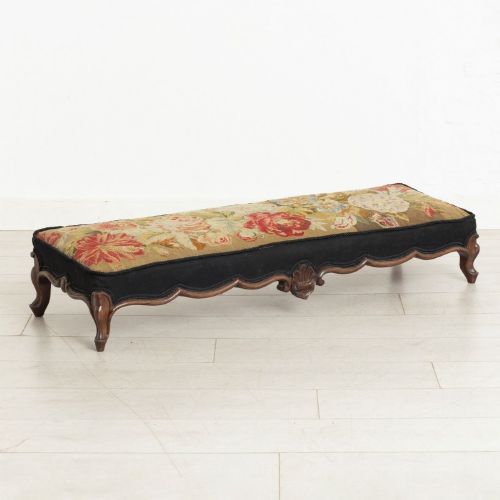


Walnut Tapestry Stool
A walnut tapestry stool combines dense, figured timber with hand-worked textile upholstery for a durable seat.
Walnut Tapestry Stool
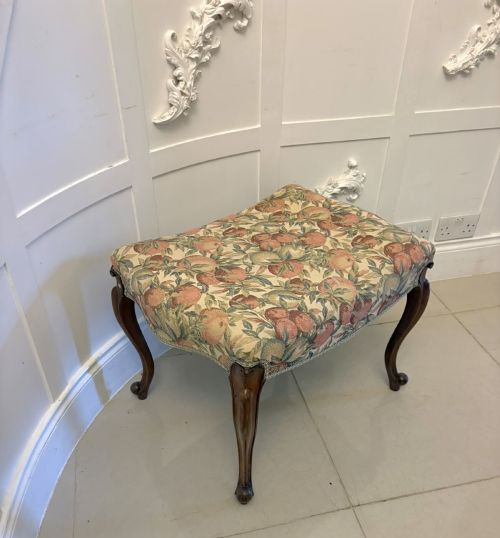
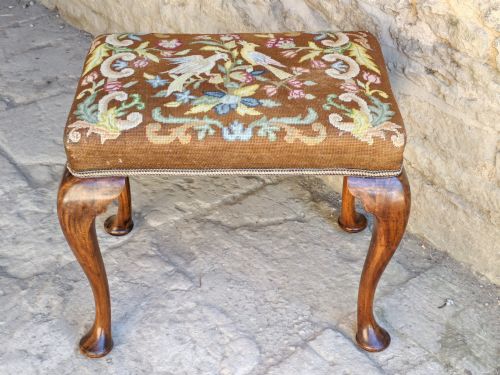
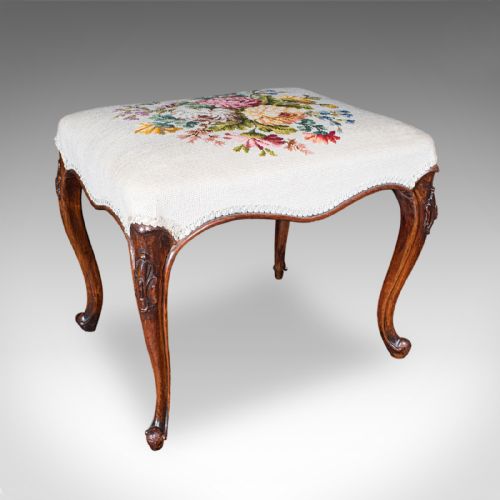
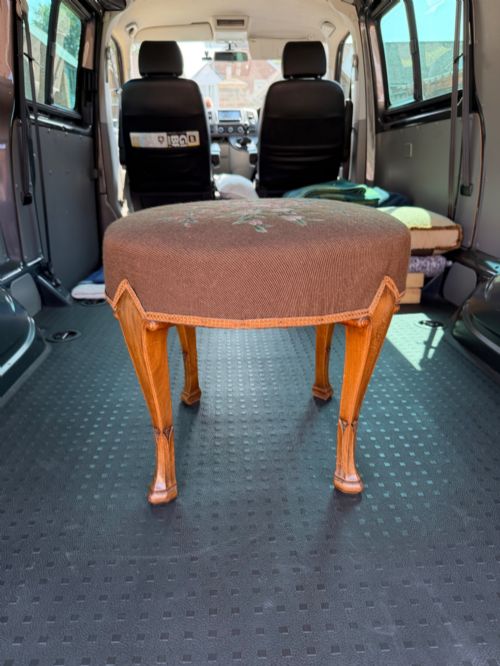
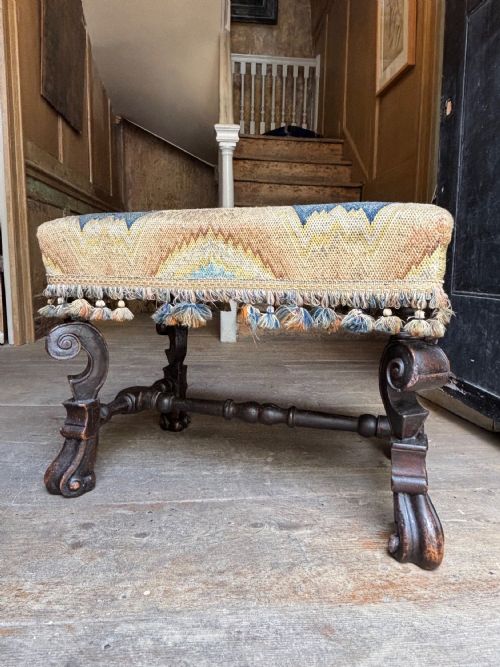
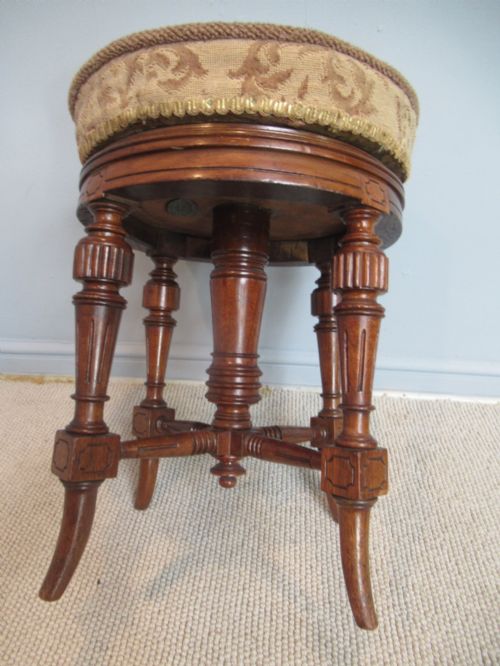
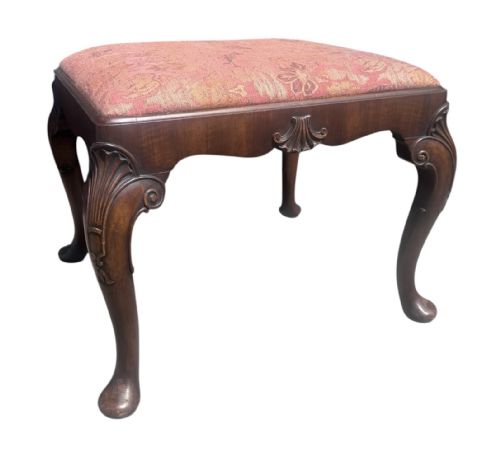
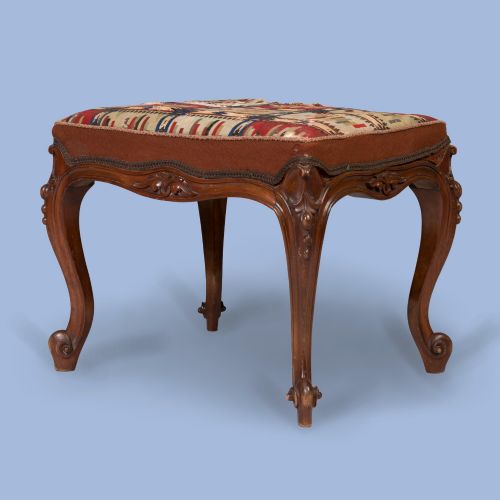
A walnut tapestry stool is a low seating form constructed from dark timber and topped with a textile cover. These pieces range from small gout stools and low footstools to large window seats and revolving piano stools. The version most commonly met on this page is the Victorian walnut stool, frequently standing on cabriole legs or taking an X-frame shape.
The materials recorded span solid walnut frames paired with wool tapestry, needlepoint, needlework, velvet, and fabric upholstery. English and French workshops produced these designs across the nineteenth century, incorporating revival styles such as Queen Anne, Carolean, and Louis XVI alongside straightforward Victorian domestic forms.
How They Were Made
Makers shaped the timber frames from walnut, utilising its natural grain and strength to carve decorative details like cabriole legs, ball and claw feet, and X-frame supports. Some pieces incorporate inlay work such as Tunbridge Ware or include functional turning for revolving mechanisms.
The upper sections utilise textile covers worked in wool tapestry, needlepoint, beadwork, or kilim, stretched over padded frames and secured with brass tacks or edge banding.
Walnut Tapestry Stool Retail Price Guide 2026
Typical asking prices for walnut tapestry stool among the pieces listed under this phrase on Sellingantiques today, from the lower quarter to the upper quarter. They describe what is for sale here now, not the wider market.
Materials paired with walnut frames include wool tapestry, needlepoint, beadwork, velvet, and geometric kilim textiles.
What Varies in Quality
The standard of a walnut tapestry stool rests upon the crispness of the timber carving and the density of the frame construction. Pieces displaying finely rendered details, such as carved hunting dog heads on X-frames or substantial proportions like those seen in Scottish Baronial or large French revival examples, demonstrate superior workshop input.
The execution of the textile cover dictates much of the visual merit. Finely worked needlepoint, petit point, and original period tapestry with tight, complex pictorial or geometric wool stitching separate standard domestic seating from finer examples.
The Walnut Tapestry Stool Glossary
- Walnut
- A hard, rich brown timber favoured for furniture frames because of its grain and stability. It accepts fine carving and takes a smooth polish.
- Tapestry
- A thick textile woven or stitched with pictorial or geometric designs. In these listings, it often refers to wool needlework or needlepoint covers.
- Cabriole leg
- A furniture leg that curves outward at the knee and tapers inward toward the foot, inspired by animal limbs. It appears frequently on Queen Anne style and Victorian stools.
- X-frame
- A structural furniture support formed by two intersecting diagonal members shaped like the letter X. This form provides robust support for window seats and occasional stools.
- Needlepoint
- A type of canvas work embroidery stitched by hand using wool or silk threads. It forms the decorative seat cover on many antique footstools.
- Revolving stool
- A seat featuring a threaded wooden spindle or mechanical screw that allows the top to adjust in height. These are typical of piano and dressing table forms.
Walnut Tapestry Stool: Frequently Asked Questions
What is a walnut tapestry stool used for?
These pieces served multiple domestic purposes, functioning as fireside footstools, dressing table seats, window benches, and piano stools. Their compact size allowed them to be moved easily around a Victorian interior.
Larger versions like window seats and long benches provided auxiliary seating in reception rooms. Smaller circular or gout stools offered foot support during long periods spent sitting.
How do I date a walnut tapestry stool?
Dating relies on combining the timber framing style with the technique and motifs of the upholstery. Victorian pieces from the mid to late nineteenth century frequently feature cabriole legs, walnut frames, and wool needlepoint covers.
Earlier eighteenth-century revival pieces show specific stylistic markers like carved ball and claw feet or exaggerated baroque forms. Construction joints and the type of secondary wood inside the frame offer further chronological clues.
Are the tapestry seats original to the stools?
Many surviving pieces retain their original needlework or tapestry covers, often secured with early brass tacks. Some listings specifically note original fabric or needlepoint from the period of manufacture.
Because textiles wear out faster than wooden frames, numerous stools have been reupholstered over time using period-appropriate wool tapestry or needlepoint. Inspecting the underside reveals how the textile interacts with the frame webbing.
How do I care for antique walnut and tapestry?
Keep wooden frames away from direct sunlight and heat sources to prevent the walnut from drying out or splitting. Occasional light dusting preserves the polished timber surface.
Protect wool tapestry seats from sustained direct light to prevent fading of the dyed threads. Gentle vacuuming through a mesh screen helps remove dust from the textile without damaging the needlepoint stitches.