
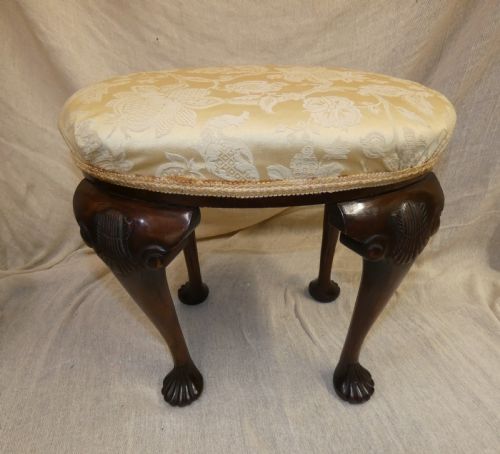


Queen Anne Style Footstool
A queen anne style footstool brings sculptural cabriole legs and rich upholstery to a room, offering both practical seating and traditional English form.
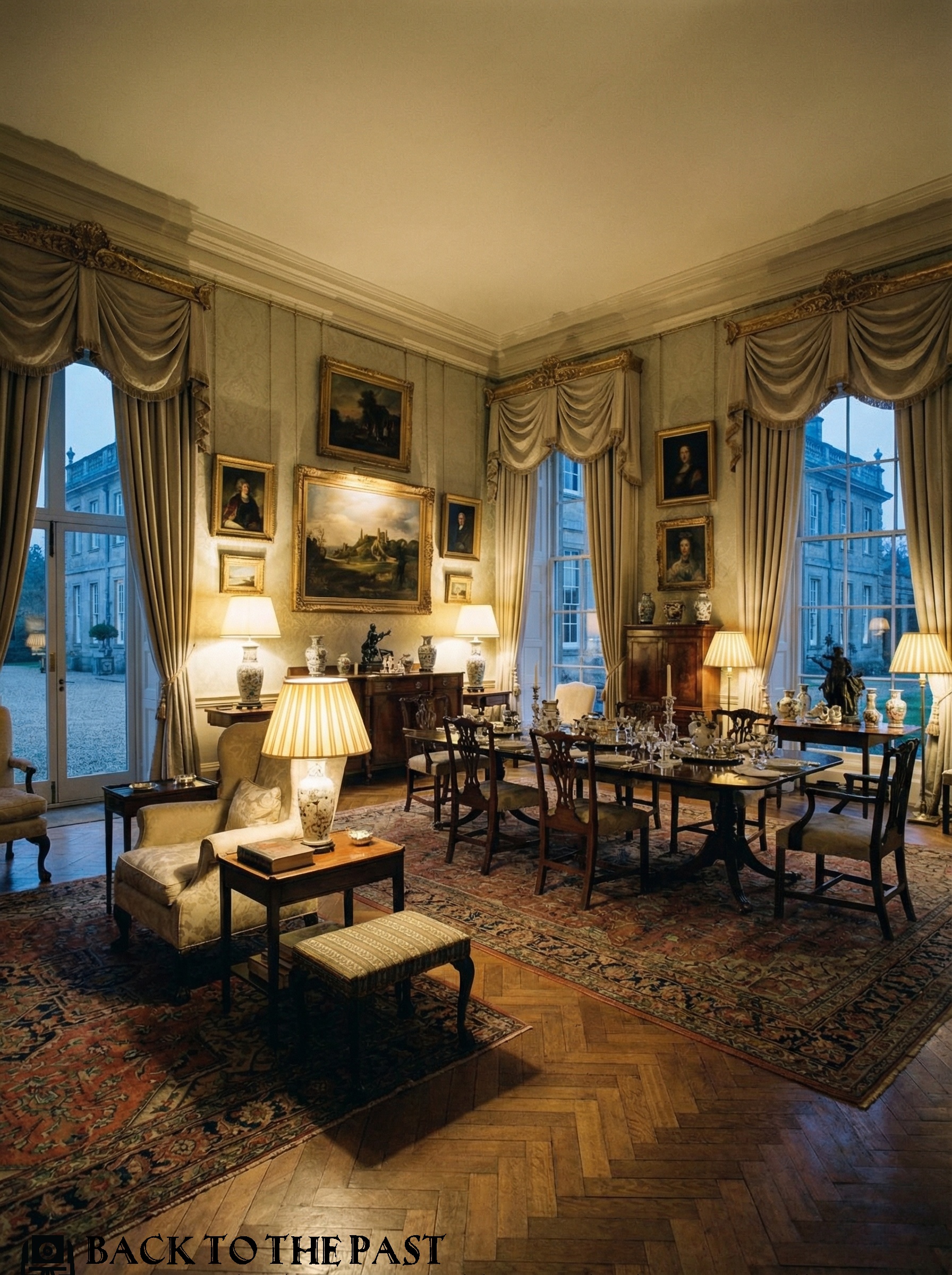
Queen Anne Style Footstool
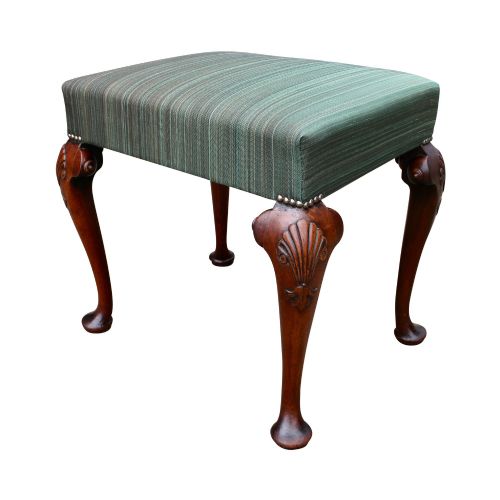
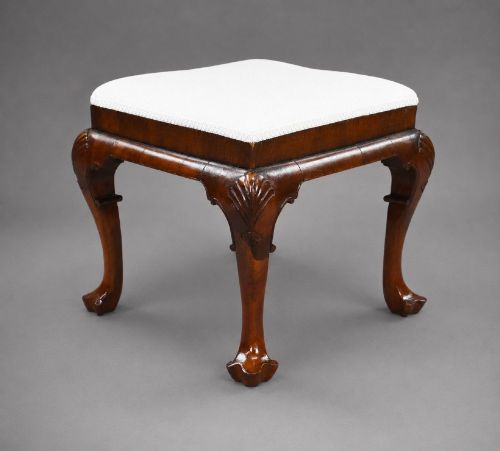
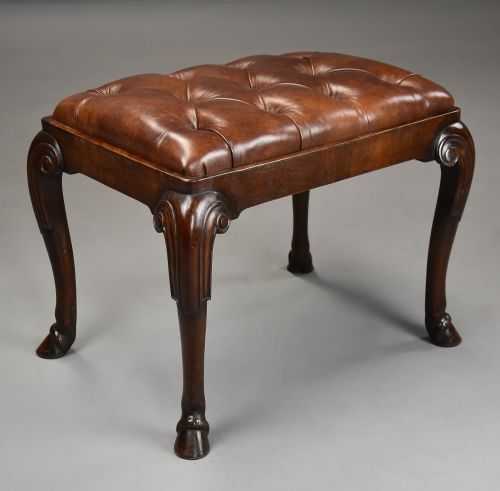
A queen anne style footstool is a low seating piece typically designed for dressing tables, piano use, or resting feet beside a chair. When you search for this phrase, you will find forms ranging from compact square dressing stools to long window seats and benches.
The versions most common on this page date from the nineteenth and early twentieth centuries, including revival pieces from the Edwardian era and the nineteen-twenties alongside earlier examples. Walnut frames dominate the selection, frequently paired with textile or needlework covers.
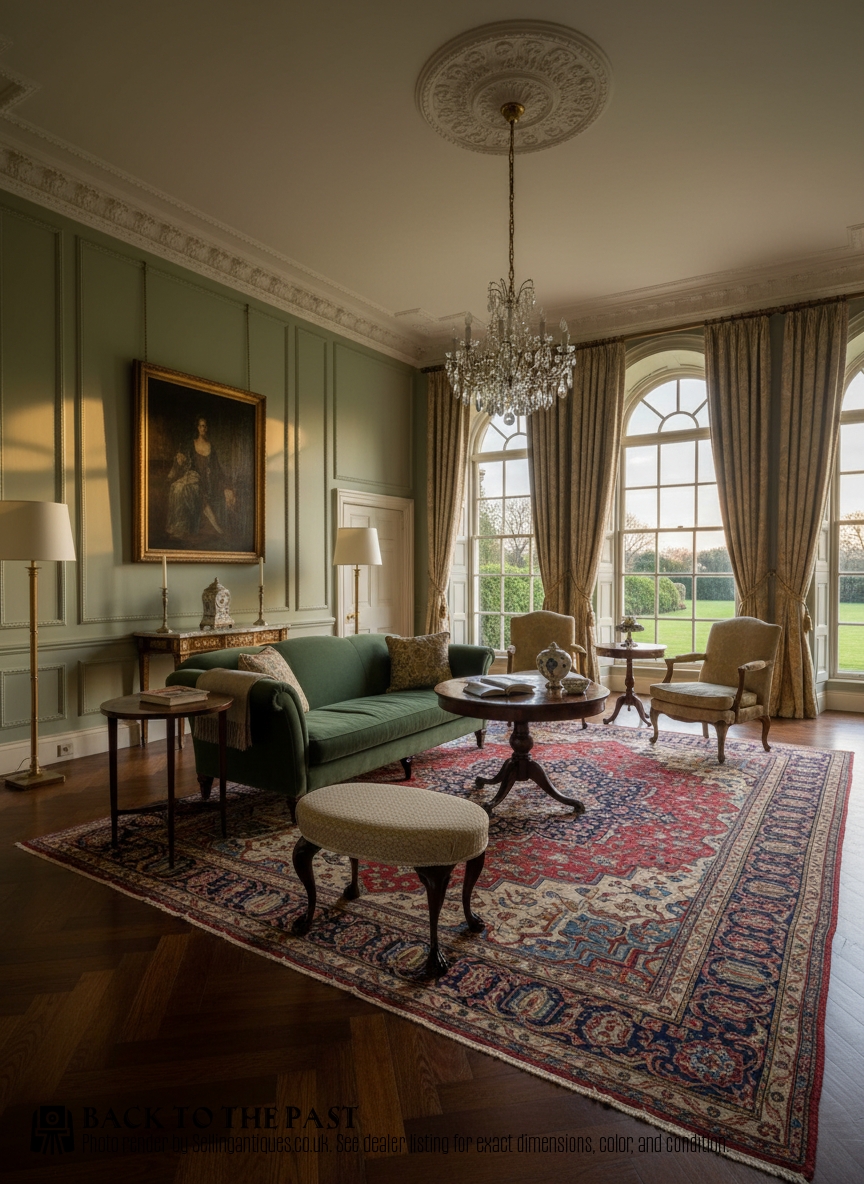
How they were made
Frames are constructed primarily from solid walnut and mahogany, shaped with curved cabriole legs that often terminate in ball and claw details. Woodcarving appears on knees and rails, giving structural depth to the timber forms.
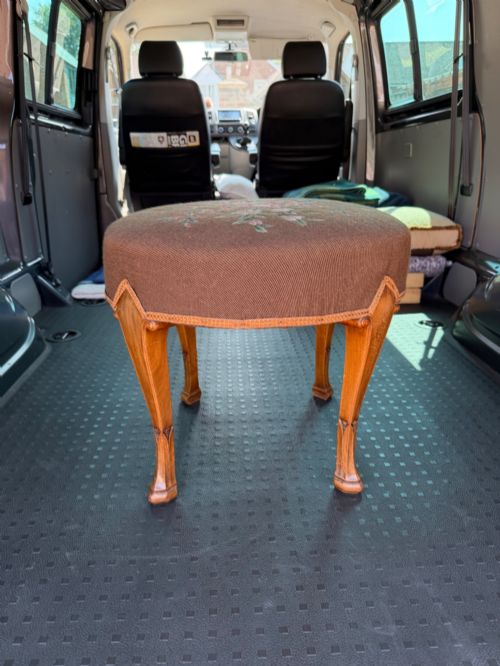
Upholstery relies on traditional textiles, wool, tapestry, needlepoint, and leather secured over internal padding. Some variants incorporate drop-in seats or X-frame supports alongside standard four-leg configurations.
Queen Anne Style Footstool Retail Price Guide 2026
Typical asking prices for queen anne style footstool among the pieces listed under this phrase on Sellingantiques today, from the lower quarter to the upper quarter. They describe what is for sale here now, not the wider market.
Listings feature walnut frames predominantly, alongside mahogany, with upholstery in wool, tapestry, fabric, and leather.
What varies in quality
Quality shows in the crispness of the wood carving on the cabriole legs and the weight of the timber used in the frame. Superior examples display balanced proportions and refined curves rather than rigid or heavy lines.
The upholstery contributes significantly to the character of the piece, with hand-worked needlepoint, tapestry, or quality leather elevating the finish. The integration of the cover with the wooden frame demonstrates the maker's attention to detail.
Morris & Co.
The Queen Anne Style Footstool Glossary
- Cabriole leg
- A furniture leg that curves out and then narrows inward, imitating an animal's curving leg. This form is central to the visual identity of the style.
- X-frame
- A structural base formed by intersecting curved or straight wooden members beneath the seat. This design offers distinct visual interest compared to standard four-leg stools.
- Window seat
- An elongated stool designed to fit beneath a window recess. These pieces often feature longer proportions to accommodate multiple sitters.
- Drop-in seat
- An upholstered frame insert that lifts out of the wooden seat rail rather than being permanently fixed. It allows for straightforward reupholstery.
Queen Anne Style Footstool: Frequently Asked Questions
What is a queen anne style footstool?
A queen anne style footstool is a low seat defined by characteristic cabriole legs and traditional timber framing, often upholstered in textile or needlework.
These pieces function as dressing table stools, piano seats, or window benches within a room.
How do I date a stool?
Dating relies on timber selection, construction methods, and stylistic revival markers typical of nineteenth and early twentieth-century production.
Earlier eighteenth-century pieces display distinct hand-tooling, whereas revival pieces from the Victorian and Edwardian periods show machine-assisted joinery.
Where should I place it?
These stools suit bedrooms before dressing tables, living spaces near armchairs, or hallways beneath windows.
Their compact scale allows them to slide easily beneath surfaces when not in use.
What fabrics are used?
Upholstery materials include wool needlepoint, tapestry, woven fabrics, and leather.
Many examples feature hand-stitched floral designs that reflect historical textile traditions.