

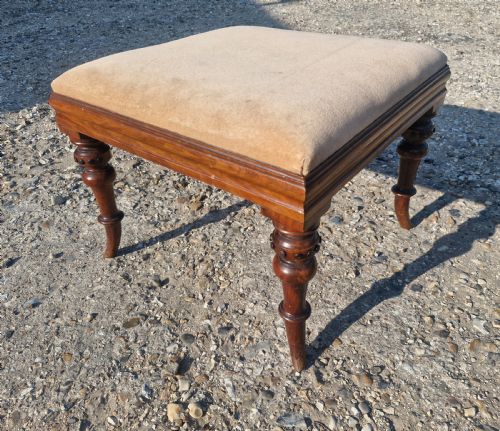


Beige Upholstered Stool
These beige upholstered stool examples bring period seating into domestic spaces with restrained form and tactile surface interest.
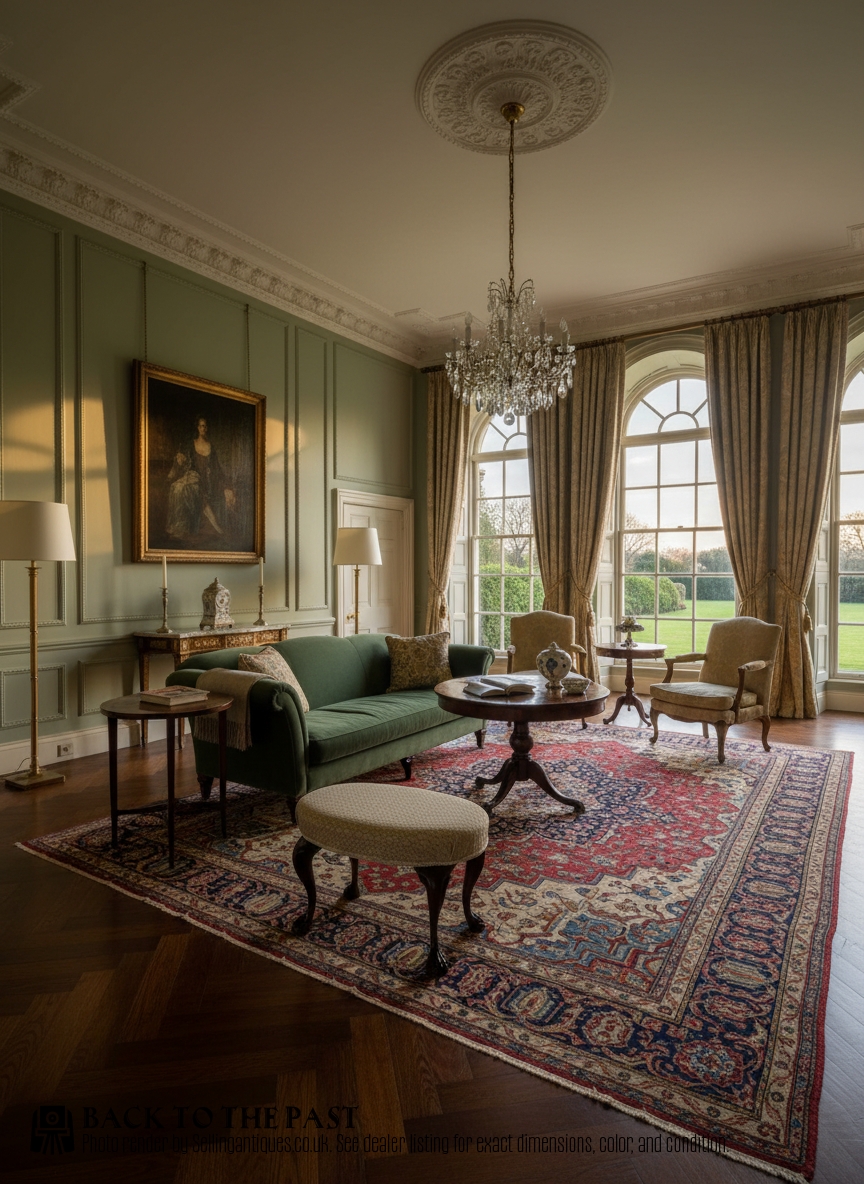
Beige Upholstered Stool
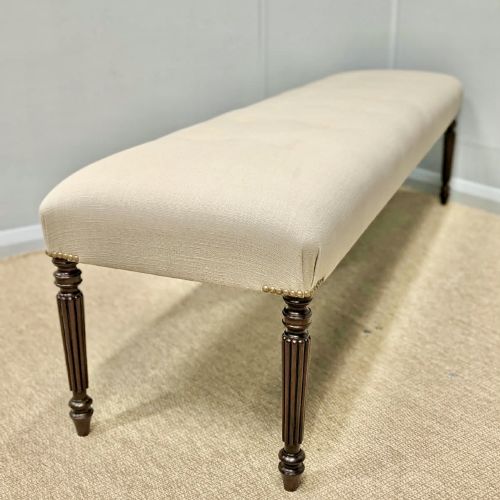
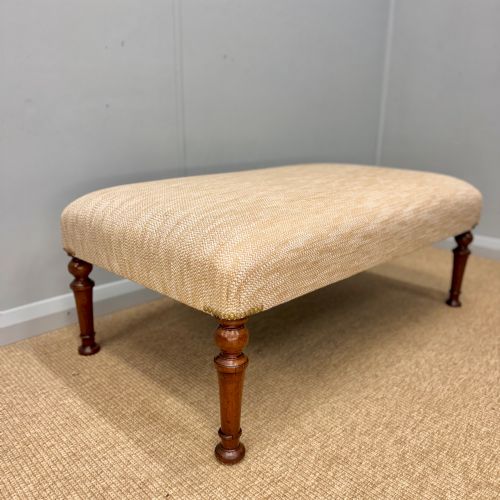
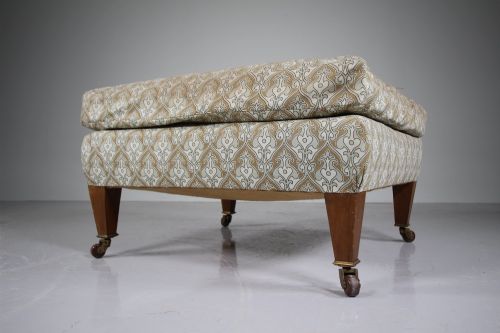
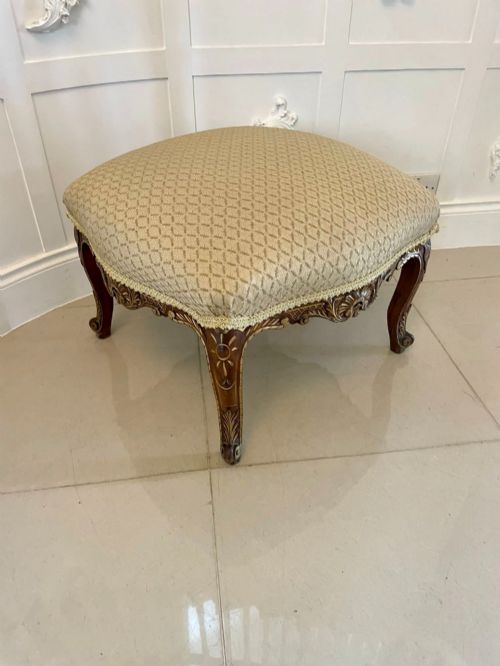
A beige upholstered stool serves as a versatile low seat or footrest, drawing from nineteenth-century forms such as fender stools, box ottomans, and freestanding centre stools. These pieces combine wooden frames in mahogany, walnut, or giltwood with neutral coverings in linen, wool, and textile.
Buyers encounter Victorian and Regency designs frequently on this page, ranging from compact footstools to large ottomans and hall benches. Many retain carved woodwork reflecting Victorian Rococo Revival or French Rococo Revival influences.
The selection includes rectangular oblong shapes alongside oval formats and paired ottoman stools. Some examples incorporate buttoned upholstery or contemporary neutral recovery over period wooden structures.
Materials and construction
Makers constructed the structural frames from dense hardwoods including mahogany, walnut, and rosewood, alongside carved giltwood. These timbers were shaped into cabriole or fluted legs, often featuring detailed hand carving.
Upholstery methods utilised traditional stuffing and webbing beneath top coverings of linen, wool, and tapestry textiles. Brass hardware and buttoning details frequently secured the fabric or provided functional access in box ottoman designs.
Beige Upholstered Stool Retail Price Guide 2026
Typical asking prices for beige upholstered stool among the pieces listed under this phrase on Sellingantiques today, from the lower quarter to the upper quarter. They describe what is for sale here now, not the wider market.
Some nineteenth-century feet spent their early days keeping ankles safely away from sputtering coal fires.
Distinctions in quality
Quality rests upon the crispness of the frame carving and the selection of timber grain. Walnut and mahogany frames with deep, hand-chiselled detail command attention above plain structural timbers.
The integrity of the joinery and the retention of original gilding or polish dictate the standing of a piece. Finer examples display harmonious proportions between the decorative woodwork and the upholstered top.
LOIDRAULT FRERES PARIS
The Beige Upholstered Stool Glossary
- Fender stool
- A long, narrow footstool designed to sit in front of a domestic hearth. These pieces traditionally kept feet elevated above cold stone floors.
- Box ottoman
- A seated piece featuring a hinged lid that opens to reveal internal storage space. These containers combined upholstery with practical household organisation.
- Cabriole leg
- A furniture leg that curves out and then in, resembling the leg of an animal. This form appears frequently on Victorian and revival seating.
- Giltwood
- Timber coated with a thin layer of gold leaf or gilt pigment. This finish highlights elaborate carved details on formal nineteenth-century frames.
Beige Upholstered Stool: Frequently Asked Questions
Where were these stools placed originally?
These stools functioned primarily in drawing rooms, parlours, and hallways as movable seating or footrests. Fender stools specifically belonged in front of fireplaces to provide comfort during cooler months.
Larger ottoman variants served at the foot of beds or as central seating within principal entertaining spaces, accommodating multiple users or serving as impromptu tables.
How do I identify a Victorian stool?
Victorian examples frequently display darker hardwoods such as walnut and rosewood, often shaped into cabriole legs or ornate revival motifs. Buttoned upholstery and heavy textiles are characteristic of this mid to late nineteenth-century period.
Proportions tend to be robust, with attention given to carved wooden aprons and structural stability beneath the fabric top.
What is a Regency ottoman stool?
Regency pieces reflect the classical revival tastes of the early nineteenth century, featuring cleaner lines and specific timber choices like mahogany. They often incorporate box storage beneath the upholstered lid.
These stools show a distinct geometric discipline in their frames compared to the later, more exuberant carvings of the Victorian era.
Are these covers original?
Most pieces show either historic textiles such as period tapestry or contemporary neutral coverings like beige linen. Upholstery is frequently renewed to suit modern domestic interiors while preserving the antique wooden frame.
Listings specify whether the fabric is a recent recovery or a surviving period textile.