



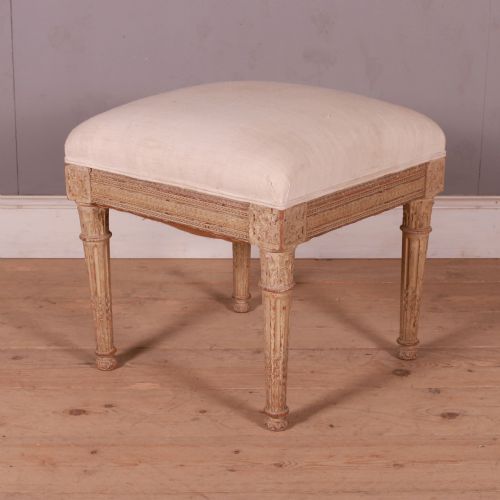


Antique Swedish Footstool
An antique swedish footstool brings restrained Nordic elegance and useful low seating to a room, defined by understated painted finishes and clean historic lines.
Antique Swedish Footstool
An antique swedish footstool offers low seating and practical resting forms derived from centuries of Scandinavian interior design traditions. These pieces appear in forms ranging from simple low stools to matched pairs, often categorised alongside broader ottoman and footstool groups.
The pieces listed on this page span the eighteenth and nineteenth centuries, capturing key historical shifts in Scandinavian taste. Buyers frequently encounter examples from the 1880s and 1890s alongside earlier eighteenth-century designs.
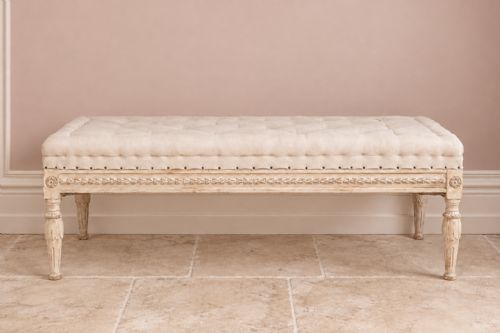
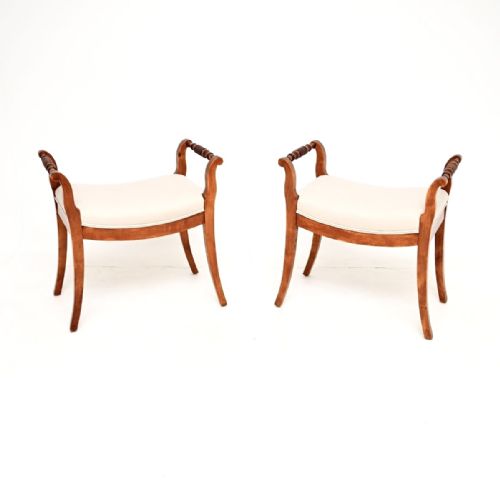
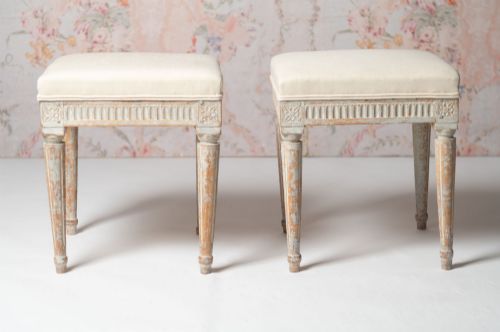
Stylistic influences across the selection strongly reflect classic regional movements such as Gustavian, Swedish Biedermeier, and Swedish Empire. Each style brings distinct proportion and ornament to the fundamental stool form.
How these pieces were made
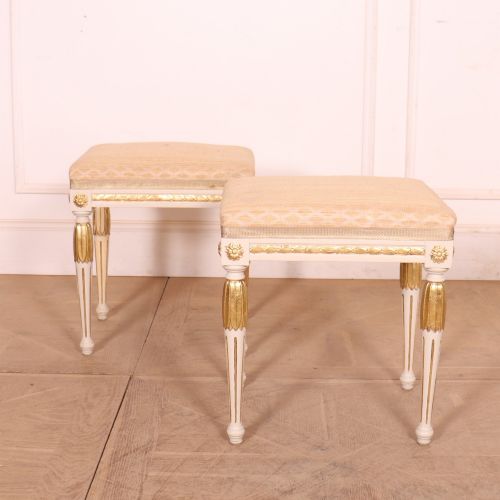
Makers utilised native timbers such as birch and satin birch, shaping the wood through traditional carpentry and carving techniques. Selected pieces receive a painted finish or delicate applications of gold leaf to accentuate the timber details.
Upholstery forms an integral part of the construction, utilising traditional textiles including fabric and linen. These soft coverings complete the functional top surface of the stool while complementing the painted or polished wooden frames.
Antique Swedish Footstool Retail Price Guide 2026
Typical asking prices for swedish footstool among the pieces listed under this phrase on Sellingantiques today, from the lower quarter to the upper quarter. They describe what is for sale here now, not the wider market.
Many nineteenth-century footstools survived simply because they were small enough to hide behind larger cabinets when tastes changed.
What varies in quality
The refinement of the carved wooden detailing and the execution of the painted or gilded surfaces distinguish finer examples. Crisp lines on Gustavian or Empire frames reveal the hand of a more accomplished maker.
The choice of primary timber also influences the character of the piece, with figured satin birch sitting alongside painted softwoods. Original surface treatments carry greater authenticity than later interventions.
The Antique Swedish Footstool Glossary
- Gustavian
- The Swedish neoclassical style spanning the late eighteenth century, characterised by restrained symmetry and light painted finishes. It takes its name from King Gustav III.
- Swedish Biedermeier
- A nineteenth-century aesthetic focusing on domestic comfort and clean wood grains, particularly utilising satin birch. Ornamentation remains minimal compared to continental equivalents.
- Swedish Empire
- A regional interpretation of the French Empire style, marked by heavier proportions and classical motifs. Pieces from this movement often display dark woods or polished birch.
- Satin Birch
- A pale hardwood with a lustrous, rippled grain frequently utilised in nineteenth-century Scandinavian cabinetmaking. It provides a bright, decorative surface without heavy staining.
- Gold Leaf
- Extremely thin gold beaten into sheets and applied to wooden carved elements for highlights. It reflects light gently in traditional Nordic interiors.
Antique Swedish Footstool: Frequently Asked Questions
What is a Gustavian footstool?
A Gustavian footstool is a piece of seating furniture created during the late eighteenth-century Swedish neoclassical period. These items typically feature light painted wooden frames and restrained classical carving.
They function well as low seats or footrests in rooms that value symmetry and pale, reflective finishes.
How do I identify a Biedermeier stool?
Biedermeier stools from Sweden are generally characterised by smooth surfaces that highlight the natural grain of satin birch or other native timbers. The design prioritises domestic comfort and clean structural lines over complex ornamentation.
These pieces fit naturally into both traditional and contemporary interiors requiring understated wooden textures.
Were these stools always painted?
Not all pieces feature paint, as nineteenth-century examples frequently showcase polished birch or satin birch timbers. Painted finishes, however, remain a defining trait of eighteenth-century Gustavian output.
Original paint layers provide historical depth and contribute significantly to the visual character of the stool.
How were footstools used originally?
Footstools served to keep feet elevated above cold draughty floors in traditional Scandinavian homes. They also functioned as convenient movable seats near firesides or dressing tables.
Today they adapt easily as small side tables or casual seats in living spaces.