



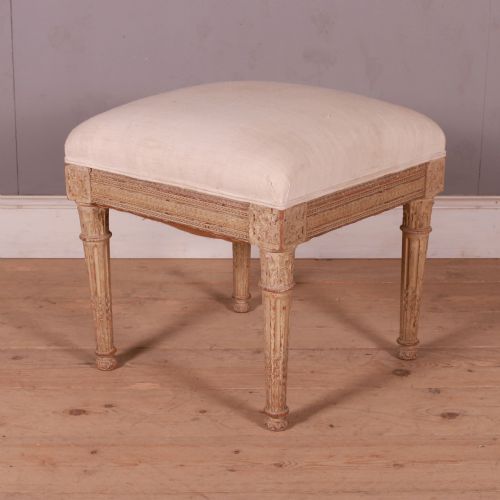


Gustavian Dressing Stool
These gustavian dressing stool pieces bring Swedish neoclassical restraint to a dressing room, offering understated painted frames and traditional seats.
Gustavian Dressing Stool
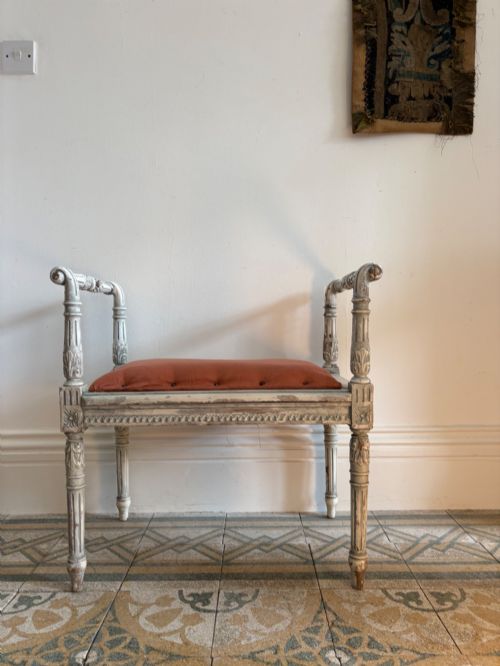
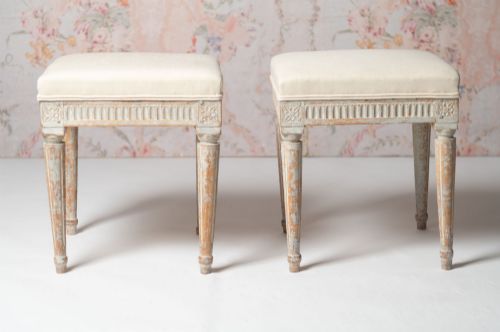
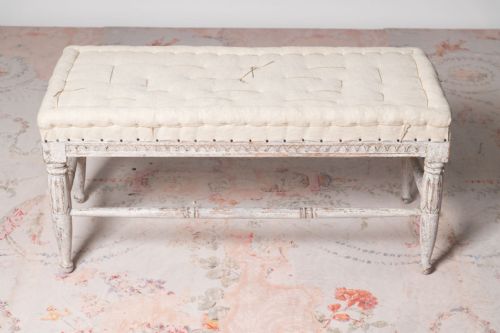
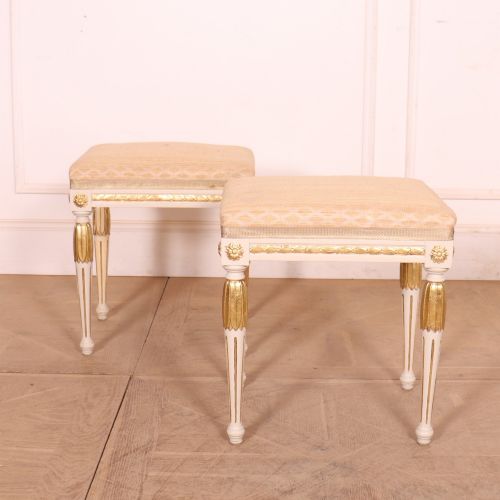
When you search for a gustavian dressing stool, you encounter seating designed for the dressing room or bedroom within the Swedish neoclassical tradition. These pieces function as stools or benches, often appearing as matched pairs alongside single examples.
The versions most commonly met on this page date from the eighteenth century through to the nineteenth century, including pieces produced around eighteen eighty, eighteen ninety, and nineteen hundred. Their forms remain rooted in Swedish interpretations of continental neoclassical design, prioritising clean lines and restrained proportions.
Originating in Sweden, these items serve primarily as dressing seats or low benches. They provide practical seating that complements traditional dressing tables without dominating the floor space.
How they were made
Makers shaped these frames from wood, frequently applying white paint or gold leaf to the exterior surfaces. Carved wooden details appear on select examples, adding texture to the otherwise restrained structural lines.
Upholstered elements utilise traditional textiles for the seat pads. Materials such as linen, cotton, silk, and general fabric complete the upper portion of the seating.
Gustavian Dressing Stool Retail Price Guide 2026
Typical asking prices for gustavian dressing stool among the pieces listed under this phrase on Sellingantiques today, from the lower quarter to the upper quarter. They describe what is for sale here now, not the wider market.
Materials across these listings consistently include painted wood, linen, cotton, silk, and gold leaf.
What varies in quality
The distinction between standard examples and finer pieces lies in the execution of the carved wooden elements and the crispness of the painted surfaces. Original paint finishes command particular attention for their authenticity compared to later surface applications.
Structural integrity of the timber frame and the quality of the textile chosen for the seat pad also differentiate the pieces. Coarser frames contrast with finely proportioned neoclassical forms that exhibit balanced proportions.
The Gustavian Dressing Stool Glossary
- Gustavian
- The Swedish interpretation of neoclassical design, spanning the late eighteenth century and influencing later nineteenth-century revival work. It is characterised by restrained ornamentation and lighter colour palettes.
- Neoclassical
- A style drawing inspiration from classical antiquity, favouring symmetry, straight lines, and understated classical motifs. This aesthetic underpins the architectural forms of these seats.
- Gold leaf
- Extremely thin sheets of beaten gold applied to wooden surfaces for decoration. It provides subtle highlights on carved details.
- Painted wood
- Timber surfaces coated with pigment, most frequently white in this tradition. This finish defines the visual character of Swedish seating from these periods.
Gustavian Dressing Stool: Frequently Asked Questions
Where did they place a gustavian dressing stool?
These seats belonged in the bedroom or dressing room, positioned directly in front of a dressing table or vanity mirror. Their compact dimensions allowed them to tuck neatly beneath furniture when not in use.
They also functioned as occasional seating in dressing alcoves or corridors, providing a low perch that matched the room's neoclassical decorative scheme.
How do I identify a period piece?
Examination of the timber construction methods, the wear patterns on the painted wood, and the upholstery substructure reveals the age of the item. Eighteenth-century examples display construction traits distinct from those made around nineteen hundred.
Looking closely at the preparation layers beneath the paint often indicates the period of manufacture and whether the surface finish remains original to the piece.
Can I use modern fabric for the seat?
Re-upholstering the seat pad with contemporary textiles is common practice to suit modern interiors while preserving the antique frame. Many pieces feature removable drop-in seat frames that simplify this process.
Maintaining traditional padding materials like linen or cotton during re-upholstery helps retain the correct seating height and firmness intended by the maker.