




Neoclassical Column Pedestal
A neoclassical column pedestal brings architectural dignity to a room, lifting sculpture and lighting to eye level.
Neoclassical Column Pedestal
A neoclassical column pedestal serves as a formal stand for sculpture, lamps, and decorative objects within a room.
The pieces on this page appear primarily from the nineteenth and early twentieth centuries, drawing on classical architectural orders.
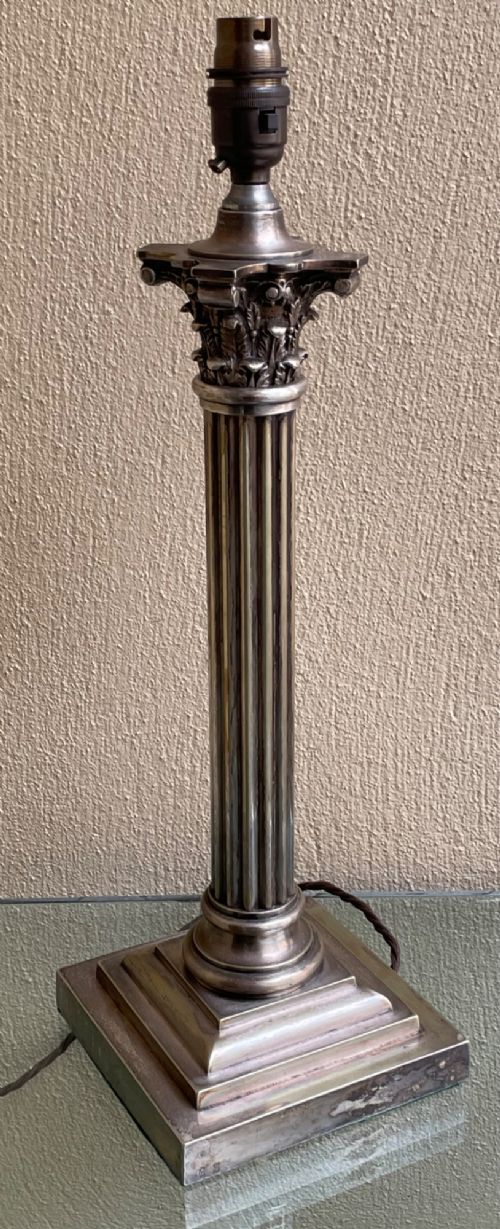
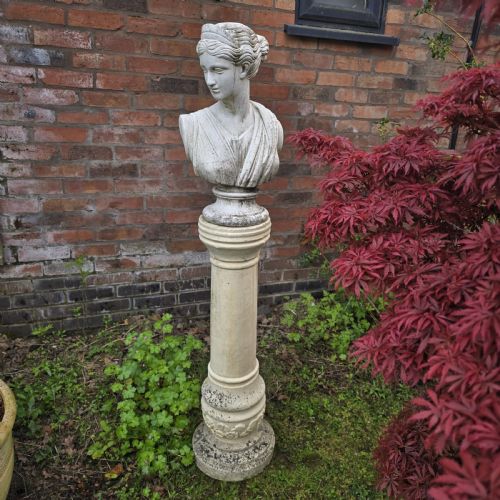
Forms range from tall display columns and garden statuary plinths to shorter table lamps and plant stands.
Materials and construction methods
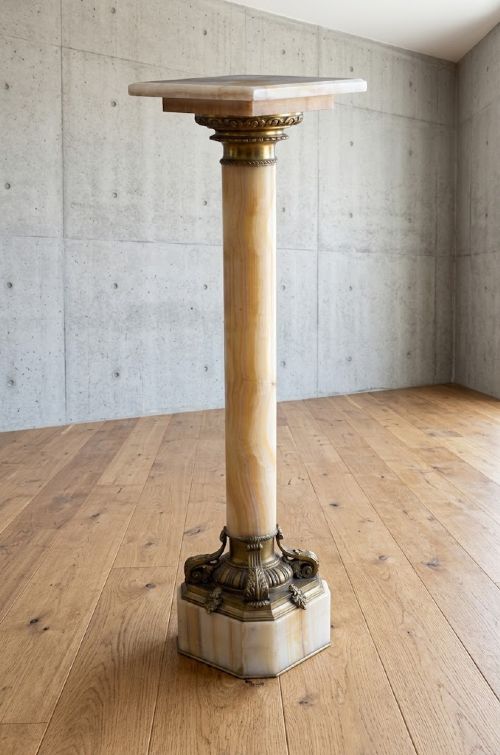
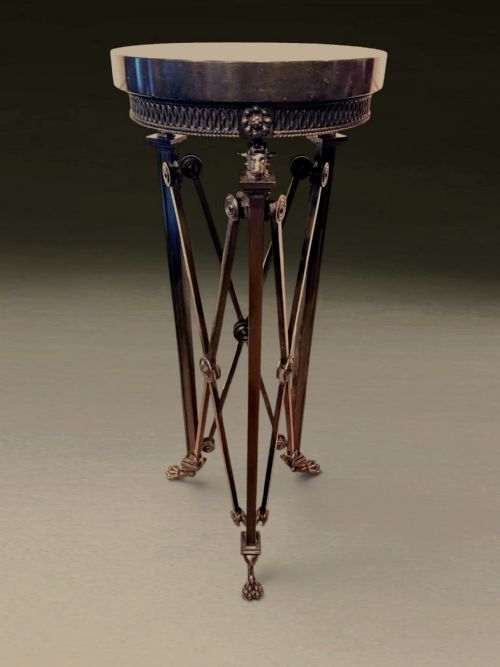
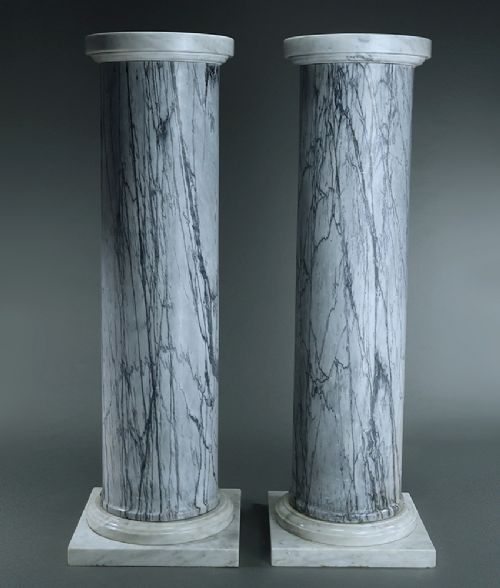
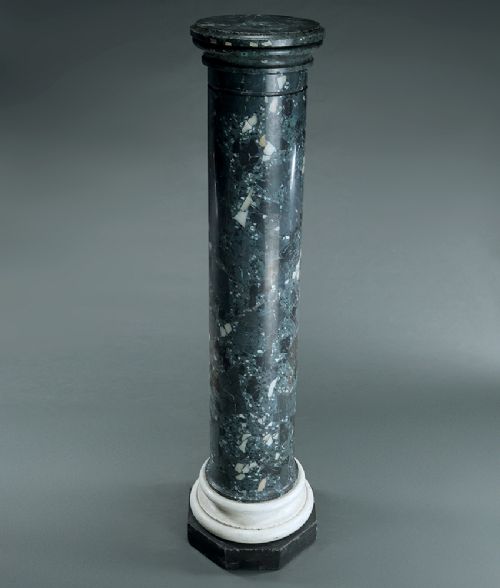
Makers utilised natural stone, including various marbles, onyx, alabaster, and stone, often combined with cast bronze, brass, or ormolu collars.
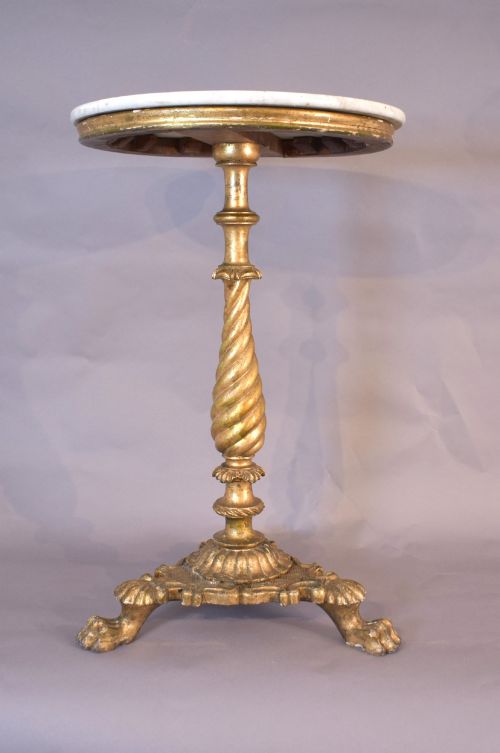
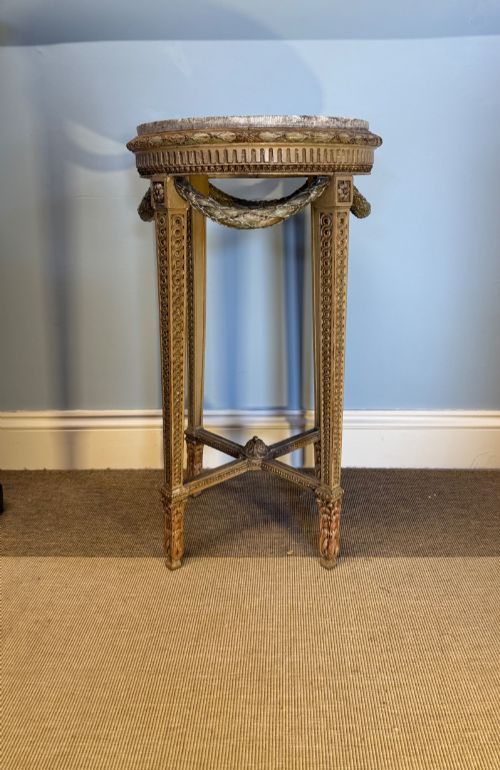
Timber construction appears in gilt wood, satinwood, and birch, alongside painted plaster, faux marble finishes, and scagliola.
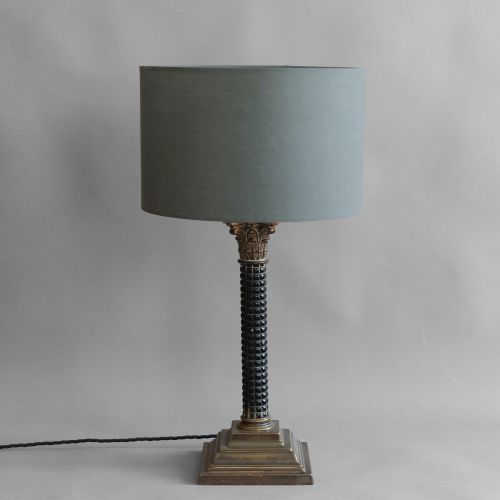
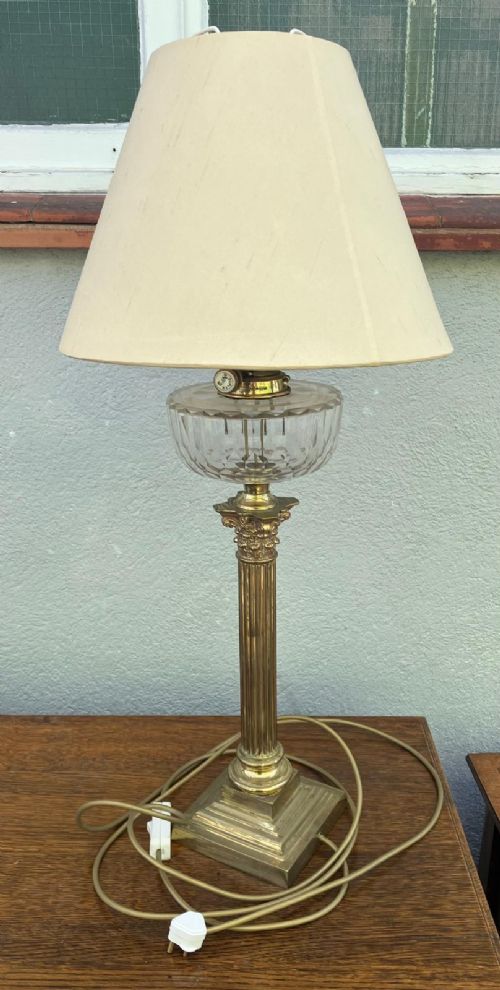
Several columns double as illumination, proving that even a classical ruin appreciates a good lightbulb.
Distinctions in quality
Quality rests upon the selection of materials, such as genuine verde antico, sienna, or bardiglio marble rather than painted substitutes.
Finishing details distinguish standard items from finer examples, seen in crisp carving on capitals, quality metal mounts, and original painted surfaces.
The Neoclassical Column Pedestal Glossary
- Corinthian
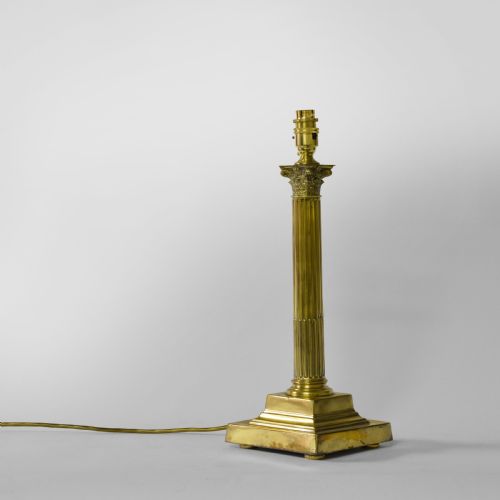
- An architectural order characterised by ornate capitals decorated with acanthus leaves. This style appears frequently on brass table lamps and stone columns.
- Doric
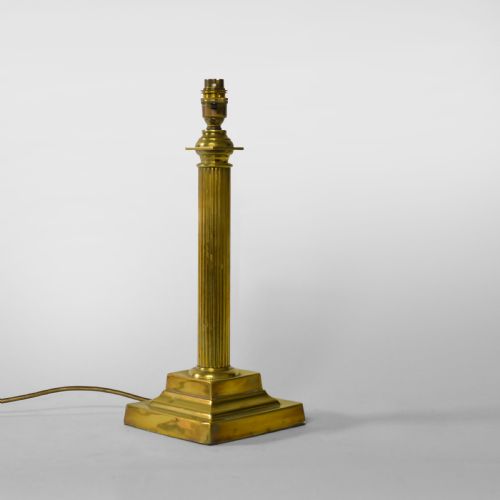
- The simplest and most robust of the classical orders, featuring plain capitals without scrollwork. It is seen on early twentieth century brass column lamps.
- Scagliola
- A composite material made from pigment, glue, and selenite, laid to imitate marble and other fine stones. It appears on Grand Tour columns and pedestals.
- Ormolu
- Gilt bronze mounts applied to furniture, marble, and onyx columns. This decorative technique adds metallic contrast to stone and wood.
- Torchere
- A tall stand or pedestal designed to support a light or candle. These pieces lift illumination sources above floor level.
Neoclassical Column Pedestal: Frequently Asked Questions
What is a neoclassical column pedestal used for?
These pieces function primarily as elevated platforms for display. They support marble busts, garden statuary, and decorative urns.
Shorter versions adapt the column form into table lamps or wine tables. They provide architectural presence in entrance halls and reception rooms.
How do I date a marble column?
Dating relies on material combination, mounting style, and regional characteristics. Nineteenth-century examples often incorporate French or Italian marbles with cast bronze collars.
Twentieth-century pieces frequently show different base constructions and alternative surface treatments like painted plaster or scagliola.
Where should I place a heavy stone pedestal?
Heavy marble and stone pedestals require solid, level flooring to distribute weight evenly. Garden statuary versions suit sheltered outdoor spots or stone-flagged conservatories.
Interior examples need careful positioning away from high-traffic routes to protect projecting corners and delicate stone edges.
Are these columns solid stone?
Construction varies considerably across the selection. Some pieces utilise solid marble, alabaster, or stone throughout their height.
Others combine internal timber or plaster cores with faux marble paint, scagliola finishes, or thin stone veneers secured by metal collars.