


Neoclassical Centre Table
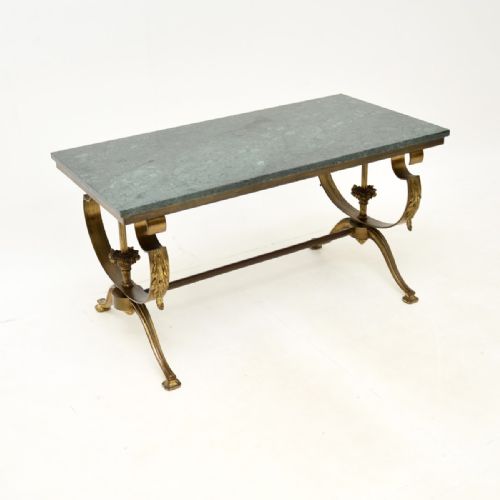
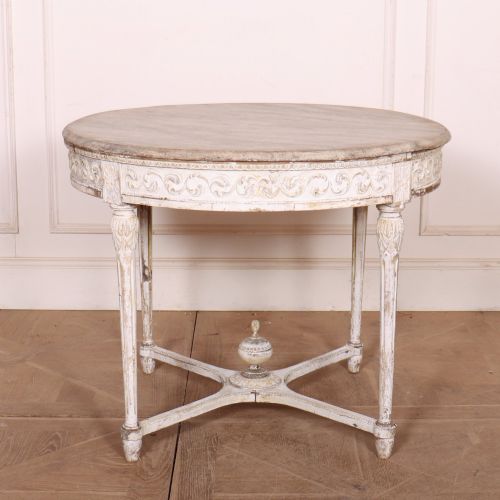
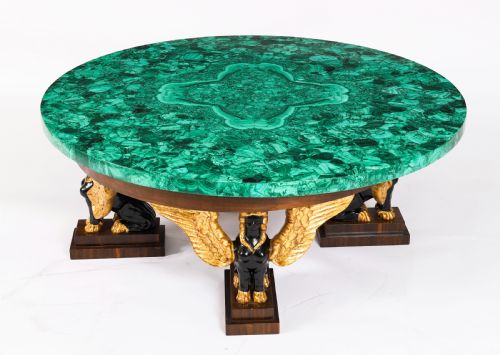
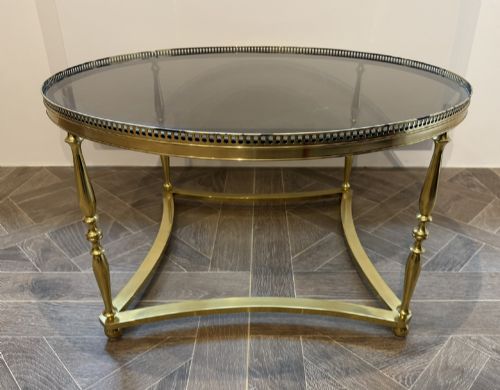
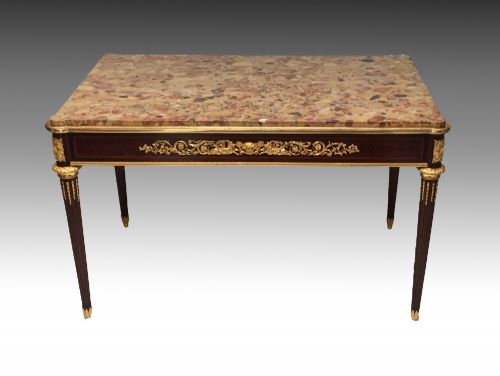
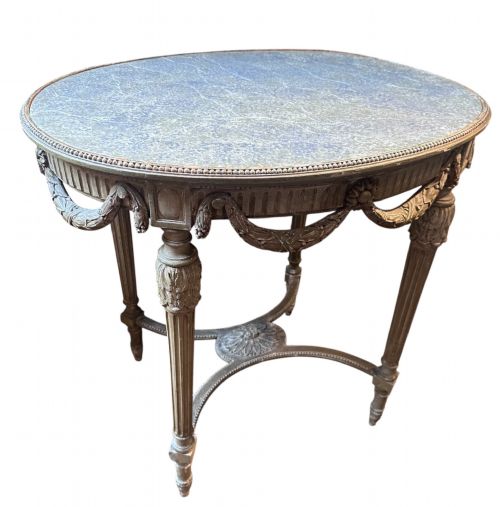
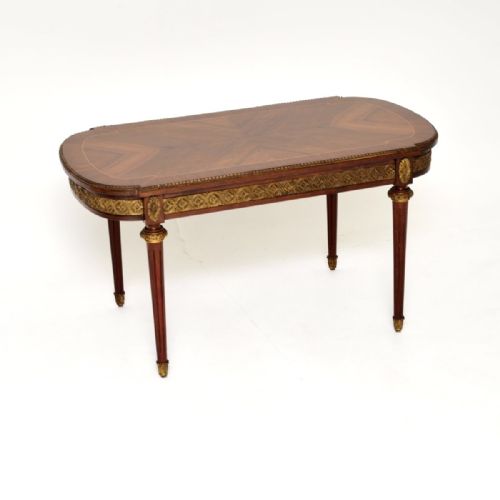
These neoclassical centre table examples combine architectural marble and rich timber to anchor a formal room.
Neoclassical Centre Table
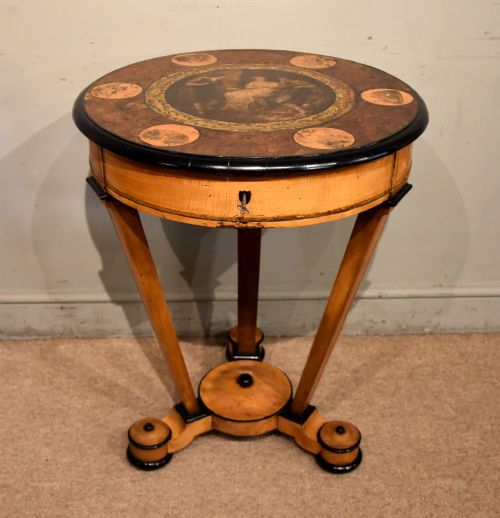
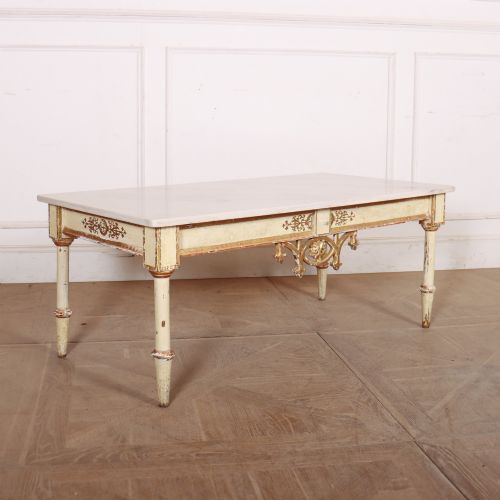
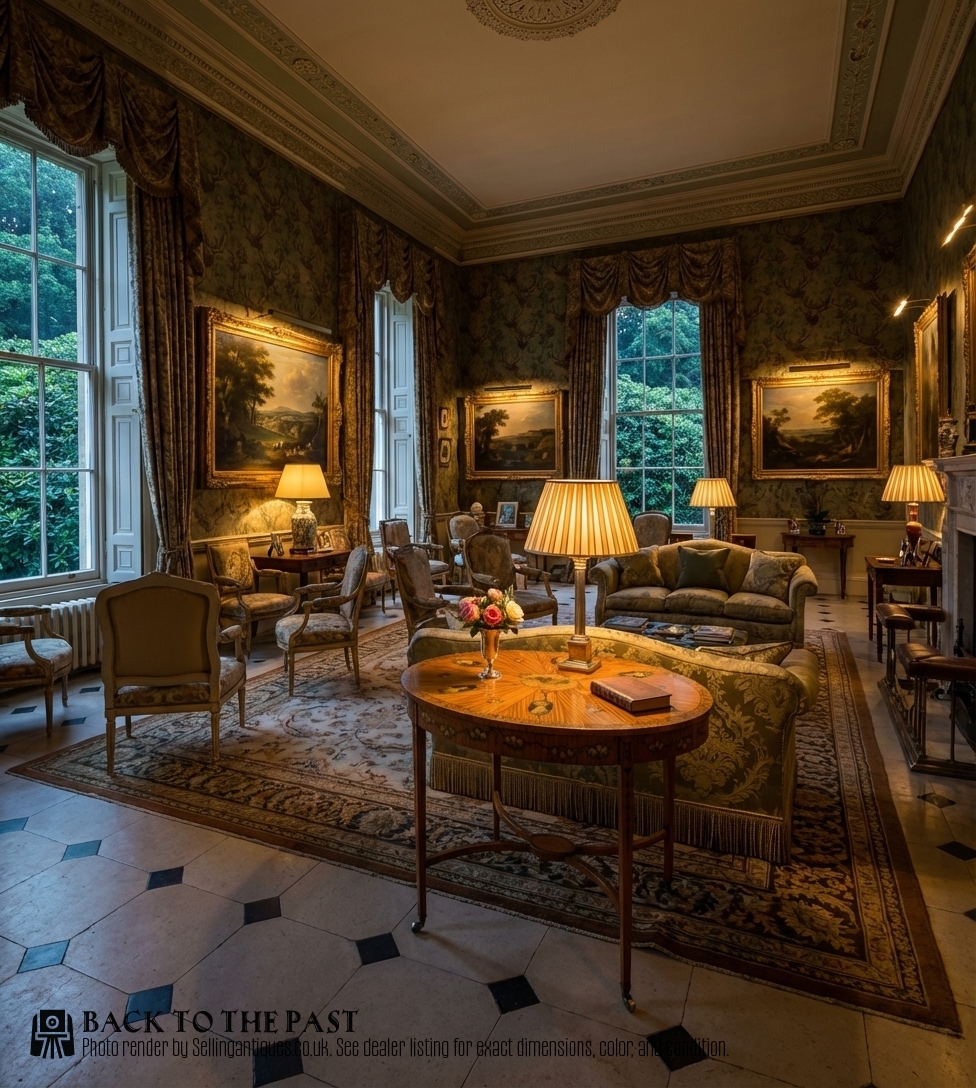
A neoclassical centre table serves as a freestanding focal point in a room, designed to be viewed from all sides rather than pushed against a wall. The pieces gathered here span from the nineteenth century into the twentieth, taking the form of round guéridons, occasional tables, and coffee tables.
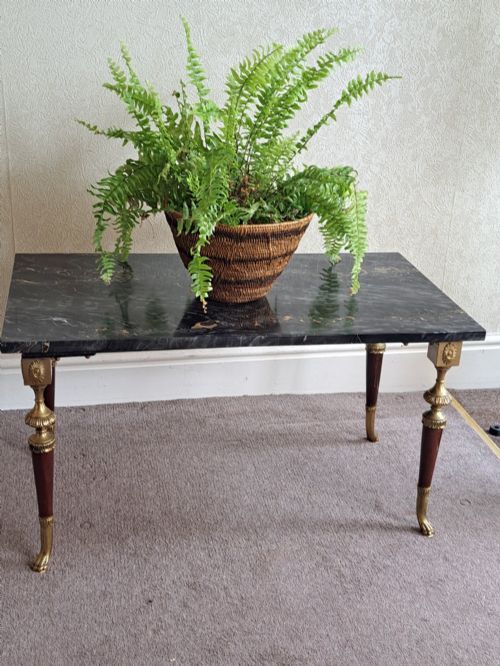
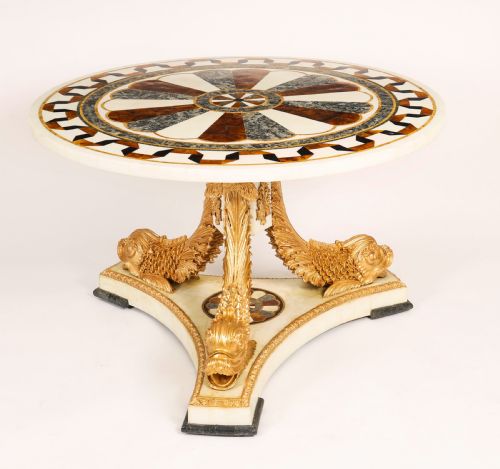
French Empire and Louis XVI styles dominate the selection, alongside Italian, Swedish Biedermeier, and German interpretations. Buyers encounter circular marble tops supported by mahogany columns, tripod bases with animal mounts, and inlaid satinwood or walnut surfaces.

Materials and Construction
Cabinetmakers built these frames from solid mahogany, walnut, burr elm, and satinwood, frequently applying ebonised finishes or painted decorations. Tops combined heavy slabs of white, black, purple, and porphyry marble, sometimes inlaid with pietra dura or specimen wood marquetry.
Metalwork played a structural and decorative role, utilising cast or chased ormolu, polished brass, and bronze mounts shaped as swans, rams heads, and classical motifs.
The selection includes French Empire, Louis XVI, Biedermeier, and Adam revival aesthetics applied to guéridons and coffee tables.
Craftsmanship and Detail
Quality rests upon the crispness of the cast bronze and ormolu mounts, the depth and precision of the wood inlay, and the choice of stone. Superior tables display hand-chiselled detailing on metal elements and carefully matched timber grains.
Lighter occasional pieces rely on the harmony of painted surfaces or delicate marquetry, whereas heavier Empire forms depend upon architectural proportion and solid marble weight.
The Neoclassical Centre Table Glossary
- Guéridon
- A small freestanding table, often circular with a central column or tripod base, originating in France during the seventeenth century and revived in later neoclassical periods.
- Ormolu
- Gilded bronze applied as decorative mounts to furniture frames and table borders, catching the light in formal reception rooms.
- Pietra dura
- An inlay technique using cut and fitted polished coloured stones to create pictorial designs on marble table tops.
- Marquetry
- Decorative patterns formed by fitting contrasting veneers of wood or specimen materials onto a supportive carcase.
- Biedermeier
- A Central European style emphasising clean architectural lines and domestic comfort, utilising native timbers without excessive ornamentation.
Neoclassical Centre Table: Frequently Asked Questions
Where should I place a neoclassical centre table?
These tables belong in the middle of a room, library, or entrance hall where they can be walked around freely. Because they are finished on all sides, they act as sculptural anchors rather than functional sideboards.
Keep them clear of direct heat sources to protect the underlying timber and the stability of the marble tops.
How do I care for marble and wood?
Wipe marble surfaces with a damp cloth and mild soap, avoiding acidic cleaners that etch the polished stone. Treat the timber frames with traditional wax to maintain the patina of the mahogany or walnut.
Lift rather than drag the table when moving it, as heavy stone tops place immense strain on the structural joints.
How do I tell French Empire from Louis XVI style?
Louis XVI pieces feature straight tapered legs, fluting, and restrained classical carvings derived from ancient Greek and Roman architecture. They often utilise lighter woods and delicate ormolu.
Empire furniture is heavier and more monumental, drawing directly from Napoleonic tastes with dark mahogany, bold bronze mounts, and sculptural supports like swans and rams heads.
Can I use a heavy marble top table daily?
Yes, the stone tops are durable enough for everyday use as coffee or lamp tables. Use coasters to prevent rings on polished wood and soft pads beneath decorative objects.
Ensure the floor beneath the heavy central column or tripod base is level to distribute the weight evenly.