
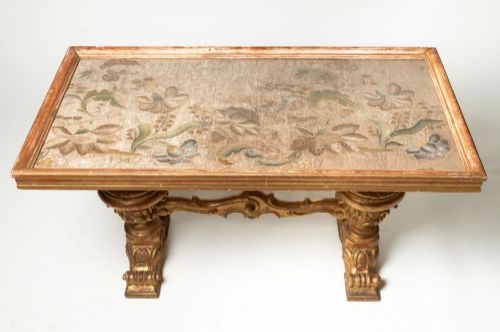
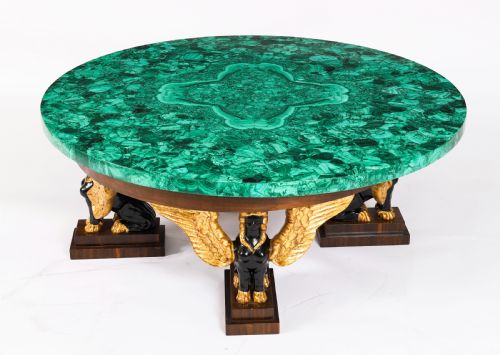
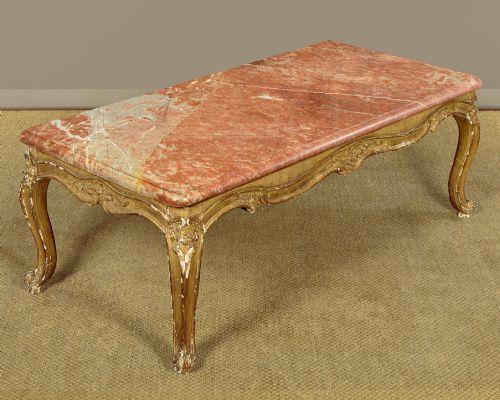
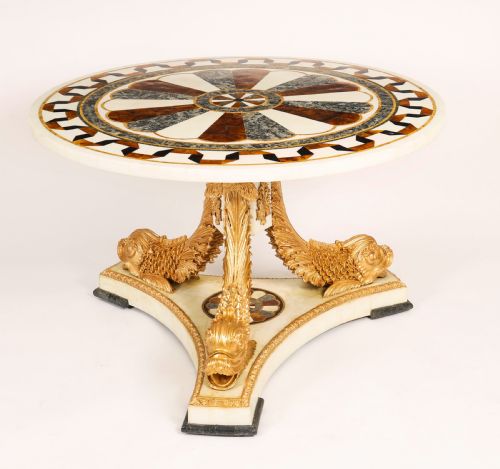
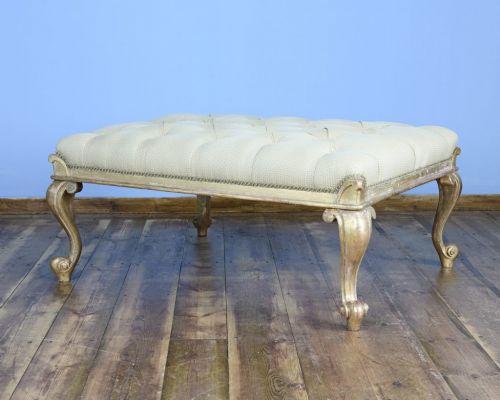
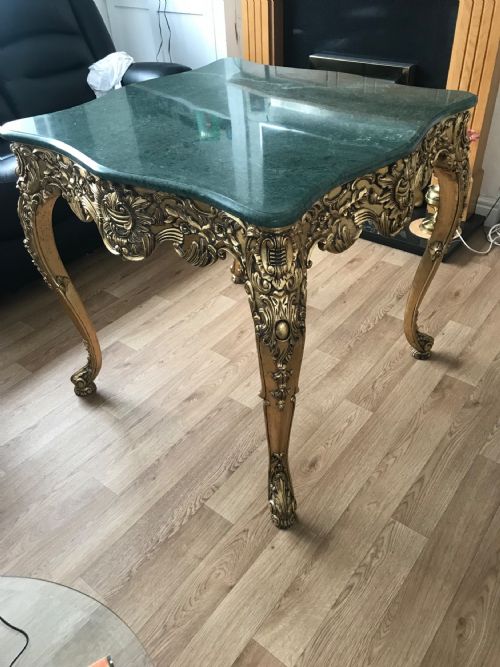
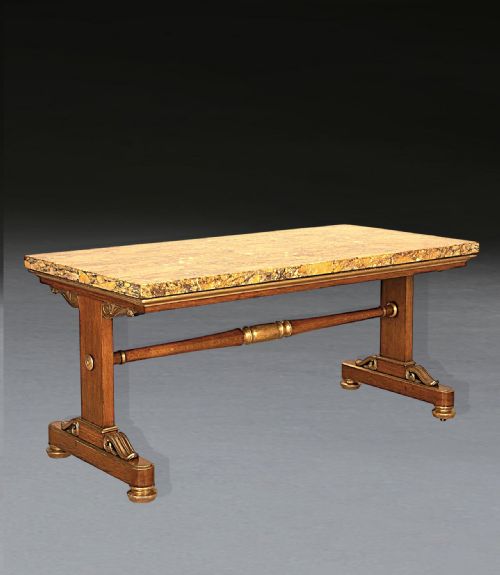


Carved Giltwood Centre Table
A carved giltwood centre table brings striking presence to a room, offering gilded surface and stone top for a bold architectural statement.

Carved Giltwood Centre Table
A carved giltwood centre table functions as a grand focal point in a reception room or hallway. When searching for this phrase, a buyer encounters pieces designed to stand free in a room rather than sit against a wall.
The selections span from the Regency era through the nineteenth century and into the early twentieth century. Common forms include large circular or rectangular tables featuring heavy marble tops.
Makers drew upon diverse design idioms, producing Italian Baroque, French Rococo, and Neoclassical revival pieces. Alongside standard centre tables, the listings include occasional, console, and coffee table variants.
How they were made
Carpenters shaped the foundational structure using woods such as oak, walnut, rosewood, ebonised wood, and pine. Artisans then applied gesso as a preparatory layer before laying gold leaf over the carved wooden surfaces.
Heavy stone inserts form the upper surface on many examples, featuring white, green, porphyry, and Siena marble or specimen marble tops. Parcel-gilt details highlight specific carved elements against painted or dark wood grounds.
Revival styles span French Rococo, Italian Baroque, and Neoclassical designs from the nineteenth and twentieth centuries.
What varies in quality
The crispness of the wood carving dictates the refinement of the piece, distinguishing deeply undercut acanthus leaves and figural supports from softer, shallower relief work. The weight and selection of the marble top also elevate the status of an item.
Original gilding methods show superior depth compared to later refinishing work. The integration of specialised secondary timbers and documented cabinetmaker marks separates standard production from exceptional examples.
Holland + Son
The Carved Giltwood Centre Table Glossary
- Giltwood
- Wood coated with gold leaf or gold paint applied over a gesso ground. This finish provides the bright reflective surface characteristic of formal antique furniture.
- Gesso
- A plaster mixture applied to wood surfaces as a smooth base for gilding. It allows carvers to achieve sharp detail before applying gold leaf.
- Parcel-gilt
- Woodwork or furniture partially gilded to highlight specific carved motifs. The technique leaves portions of the underlying wood or paint exposed.
- Siena marble
- A distinctive yellow marble quarried in Italy featuring dark grey or purple veins. It frequently appears on Regency and nineteenth-century tables.
- Porphyry
- An extremely hard igneous rock with purple or red crystals. It was prized in antiquity and imitated in nineteenth-century decorative surfaces.
Carved Giltwood Centre Table: Frequently Asked Questions
Where should a centre table go?
These tables are designed to sit in the middle of a large room or entrance hall. Because they are finished on all sides, they command attention from every angle.
Ensure there is enough walking space around the perimeter so the piece functions properly as a focal point.
How do I care for giltwood?
Giltwood requires gentle treatment because the gold leaf and underlying gesso are sensitive to moisture and abrasion. Dust the carved surfaces dry with a soft brush.
Keep these tables away from direct sunlight and radiators to prevent the wood from drying and cracking.
What is a marble top table used for?
Marble top tables provide a solid, cool surface that historically served for displaying decorative objects or serving refreshments. The heavy stone adds stability to the freestanding frame.
In modern settings, they function as substantial coffee tables or central display pieces.
How are different periods told apart?
Regency and Neoclassical pieces often feature classical motifs like dolphins, columns, and restraint in proportion. Victorian and Rococo revival items display heavier, more exuberant floral carving and curved outlines.
Examining the secondary woods and construction methods helps confirm the age of the structure.