


Gilded Marble Table
When you search for a gilded marble table, you are looking at substantial antique console, side and centre pieces uniting stone and gold leaf.
Gilded Marble Table
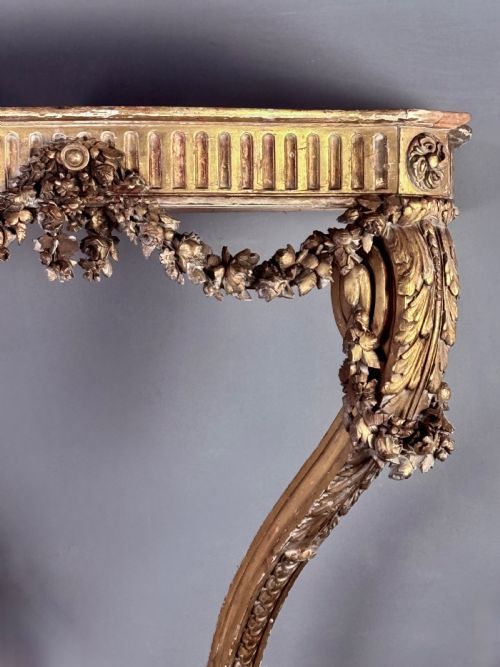
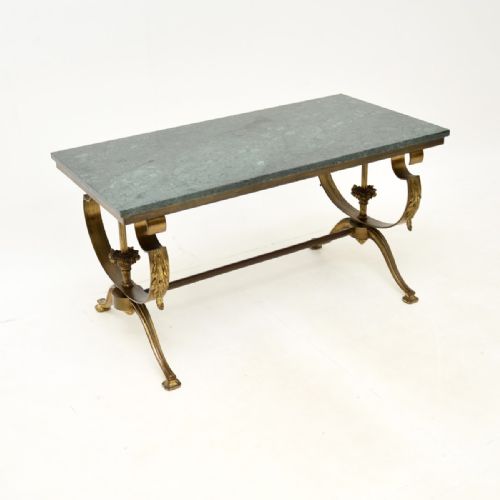
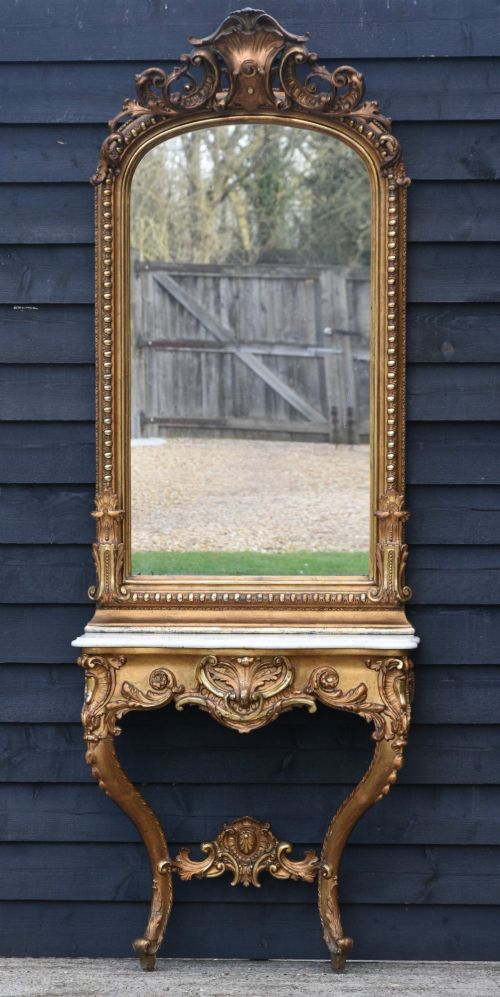
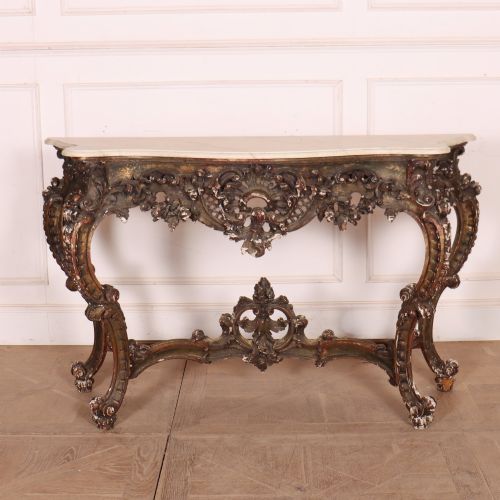
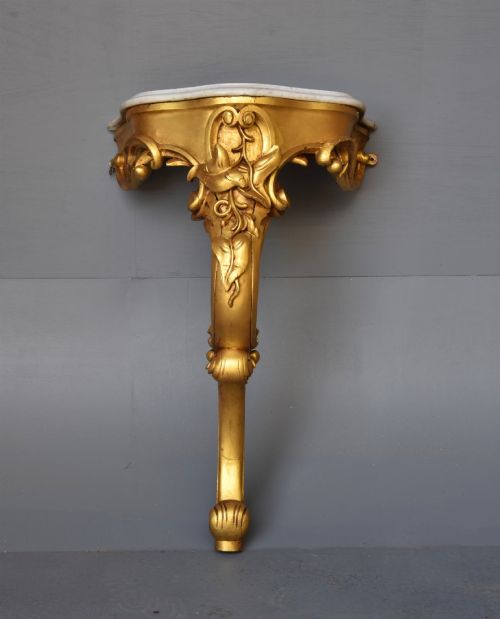
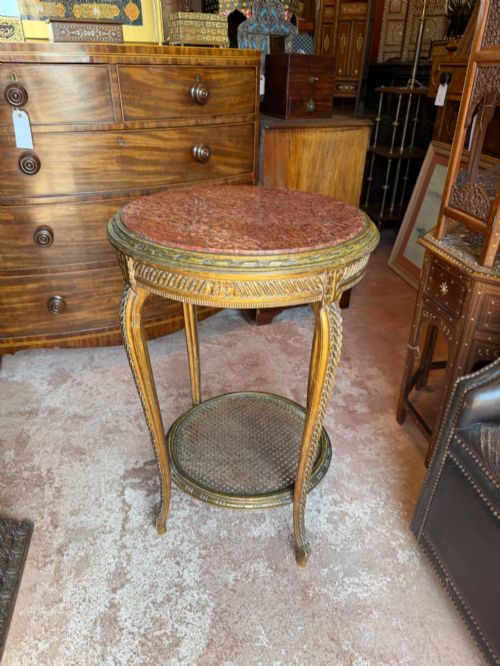
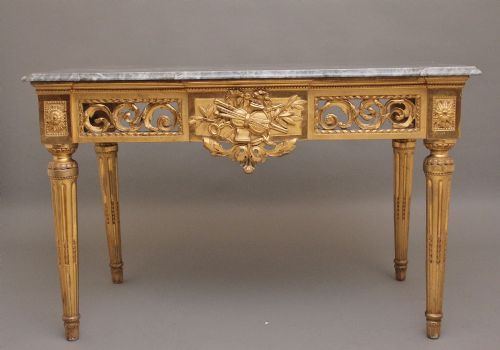
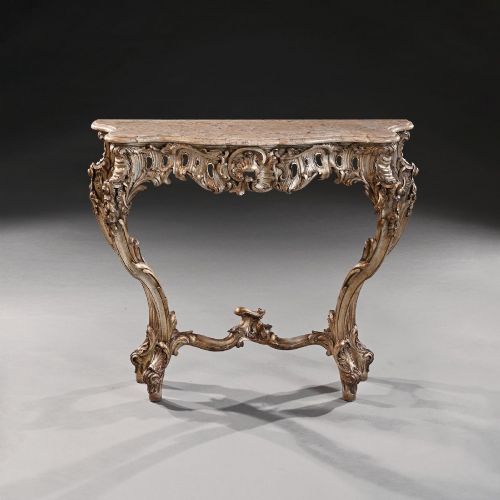
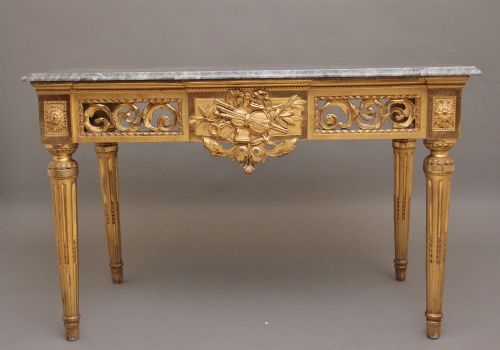
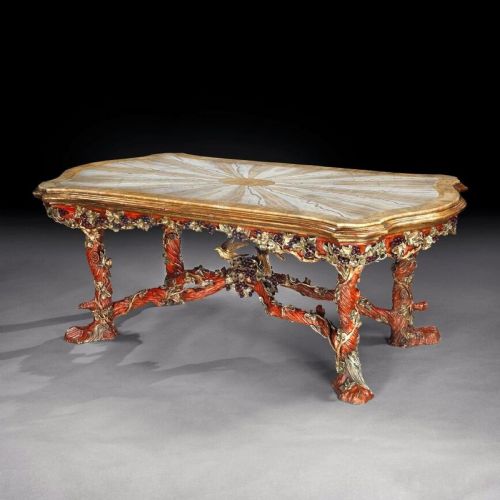
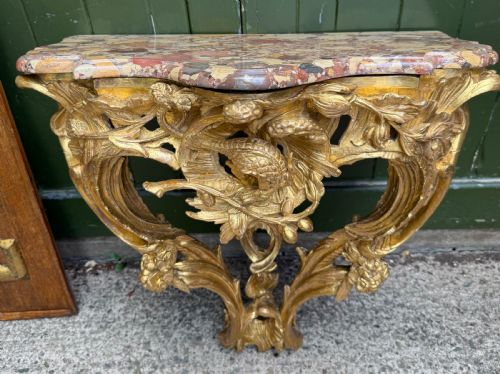
A gilded marble table combines a heavy stone slab top with a decorative wooden or metal frame finished in gold leaf, gesso, or ormolu. Console tables designed to stand against walls dominate the selection, alongside smaller side, coffee, and centre tables.
Originating largely from 18th and 19th-century French and Italian workshops, these items served grand interiors as pier tables or serving surfaces. Examples span from ornate Rococo revival forms to restrained Neoclassical and Louis XVI styles.
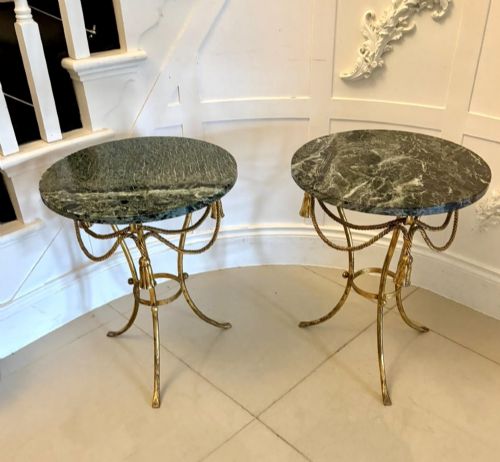
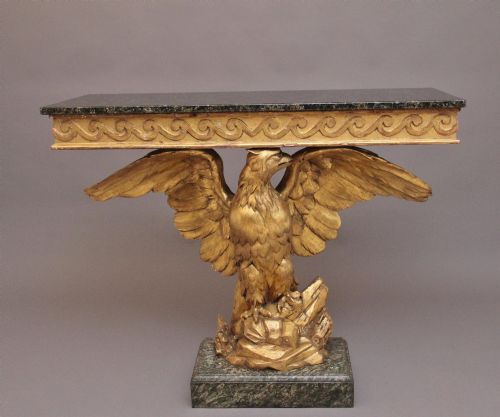
The stone tops vary from white Carrara to figured green and breccia varieties, paired with carved giltwood or gilded bronze bases. While primarily configured as rectangular or serpentine console tables, the category also embraces occasional and tripod formats.
What varies in quality
The depth and crispness of the wood carving dictate the distinction of the frame, separating hand-chiseled Italian and French giltwood from simpler moulded versions. Finer pieces display intricate undercut foliage, scrolls, or figural supports rather than shallow surface decoration.
Listings feature 18th Century and 19th Century items alongside early 20th Century revivals, uniting giltwood, ormolu, and marble.
Amleto Bertoni·Dienst of Paris
The Gilded Marble Table Glossary
- Giltwood
- Timber that has been coated with thin leaves of gold over a prepared gesso base. This technique protects the underlying wood while providing a brilliant metallic lustre.
- Ormolu
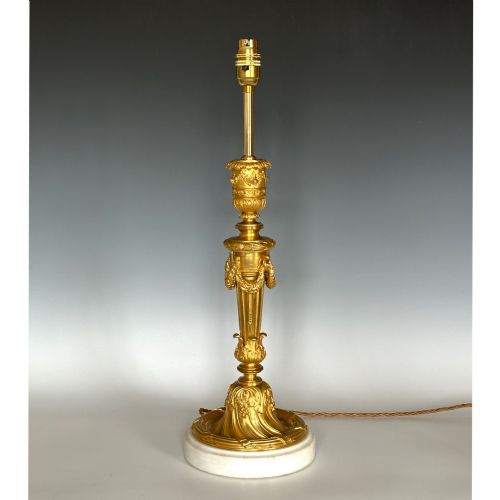
- Gilt bronze ornaments cast and chased for furniture mounts and decorative objects. The process involves applying a mercury and gold amalgam to bronze before heating.
- Console table
- A wall-mounted or freestanding table designed to stand against a vertical surface, frequently paired with a matching pier mirror. These pieces often feature heavily carved front legs while relying on the wall for rear support.
- Breccia marble
- A composite stone made of broken rock fragments embedded in a fine-grained matrix. Its dramatic, multi-coloured patterns made it a favoured material for grand 18th and 19th-century tabletops.
- Gueridon
- A small French occasional table or stand, often supported by a single central pillar or tripod base. The form developed in the 17th century and persisted through various revival periods.
Gilded Marble Table: Frequently Asked Questions
Where should I place a console table?
These tables fit naturally in entrance halls, living rooms, or dining spaces against a blank wall where their decorative frames can be fully appreciated.
Because many traditional console tables were designed to anchor beneath a mirror, pairing them with wall art or a matching pier glass completes the arrangement.
How do I clean a gilded surface?
Dust giltwood frames gently with a soft, dry ostrich feather brush or a clean microfibre cloth. Avoid all liquid cleaners, polishes, and moisture, which can lift the delicate gold leaf and underlying gesso.
Professional conservators should handle any significant restoration or cleaning of damaged leaf work.
Are these marble tops removable?
Most antique marble tops rest unattached on top of the wooden or gilt bronze base simply by their own considerable weight. This allows the heavy stone to be lifted off safely during transport or relocation.
Securing the top with discreet adhesive dots is sometimes practiced to prevent sliding, though historical pieces often rely purely on gravity.
How do I identify the period?
Stylistic cues such as asymmetrical Rococo curves, restrained Neoclassical symmetry, or heavy Victorian proportions point toward specific decades of manufacture. Examining the construction methods, tool marks on the timber, and the ageing of the gesso underneath helps confirm the era.
Comparative analysis with documented pieces from French and Italian workshops further clarifies the timeline.