
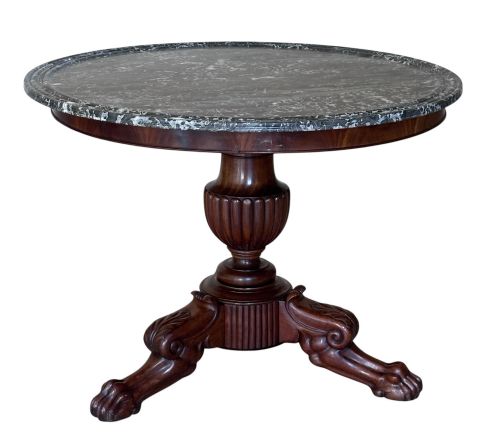
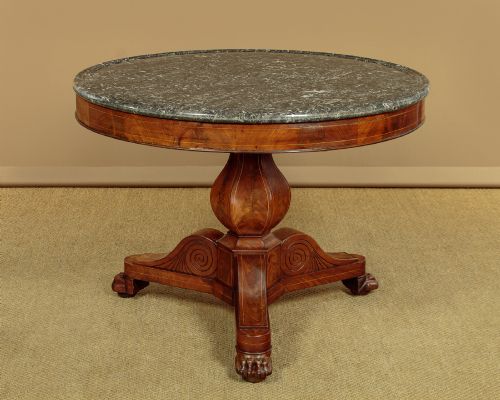
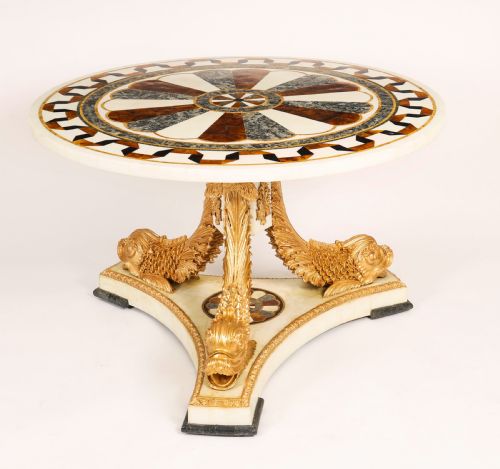


Round Marble Hall Table
A round marble hall table makes a commanding statement in an entrance, bringing classic stone and rich timber together.
Round Marble Hall Table
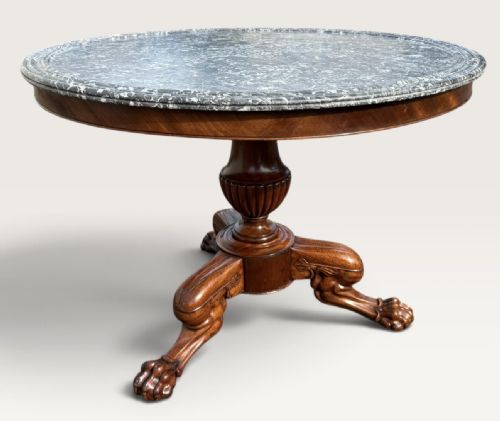
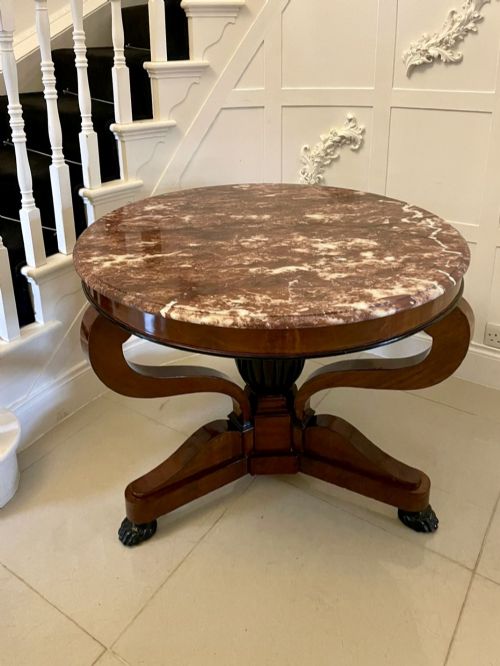
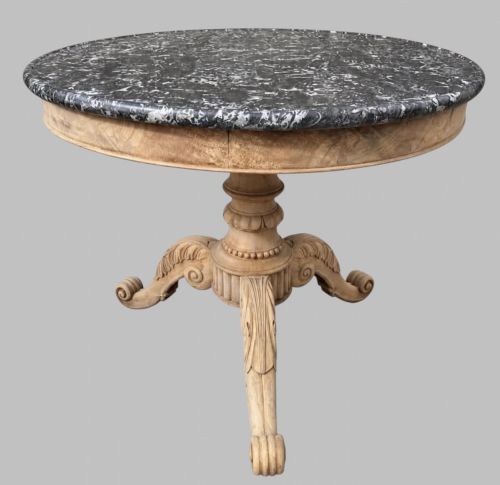
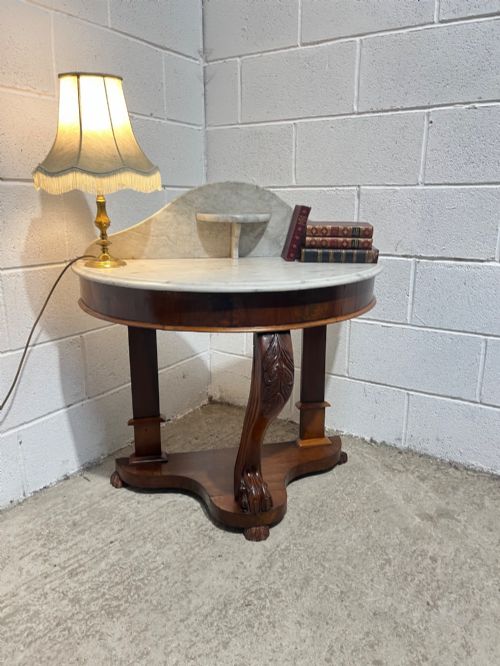
A round marble hall table combines sturdy stone surfaces with substantial timber frames, serving as a functional centrepiece for an entrance hall. When searching for a round marble hall table, buyers encounter nineteenth-century forms alongside revival styles.
The selection ranges from French gueridon tables to Regency and Victorian centre tables. Most examples originate from the nineteenth century, including specific decades such as eighteen-sixty and eighteen-fifty.
Makers utilised various object types including console tables, occasional tables, and pedestal tables. These pieces frequently feature circular stone tops supported by mahogany, walnut, or giltwood structures.
Assessing quality and craftsmanship
Superior examples display finely figured mahogany or bleached walnut veneers matched with substantial, unblemished marble slabs. The crispness of carved details, such as dolphin supports or classical moulding, distinguishes finer workshops from standard production.
The integrity of the central pillar and the weight of the stone top determine structural stability. Well-engineered pedestals support heavy marble without tilting, while lesser pieces show wear in the underlying joints.
Periods represented span from the Regency era through the Victorian period and into the twentieth century.
The Round Marble Hall Table Glossary
- Gueridon
- A small circular table on a central pillar, frequently topped with marble. This form became popular in French interiors.
- Ormolu
- Gilded bronze mounts applied to furniture for decoration. Artisans cast and chased these metal elements by hand.
- Porphyry
- A hard igneous rock with crystal inclusions used for decorative tabletops. This dense stone took a high polish.
- Regency
- A British design period spanning the early nineteenth century. Furniture from this era often incorporates classical motifs and exotic woods.
Round Marble Hall Table: Frequently Asked Questions
How do I style a round marble hall table?
Place the table centrally in an entrance hall to allow access from all sides. A single sculptural object or a low floral arrangement complements the circular stone surface without obstructing movement.
Ensure the scale matches the room dimensions so the stone top remains functional for everyday use. Pairing the piece with appropriate lighting highlights the natural veining of the marble.
Are these tables sturdy enough for daily use?
Nineteenth-century tables utilise heavy central pedestals designed to support substantial stone tops. The sheer weight of the marble keeps the surface stable during ordinary domestic tasks.
Proper placement on level flooring prevents undue strain on the central pillar and base. Avoid dragging the table when repositioning to protect the wooden joinery.
What is the difference between a gueridon and a centre table?
A gueridon specifically denotes a small round table supported by a central column. Centre tables encompass a broader category of freestanding tables designed to stand in the middle of a room.
Many listings use both terms interchangeably when describing circular nineteenth-century pieces. Both forms function effectively as focal points in large hallways.
How do I identify French Empire style?
French Empire pieces feature symmetrical designs inspired by classical antiquity. Makers incorporated dark mahogany veneers alongside prominent gilt bronze mounts.
Look for architectural proportions and motifs referencing classical mythology or military campaigns. These characteristics define the formal appearance typical of the period.